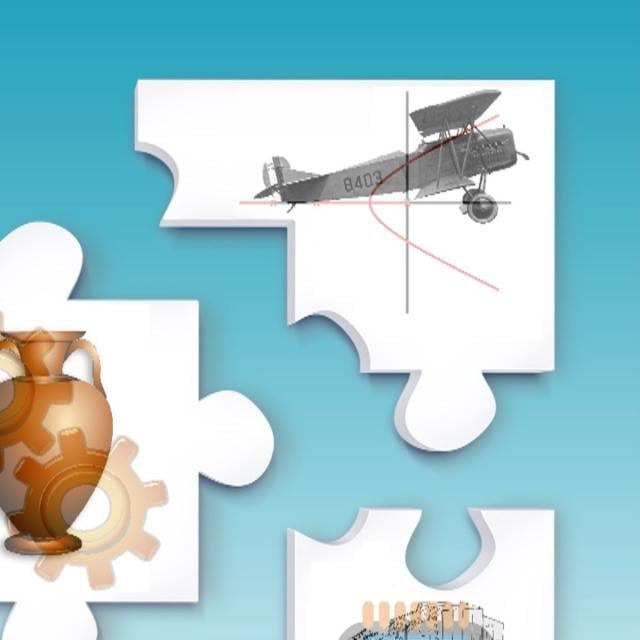
Controle de Sistemas no Plano-s (Coursera)

Controle de Sistemas no Plano-s (Coursera)

Após esse curso você será capaz de esboçar o Lugar Geométrico das Raízes (LGR - Root Locus) do denominador da Função de Transferência em Malha Fechada a partir dos polos e zeros da Função de Transferência em Malha aberta. Você também será capaz de projetar controladores de avanço de fase para atender simultaneamente requisitos de desempenho de amortecimento e de velocidade da resposta.

Class Deals by MOOC List - Click here and see Coursera's Active Discounts, Deals, and Promo Codes.

Você também será capaz de projetar controladores de atraso de fase para atender requisitos de erro em regime permanente sem alterar as características de estabilidade e da resposta transitória do sistema. Você verá que os controladores PD e PI podem ser considerados como casos especiais dos controladores de avanço e de atraso de fase e verá também que você pode combinar os dois tipos de controladores em controladores de avanço e atraso de fase ou em controladores PID.
Por fim você será capaz de modelar o efeito do atraso de transporte em um sistema com realimentação e de contrapor esse efeito projetando um controlador ou fazendo ajustes em um controlador já projetado.
Desso modo dado um sistema linear e invariante no tempo e requisitos de amortecimento, velocidade e erro em regime permanente você será capaz de projetar um controlador que fará com que o sistema em malha fechada atenda simultaneamente a esses três tipos de requisitos.
E você aprenderá tudo isso usando o MATLAB, uma ferramenta computacional extremamente útil para a análise, projeto e simulação de sistemas.

Syllabus

WEEK 1
Regiões de desempenho e aproximação de segunda ordem
Neste módulo fazemos uma breve introdução incluindo uma revisão sobre as fórmulas da resposta ao degrau de um sistema subamortecido.Você aprenderá o que é o Plano-s e como representar requisitos de desempenho no Plano-s e verá também que em alguns casos podemos desprezar a contribuição de alguns polos e zeros na resposta ao degrau.

WEEK 2
O Lugar Geométrico das Raízes
Neste módulo você aprenderá o que é o Lugar Geométrico das Raízes, também conhecido como Root Locus e aprenderá também como esboçar o LGR a partir da função de transferência do sistema em malha aberta.

WEEK 3
Controlador de avanço de fase
Neste módulo você aprenderá a projetar um controlador de avanço de fase, também conhecido como controlador lead, para atender a requisitos de desempenho que não poderiam ser atendidos com um sistema controle proporcional. Você aprenderá também o que é o controlador PD.

WEEK 4
Controlador de atraso de fase
Neste módulo você verá que não pode tentar atender a um requisito de erro em regime permanente simplesmente aumentando o ganho do sistema. Para atender a um requisito de erro em regime sem alterar outras características da resposta do sistema é preciso usar um controlador de atraso de fase. Você também vai aprender o que é um controlador PI.

WEEK 5
Controladores de avanço e atraso, atraso de transporte
Neste módulo você vai aprender a projetar controladores de avanço e atraso de fase, ou lead-lag. Você também verá um projeto de controlador PID e aprenderá como lidar com o atraso de transporte usando um controlador de avanço de fase.
Go to Class
MOOC List is learner-supported. When you buy through links on our site, we may earn an affiliate commission.

Related Courses

Mastering Programming with MATLAB (Coursera) Coursera
Vanderbilt University

Mastering Programming with MATLAB (Coursera)

The course builds on the foundation laid by the first course of the Specialization called “Introduction to Programming with MATLAB.” It covers more advanced programming concepts such as recursion, vectorization, function handles, algorithm efficiency and others. At the same time, it presents many features that make MATLAB a powerful programming environment for engineering and scientific computing, such as its support for object oriented programming, the new user interface design environment and Live Scripts.

Jun 8th 2026
5-12 Weeks
Software Engineering: Software Design and Project Management (Coursera) Coursera
The Hong Kong University of Science and Technology - HKUST

Software Engineering: Software Design and Project Management (Coursera)

Software Development Life Cycle (SDLC) is the process of developing software through planning, requirement analysis, design, implementation, testing, and maintenance. This course focuses on the project planning and analysis/design phases of SDLC, and you will learn about different architectural patterns and design patterns to solve common problems in software design. It covers project planning, scheduling, and cost estimating, which are the principal tasks of software project managers.

Jun 8th 2026
3 Weeks
Engineering of Structures: Tension and Compression (Coursera) Coursera
Dartmouth College

Engineering of Structures: Tension and Compression (Coursera)

This course deals with tension and compression. After going through this course, you will understand why tensegrity structures and sculptures are different from other structures. You will also explore tension and compression in different types of trusses. Additionally you will understand determinacy and realize how it applies to trusses.

Jun 8th 2026
3 Weeks
L'Art des Structures 2 : treillis, poutres, dalles et cadres (Coursera) Coursera
École Polytechnique Fédérale de Lausanne

L'Art des Structures 2 : treillis, poutres, dalles et cadres (Coursera)

Les structures en treillis, en poutre, en dalles et en cadre sont essentielles pour une grande partie des constructions modernes : immeubles pour l'habitation ou de bureaux, halles et usines, ponts, ou passerelles, voies de transport de l'énergie ou des télécommunications, stades et grandes toitures. Le cours L'Art des Structures 2 vous propose d'en découvrir le fonctionnement et les bases de leur dimensionnement.

Jun 8th 2026
5-12 Weeks
Ferrous Technology II (Coursera) Coursera
Pohang University of Science and Technology - POSTECH

Ferrous Technology II (Coursera)

Steel, ever-evolving material, has been the most preeminent of all materials since it can provide wide range of properties that can meet ever-changing requirements. In this course, we explore both fundamental and technical issues related to steels, including iron and steelmaking, microstructure and phase transformation, and their properties and applications.

Jun 8th 2026
5-12 Weeks
MBSE: Model-Based Systems Engineering (Coursera) Coursera
University at Buffalo,The State University of New York

MBSE: Model-Based Systems Engineering (Coursera)

This Model-Based Systems Engineering (MBSE) course and the Digital Thread courses featured earlier in this specialization bring together the concepts from across digital manufacturing and design, forming a vision in which the geometry of a product is just one way of describing it. MBSE is where the model resulting from the evolution of system requirements, design, analysis, verification and validation activities is the focus of design and manufacturing.

Jun 8th 2026
4 Weeks
Self Awareness and the Effective Leader (Coursera) Coursera
Rice University

Self Awareness and the Effective Leader (Coursera)

Part of being an effective leader is learning how to play to your strengths and overcome characteristics that don't lend to good leadership practices. During the course, you will examine your own strengths and learn ways to use them in a leadership role. Learn to manage stress and solve problems creatively. Throughout the course, you will also build a tool kit of useful techniques that you can begin using right away in your engineering career.

Jun 8th 2026
5-12 Weeks
Control of Nonlinear Spacecraft Attitude Motion (Coursera) Coursera
University of Colorado Boulder

Control of Nonlinear Spacecraft Attitude Motion (Coursera)

This course trains you in the skills needed to program specific orientation and achieve precise aiming goals for spacecraft moving through three dimensional space. First, we cover stability definitions of nonlinear dynamical systems, covering the difference between local and global stability. We then analyze and apply Lyapunov's Direct Method to prove these stability properties, and develop a nonlinear 3-axis attitude pointing control law using Lyapunov theory. Finally, we look at alternate feedback control laws and closed loop dynamics.

Jun 8th 2026
4 Weeks
Chemical Engineering Thermodynamics 1 (Coursera) Coursera
Korea Advanced Institute of Science and Technology - KAIST

Chemical Engineering Thermodynamics 1 (Coursera)

An appreciation of thermodynamics is required to become a chemical and biomolecular engineer. Thermodynamics can assess the viability of a process and is one of the curriculum's most essential topics. The principles are utilized in following engineering courses (kinetics, mass transfer, design, materials) and are applicable to numerous engineering disciplines. The increased emphasis on energy usage and transformation as a result of rising demand, diminishing supply, and global warming necessitates that the engineers who will tackle these issues have a firm grasp of thermodynamics.

Jun 8th 2026
5-12 Weeks
Data Analysis and Visualization (Coursera) Coursera
University at Buffalo,The State University of New York

Data Analysis and Visualization (Coursera)

By the end of this course, learners are provided a high-level overview of data analysis and visualization tools, and are prepared to discuss best practices and develop an ensuing action plan that addresses key discoveries. It begins with common hurdles that obstruct adoption of a data-driven culture before introducing data analysis tools (R software, Minitab, MATLAB, and Python). Deeper examination is spent on statistical process control (SPC), which is a method for studying variation over time. The course also addresses do’s and don’ts of presenting data visually, visualization software (Tableau, Excel, Power BI), and creating a data story.

Jun 8th 2026
4 Weeks