MBSE: Model-Based Systems Engineering (Coursera)

MBSE: Model-Based Systems Engineering (Coursera)

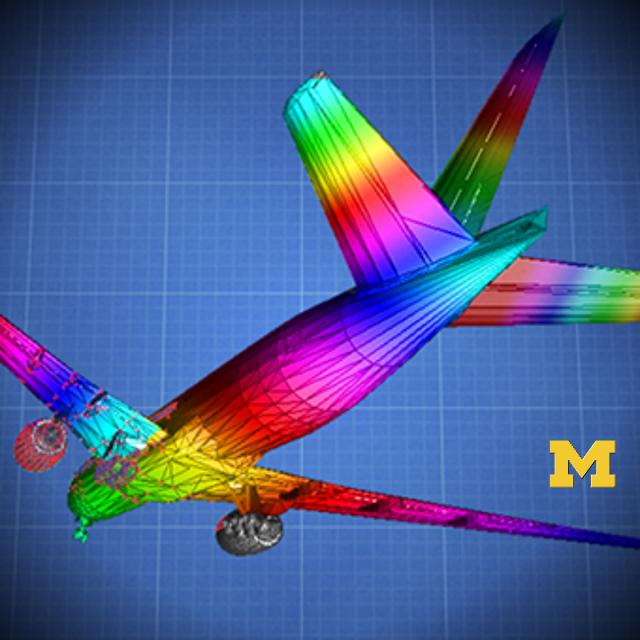
This Model-Based Systems Engineering (MBSE) course and the Digital Thread courses featured earlier in this specialization bring together the concepts from across digital manufacturing and design, forming a vision in which the geometry of a product is just one way of describing it. MBSE is where the model resulting from the evolution of system requirements, design, analysis, verification and validation activities is the focus of design and manufacturing.

Class Deals by MOOC List - Click here and see Coursera's Active Discounts, Deals, and Promo Codes.

Students will gain an understanding of systems engineering, the model-based approach to design and manufacturing, the Digital Twin, and a roadmap toward a model-based enterprise.

Students will be able to explain the value and expectations of systems engineering and model-based systems engineering, and the underlying motivations and opportunities represented by a model-based enterprise. They will develop the knowledge necessary to perform a baseline assessment of an organization’s potential to leverage MBSE.
Main concepts of this course will be delivered through lectures, readings, discussions and various videos.
This is the ninth course in the Digital Manufacturing & Design Technology specialization that explores the many facets of manufacturing’s “Fourth Revolution,” and features a culminating project involving creation of a roadmap to achieve a self-established DMD-related professional goal.
Course 8 of 9 in the Digital Manufacturing & Design Technology Specialization.

Syllabus

WEEK 1
Systems Engineering
The purpose of this module is to establish a basic understanding of Systems Engineering and the role it plays in design and manufacturing. At the end of the module, learners will be able to explain a Systems Engineering process and discuss the advantages and disadvantages of the approach.

WEEK 2
Model-Based Systems Engineering
The purpose of this module is to explain Model-Based Systems Engineering (MBSE) and its applications. Upon completion, learners will be able to assess a process for MBSE opportunities and develop an argument for implementation. The learners will also be able to develop a strategy on how to implement applications of MBSE.

WEEK 3
Applications of Model-Based Systems Engineering
Learners will develop an appreciation of the Model-Based Enterprise, including the benefits and barriers to successful implementation. Learners will be able to identify potential opportunities for the adoption of a Model-Based Enterprise.

WEEK 4
Model-Based Enterprise
The purpose of this module is to develop an understanding of the MBE Self Assessment tools. At the end of the module, learners will be able to go through a tool to analyze MBE maturity.

Go to Class
MOOC List is learner-supported. When you buy through links on our site, we may earn an affiliate commission.

Related Courses

Engineering Systems in Motion: Dynamics of Particles and Bodies in 2D Motion (Coursera) Coursera
Georgia Institute of Technology

Engineering Systems in Motion: Dynamics of Particles and Bodies in 2D Motion (Coursera)

This course is an introduction to the study of bodies in motion as applied to engineering systems and structures. We will study the dynamics of particle motion and bodies in rigid planar (2D) motion. This will consist of both the kinematics and kinetics of motion. Kinematics deals with the geometrical aspects of motion describing position, velocity, and acceleration, all as a function of time. Kinetics is the study of forces acting on these bodies and how it affects their motion.

Oct 5th 2026
5-12 Weeks
Advanced Engineering Systems in Motion: Dynamics of Three Dimensional (3D) Motion (Coursera) Coursera
Georgia Institute of Technology

Advanced Engineering Systems in Motion: Dynamics of Three Dimensional (3D) Motion (Coursera)

This course is an advanced study of bodies in motion as applied to engineering systems and structures. We will study the dynamics of rigid bodies in 3D motion. This will consist of both the kinematics and kinetics of motion. Kinematics deals with the geometrical aspects of motion describing position, velocity, and acceleration, all as a function of time. Kinetics is the study of forces acting on these bodies and how it affects their motion.

Oct 5th 2026
5-12 Weeks
Wind resources for renewable energies (Coursera) Coursera
École Polytechnique

Wind resources for renewable energies (Coursera)

The main goal of this course is to get the necessary knowledge on atmospheric and fluid dynamics in order to quantify the wind resource of a local or regional area. We’ll learn about basic meteorology, the specific dynamics of turbulent boundary layers and some standard techniques to estimate wind resources regardless of the type of turbine used or the level of efficiency achieved.

Oct 5th 2026
4 Weeks
Gamification (Coursera) Coursera
University of Pennsylvania

Gamification (Coursera)

Gamification is the application of game elements and digital game design techniques to non-game problems, such as business and social impact challenges. This course will teach you the mechanisms of gamification, why it has such tremendous potential, and how to use it effectively.

Sep 28th 2026
5-12 Weeks
Engineering Maintainable Android Apps (Coursera) Coursera
Vanderbilt University

Engineering Maintainable Android Apps (Coursera)

Engineering Maintainable Android Apps, which is a 4 week MOOC that shows by example various methods for engineering maintainable Android apps, including test-driven development methods and how to develop/run unit tests using JUnit and Robotium (or equivalent automated testing frameworks for Android), as well as how to successfully apply common Java/Android software patterns to improve the extensibility and clarity of Android apps.

Sep 28th 2026
4 Weeks
Self Awareness and the Effective Leader (Coursera) Coursera
Rice University

Self Awareness and the Effective Leader (Coursera)

Part of being an effective leader is learning how to play to your strengths and overcome characteristics that don't lend to good leadership practices. During the course, you will examine your own strengths and learn ways to use them in a leadership role. Learn to manage stress and solve problems creatively. Throughout the course, you will also build a tool kit of useful techniques that you can begin using right away in your engineering career.

Sep 28th 2026
5-12 Weeks
Applications in Engineering Mechanics (Coursera) Coursera
Georgia Institute of Technology

Applications in Engineering Mechanics (Coursera)

This course applies principles learned in my course “Introduction to Engineering Mechanics” to analyze real world engineering structures. You will need to have mastered the engineering fundamentals from that class in order to be successful in this course offering. This course addresses the modeling and analysis of static equilibrium problems with an emphasis on real world engineering systems and problem solving.

Oct 5th 2026
5-12 Weeks