Confronting The Big Questions: Highlights of Modern Astronomy (Coursera)

Confronting The Big Questions: Highlights of Modern Astronomy (Coursera)

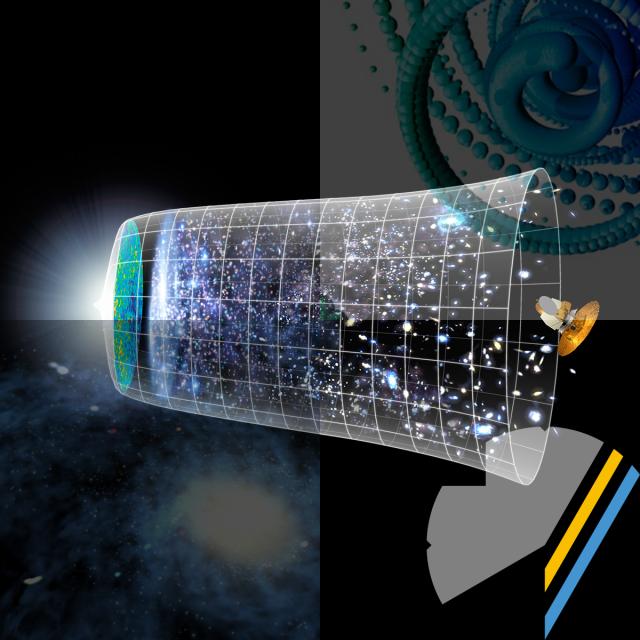
An introduction to modern astronomy's most important questions. The four sections of the course are Planets and Life in The Universe; The Life of Stars; Galaxies and Their Environments; The History of The Universe.

Class Deals by MOOC List - Click here and see Coursera's Active Discounts, Deals, and Promo Codes.

Syllabus

Week 1
Are we alone in the Universe?
Planets and Life in The Universe - Exoplanets searches, exoplanet census, astrobiology

Week 2
How do Stars Evolve and Die?
The Life of Stars - Star formation, fusion and stellar middle age, black holes and stellar death-

Week 3
What Exists Outside our Galaxy?
Galaxies and Their Environments - Galaxy types, Active Galactic Nuclei, Clusters of Clusters of Galaxies

Week 4
What is the Fate of the Universe?
The History of The Universe - Why the Big Bang? A History of Time, What Happened Before the Big Bang

Go to Class
MOOC List is learner-supported. When you buy through links on our site, we may earn an affiliate commission.

Related Courses

Global Warming I: The Science and Modeling of Climate Change (Coursera) Coursera
University of Chicago

Global Warming I: The Science and Modeling of Climate Change (Coursera)

This class describes the science of global warming and the forecast for humans’ impact on Earth’s climate. Intended for an audience without much scientific background but a healthy sense of curiosity, the class brings together insights and perspectives from physics, chemistry, biology, earth and atmospheric sciences, and even some economics—all based on a foundation of simple mathematics (algebra).

Aug 24th 2026
5-12 Weeks
Fundamentals of Fluid-Solid Interactions (Coursera) Coursera
École Polytechnique

Fundamentals of Fluid-Solid Interactions (Coursera)

What is fluid-solid interactions ? It is what happens when the motions of a fluid and of a solid are somehow coupled. This happens all the time, around you when leaves flutter in the wind, inside you when your heart beats, above you when wings of a plane vibrate, under the sea... The idea behind this MOOC is to give you the basic tools to be able to predict and eventually mitigate things called flutter, galloping, sloshing, vortex-induced vibrations, added mass, to cite a few. We are going to consider any possible domains of applications such as civil engineering, aerospace engineering, nuclear engineering , ocean engineering, biomechanics and even food processing !

Aug 10th 2026
5-12 Weeks
Flight mechanics - The basis (Coursera) Coursera
ISAE-SUPAERO

Flight mechanics - The basis (Coursera)

More than one century after the Wright brothers' first flight, the flight still defy our intuition. You will learn here how to name the different parts of the airplane and how to describe and quantify its geometry. For that, we need now to share a precise vocabulary to describe the airplane's movement and attitude in space, and a refresher on basic general mechanic principles. You will remind how Newton's 2nd law allows you to determine what force must be applied on an apple - or on an airplane, to modify the magnitude and direction of its speed.

Aug 24th 2026
3 Weeks
Introduction to Thermodynamics: Transferring Energy from Here to There (Coursera) Coursera
University of Michigan

Introduction to Thermodynamics: Transferring Energy from Here to There (Coursera)

This course provides an introduction to the most powerful engineering principles you will ever learn - Thermodynamics: the science of transferring energy from one place or form to another place or form. We will introduce the tools you need to analyze energy systems from solar panels, to engines, to insulated coffee mugs. More specifically, we will cover the topics of mass and energy conservation principles; first law analysis of control mass and control volume systems; properties and behavior of pure substances; and applications to thermodynamic systems operating at steady state conditions.

Aug 24th 2026
5-12 Weeks
Astro 101: Black Holes (Coursera) Coursera
University of Alberta

Astro 101: Black Holes (Coursera)

What is a black hole? Do they really exist? How do they form? How are they related to stars? What would happen if you fell into one? How do you see a black hole if they emit no light? What’s the difference between a black hole and a really dark star? Could a particle accelerator create a black hole? Can a black hole also be a worm hole or a time machine? In Astro 101: Black Holes, you will explore the concepts behind black holes. Using the theme of black holes, you will learn the basic ideas of astronomy, relativity, and quantum physics.

Aug 17th 2026
5-12 Weeks
Astrobiology: Exploring Other Worlds (Coursera) Coursera
University of Arizona

Astrobiology: Exploring Other Worlds (Coursera)

How are astronomers approaching their search for life in the universe? What have we learned from the surge of exoplanets discoveries? How likely is it that Earth does not host the only life in the Universe? In this course we explore the field of astrobiology, an emerging multidisciplinary field. Progress in astrobiology is driven by telescopes on the ground and in space, and by new insights on how life emerged on Earth and its diversity.

Aug 24th 2026
5-12 Weeks
Understanding Einstein: The Special Theory of Relativity (Coursera) Coursera
Stanford University

Understanding Einstein: The Special Theory of Relativity (Coursera)

In this course we will seek to “understand Einstein,” especially focusing on the special theory of relativity that Albert Einstein, as a twenty-six year old patent clerk, introduced in his “miracle year” of 1905. Our goal will be to go behind the myth-making and beyond the popularized presentations of relativity in order to gain a deeper understanding of both Einstein the person and the concepts, predictions, and strange paradoxes of his theory.

Aug 10th 2026
5-12 Weeks
Density Functional Theory (Coursera) Coursera
École Polytechnique

Density Functional Theory (Coursera)

The aim of this course is to give a thorough introduction to Density Functional Theory (DFT). DFT is today the most widely used method to study interacting electrons, and its applicability ranges from atoms to solid systems, from nuclei to quantum fluids. In this course, we introduce the most important concepts underlying DFT, its foundation, and basic ideas. We will in particular stress the features and reasons that lead DFT to become the dominant method for simulating quantum mechanical systems.

Aug 24th 2026
3 Weeks
Particle Physics: an Introduction (Coursera) Coursera
University of Geneva

Particle Physics: an Introduction (Coursera)

This course introduces you to subatomic physics, i.e. the physics of nuclei and particles. More specifically, the following questions are addressed: What are the concepts of particle physics and how are they implemented?; What are the properties of atomic nuclei and how can one use them?; How does one accelerate and detect particles and measure their properties?; What does one learn from particle reactions at high energies and particle decays?; How do electromagnetic interactions work and how can one use them?; How do strong interactions work and why are they difficult to understand?; How do weak interactions work and why are they so special?; What is the mass of objects at the subatomic level and how does the Higgs boson intervene?; How does one search for new phenomena beyond the known ones?; What can one learn from particle physics concerning astrophysics and the Universe as a whole?

Aug 10th 2026
5-12 Weeks