Sit Less, Get Active (Coursera)

Sit Less, Get Active (Coursera)

Physical inactivity and sedentariness are “silent killers”. Do you feel like you spend too much time sitting? Do you feel like you would like to be more active? Are you unsure about how to incorporate physical activity into your daily life? We are here to help. Join us on a journey to learn about how to sit less and become more active. Use this FREE course to learn how to monitor your own activity and set physical activity goals.

Class Deals by MOOC List - Click here and see Coursera's Active Discounts, Deals, and Promo Codes.

We will feature various examples of how physical activity could be increased in different settings, such as your neighbourhood, home or work, to give you ideas of ones that could best fit your lifestyle.
Are you a health professional? Use this opportunity to learn how to incorporate physical activity into your daily routine and also how to empower your patients to be more physically active. If time with a patient is an issue, you can simply “prescribe” this course to your patient.
This course offers you a unique opportunity to receive weekly physical activity health messages and monthly video-reminders on how to increase physical activity in various settings for 6 months after the initial 3 week course. So, join us on the Sit less, get active! journey.

Syllabus

WEEK 1
Welcome to Sit Less, Get Active 1
Defining, measuring and getting started with physical activity
Welcome to the first week of the Sit Less, Get Active journey! Watch the exciting videos and learn the basics about physical activity and sedentariness; how much physical activity we should be doing; how to monitor your physical activity levels and set physical activity goals; and how to judge how credible the resources for physical activity are. Use the opportunity to engage with others by participating in discussion forums. Join the discussion on barriers and facilitators to physical activity, as we would love to learn more about what helps you or makes it difficult for you to be active daily. Also, share and discuss with us your favourite physical activity resources.Test your knowledge through practice or weekly quizzes and also practice monitoring your own physical activity and setting physical activity goals. Happy Learning! Sit Less, Get Active Team.

WEEK 2
Sit less, get active wherever you are!
We hope you enjoyed the videos and activities in Week 1. If you haven’t started your assignments, now is the great time to start with the week of monitoring your physical activity and goal setting. This week we will give you tips and suggestions on how to be more active in your neighbourhood, at work, home and school, and how to travel actively to destinations. Discuss with others about what helps you and what keeps you from being active in your neighbourhood or at work. Also, check out additional tips in the optional readings. We hope these videos, tasks and additional readings will help you to complete the practice quizzes and a weekly quiz successfully. As always, happy learning! Sit Less, Get Active Team.

  • Sit less, get active wherever you are!: Lesson Choices
Choice 1: If you measured step count, complete this assignment Choice 2: If you used a diary, complete this assignment

WEEK 3
Making physical activity a lifelong habit for you and others
Week 3 is starting and bringing with itself new great videos and activities. If you have never heard about the pelvic floor, check out the video on physical activity in pregnancy. Guest speaker Elaine Miller, a physiotherapist and a stand-up comedian, will help you learn more about the pelvic floor and how to strengthen it. Other videos this week will tell you about what leisure centres have to offer, how dancing can help us be more active, how we can make physical activity a habit, and how we can inspire others to sit less and be more active. Remember to track your weekly steps and record them in the assignment. Also, have you set yourself some SMART goals? We encourage you to stay with us after these 3 weeks and get an additional dose of physical activity promotion. We will be sending you weekly physical activity promotional messages and monthly short inspirational videos for 6 months to help you stay active.
Go to Class
MOOC List is learner-supported. When you buy through links on our site, we may earn an affiliate commission.

Related Courses

Voice Disorders: What Patients and Professionals Need to Know (Coursera) Coursera
Icahn School of Medicine at Mount Sinai

Voice Disorders: What Patients and Professionals Need to Know (Coursera)

Knowledge regarding vocal production physiology and management options for voice disorders have experienced rapid growth over the past 40 years. This growth has resulted in a knowledge gap amongst patients and practitioners. Entirely new subspecialties of laryngology under otolaryngology and vocology under speech-language pathology have developed in response to this gap. This MOOC (Massive Open Online Course) is designed to educated patients, allied healthcare providers, vocal trainers/coaches, general medical practitioners and otolaryngologists.

Aug 31st 2026
5-12 Weeks
Severe to Profound Intellectual Disability: Circles of Care and Education (Coursera) Coursera
University of Cape Town

Severe to Profound Intellectual Disability: Circles of Care and Education (Coursera)

This course is about caring for and educating children (and youth) with severe to profound intellectual disability. We use the idea of 'circles' to position the child at the center of the many levels of support needed. Around the child are circles of care and education - such as the parents, family, friends, caregivers, educators, health care workers and others such as neighbors, business owners and community members.

Aug 31st 2026
4 Weeks
Regulated Competition in Healthcare Systems: Theory & Practice (Coursera) Coursera
Erasmus University Rotterdam

Regulated Competition in Healthcare Systems: Theory & Practice (Coursera)

In this MOOC you will learn about the theory and practice of 'regulated competition' (also known as 'managed competition') in healthcare systems. Many countries have implemented or consider implementation of regulated competition in healthcare. Examples include Australia, Belgium, Chile, Colombia, Germany, Ireland, Israel, The Netherlands, Switzerland and the United States.

Aug 31st 2026
5-12 Weeks
Biohacking Your Brain's Health (Coursera) Coursera
Emory University

Biohacking Your Brain's Health (Coursera)

With deteriorating health, particularly brain health, occurring at a global level, this course introduces you to methods for maximizing your brain's fitness through nutrition, exercise, meditation, and sleep. We'll debunk popular myths about prescribed practices for overall health and then uncover studies from the last few decades revealing practical routines and interventions that are proven to help improve the brain.

Aug 31st 2026
4 Weeks
Genomics: Decoding the Universal Language of Life (Coursera) Coursera
University of Illinois at Urbana-Champaign

Genomics: Decoding the Universal Language of Life (Coursera)

What is a genome? A genome contains all of the information that a cell needs to develop, function, and reproduce itself, and all the information needed for those cells to come together to form a person, plant, or animal. Genomes contain an organism’s complete set of genes, and also the even tinier genetic structures that help regulate when and how those genes are used. The ability to regrow a torn ligament, the clues that might predict the onset of mental illness, the nutritional potential of crops, and even the history of life itself, are all encoded in genomes. By taking this course, you will discover how scientists are deciphering the language of genomes to learn how to develop sustainable food and fuel supplies, improve disease treatment and prevention, and protect our environment.

Aug 31st 2026
5-12 Weeks
Toxicology 21: Scientific Applications (Coursera) Coursera
Johns Hopkins University

Toxicology 21: Scientific Applications (Coursera)

This course familiarizes students with the novel concepts being used to revamp regulatory toxicology in response to a breakthrough National Research Council Report “Toxicity Testing in the 21st Century: A Vision and a Strategy.” We present the latest developments in the field of toxicology—the shift from animal testing toward human relevant, high content, high-throughput integrative testing strategies. Active programs from EPA, NIH, and the global scientific community illustrate the dynamics of safety sciences.

Aug 31st 2026
5-12 Weeks
Engineering Health: Introduction to Yoga and Physiology (Coursera) Coursera
New York University Tandon School of Engineering

Engineering Health: Introduction to Yoga and Physiology (Coursera)

This course gives you access to an exploration of physiological systems from the perspective of overall health and wellness. In particular, a focus on yoga, meditation and mindfulness as a therapeutic intervention in chronic illness and long term treatment. This course is intended for yoga practitioners and teachers, as well as college students and medical practitioners looking for a deeper understanding of the physiological benefits of yoga.

Aug 31st 2026
5-12 Weeks
Introduction to Reproduction (Coursera) Coursera
Northwestern University

Introduction to Reproduction (Coursera)

Do you have questions about sex hormones or menstrual cycles? This is a crash-course in human reproductive health through fact and biology-based information on a variety of topics. "Sex 101" will cover reproductive anatomy, key biological changes during puberty, sexual biology and contraceptive methods, reproductive disorders, and a special introduction to the exciting field of Oncofertility. Specific lecture titles are as follows: 1) Reproductive Anatomy & Hormones, 2) Menstrual Cycle, Oocyte Maturation, & Sperm Activation, 3) Sexual Biology, Fertilization, & Contraception, and 4) Reproductive Health & Disorders.

Aug 31st 2026
4 Weeks
Unravelling solutions for Future Food problems (Coursera) Coursera
Universiteit Utrecht

Unravelling solutions for Future Food problems (Coursera)

Our society depends on the availability of food and accessibility to it. According to the United Nations nearly 800 million people are hungry and on the other hand, over 650 million people are obese. While many people in developing countries experience food shortage, in industrialized countries people are throwing food away. These facts show how paradoxical and complex the world’s food problem is.

Sep 6th 2026
5-12 Weeks
Leading Healthcare Quality and Safety (Coursera) Coursera
George Washington University

Leading Healthcare Quality and Safety (Coursera)

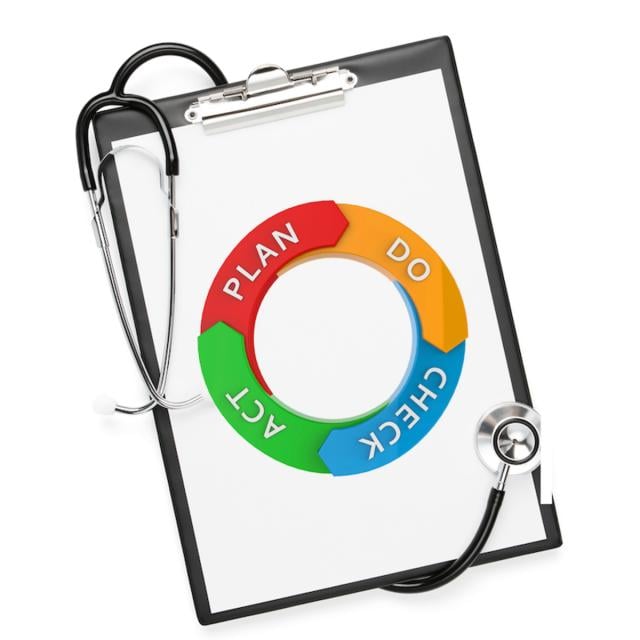
Ensuring patient safety and healthcare quality is critical and should be a key focus of everyone in healthcare practice. This course provides healthcare practitioners and others with an introduction to the knowledge and skills needed to lead patient safety and quality improvement initiatives at the micro and macro levels. Participants will explore the foundations of health care quality and the science underlying patient safety and quality improvement, design and select effective health care measures, analyze patient safety problems and processes using tools such as human factors analysis, apply systematic approaches including the Plan-Do-Study-Act (PDSA) model to address quality improvement challenges, and learn strategies to lead a culture of change

Aug 31st 2026
5-12 Weeks
Diagnosing Health Behaviors for Global Health Programs (Coursera) Coursera
Johns Hopkins University

Diagnosing Health Behaviors for Global Health Programs (Coursera)

Health behavior lies at the core of any successful public health intervention. While we will examine the behavior of individual in depth in this course, we also recognize by way of the Ecological Model that individual behavior is encouraged or constrained by the behavior of families, social groups, communities, organizations and policy makers. We recognize that behavior change is not a simplistic process but requires an understanding of dimensions like frequency, complexity and cultural congruity. Such behavioral analysis is strengthened through the use of a toolkit of theoretical models and practical frameworks.

Aug 31st 2026
4 Weeks
Health Concepts in Chinese Medicine (Coursera) Coursera
The Hong Kong University of Science and Technology - HKUST

Health Concepts in Chinese Medicine (Coursera)

Chinese Medicine and Modern Medicine are two distinct medical systems, yet they both aim at the prevention and treatment of human diseases. With this in mind, we should understand the practice of Chinese Medicine in the context of Modern Medicine. In this course, we explore the basic theories underlying the practice of Chinese Medicine, compare and contrast the use of Chinese Medicine and Modern Medicine in Preventive Health, and discuss how to restore a healthy condition and understand the pharmacological basis of different types of Chinese tonifying herbs.

Aug 31st 2026
5-12 Weeks