Neuropsychotherapy (OpenLearning)

Offered by OpenLearning,
Neuropsychotherapy (OpenLearning)

The World Federation for Mental Health prescribes: “Stimulate new areas of your brain and grow more connections among brain cells by intellectually challenging yourself. Solve a puzzle, learn a new musical instrument, read a challenging book, play a board or card game, attend a lecture or play, or write a short story”. This Neuropsychotherapy Course helps therapists and teachers adapt digital gamification and multimedia to provide such stimulation. It builds from basic audio-visual skills to comprehensive studio techniques, all within conventional budget limits.

“...Solve a puzzle, learn a new musical instrument, read a challenging book, play a board or card game, attend a lecture or play, or write a short story”. (World Federation for Mental Health) is very similar to the prescriptions of Positive Psychology "creative thinking and learning new stuff" (Seligman).
It would be very difficult to distinguish any of this from the "education and uplift" goals of the Chautauqua adult education movement that started the 20th Century.
So where do 21st Century digital arts such as this Course fit in to all this? Digital tools are meant to be just that - tools. They amplify, simplify and extend our capabilities.
Go to Class
MOOC List is learner-supported. When you buy through links on our site, we may earn an affiliate commission.

Related Courses

Advanced Neurobiology I (Coursera) Coursera
Peking University

Advanced Neurobiology I (Coursera)

Hello everyone! Welcome to advanced neurobiology! Neuroscience is a wonderful branch of science on how our brain perceives the external world, how our brain thinks, how our brain responds to the outside of the world, and how during disease or aging the neuronal connections deteriorate. We’re trying to understand the molecular, cellular nature and the circuitry arrangement of how nervous system works.

Sep 21st 2026
5-12 Weeks
Seeing: How the Brain Creates the Visual World (FutureLearn) FutureLearn
National Yang Ming Chiao Tung University (NYCU)

Seeing: How the Brain Creates the Visual World (FutureLearn)

Gain insights into how we perceive sensory system input when it reaches our brains, and the factors affecting that process. Explore how our visual system and human psychology influence our world view. Our visual system is complicated; using our eyes and brains to convert external information into internal feelings and enabling us to see and interpret the world. On this four-week course from the National Chiao Tung University (NCTU), you’ll explore how our eyes and brains constitute the visual world for us and discover that seeing is not always believing.

Self Paced
4 Weeks
Learning How to Learn: Powerful mental tools to help you master tough subjects (Coursera) Coursera
University of California, San Diego,McMaster University

Learning How to Learn: Powerful mental tools to help you master tough subjects (Coursera)

This course gives you easy access to the invaluable learning techniques used by experts in art, music, literature, math, science, sports, and many other disciplines. We’ll learn about the how the brain uses two very different learning modes and how it encapsulates (“chunks”) information. We’ll also cover illusions of learning, memory techniques, dealing with procrastination, and best practices shown by research to be most effective in helping you master tough subjects.

Sep 14th 2026
4 Weeks
Learning and memory in the brain: a guide for teachers (edX) EdX
University of Cambridge

Learning and memory in the brain: a guide for teachers (edX)

This course will help you discover how neuroscience and psychology can help your students learn more effectively. This course provides a guided tour through the brain, looking at the changes that occur on a cellular level when we learn new information or store a memory. Using research from neuroscience and psychology, we will look at the process of storing long-term memories, and how you can help your students do this effectively.

Self Paced
Self-Paced
Cellular Mechanisms of Brain Function (edX) EdX
École Polytechnique Fédérale de Lausanne,EPFLx

Cellular Mechanisms of Brain Function (edX)

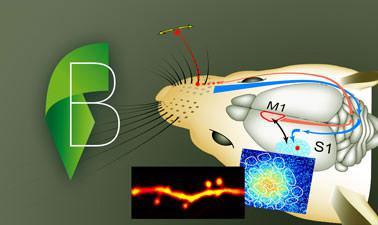
This course aims for a mechanistic description of mammalian brain function at the level of individual nerve cells and their synaptic interactions. Brain and behavior are inextricably linked in neuroscience. The function of the brain is to govern behavior, and the aim of this course is to causally link biophysical mechanisms with simple behaviors studied in mice.

Self Paced
Self-Paced
The Many Faces of Dementia (FutureLearn) FutureLearn
University College London

The Many Faces of Dementia (FutureLearn)

Gain a unique insight into dementia through the stories, symptoms and science behind four less common diagnoses. Explore key issues in dementia care and research, through four less common forms. Dementia is one of the foremost priorities in global health and is estimated to affect over 44 million people worldwide.

Self Paced
4 Weeks
The Neuromarketing Toolbox (Coursera) Coursera
Copenhagen Business School

The Neuromarketing Toolbox (Coursera)

Doing marketing research by asking people has been a common method and does still have advantages. On the other hand, if you want insights into the non-conscious interpretations of a consumer’s decision, then you need other research tools in your research toolbox. Neuromarketing makes use of such an extended toolbox, containing both technical equipment and ways of doing experimental research.

Sep 14th 2026
5-12 Weeks
Aprendendo a aprender: ferramentas mentais poderosas para ajudá-lo a dominar assuntos difíceis (em Português) [Learning How to Learn] (Coursera) Coursera
Deep Teaching Solutions

Aprendendo a aprender: ferramentas mentais poderosas para ajudá-lo a dominar assuntos difíceis (em Português) [Learning How to Learn] (Coursera)

Este curso dá-lhe acesso fácil a técnicas de aprendizagem de valor inestimável, usadas por especialistas em Arte, Música, Literatura, Matemática, Ciência, Esportes e muitas outras disciplinas. Vamos aprender sobre a forma como o cérebro usa dois modos de aprendizagem muito diferentes e como ele encapsula (em "pedaços") informações. Também vamos falar sobre ilusões de aprendizagem, técnicas de memória, lidar com a procrastinação, e as melhores práticas apresentadas pela investigação a ser mais eficaz em o ajudar a dominar assuntos difíceis.

Jul 6th 2026
4 Weeks
Medical Neuroscience (Coursera) Coursera
Duke University

Medical Neuroscience (Coursera)

Medical Neuroscience explores the functional organization and neurophysiology of the human central nervous system, while providing a neurobiological framework for understanding human behavior. In this course, you will discover the organization of the neural systems in the brain and spinal cord that mediate sensation, motivate bodily action, and integrate sensorimotor signals with memory, emotion and related faculties of cognition. The overall goal of this course is to provide the foundation for understanding the impairments of sensation, action and cognition that accompany injury, disease or dysfunction in the central nervous system. The course will build upon knowledge acquired through prior studies of cell and molecular biology, general physiology and human anatomy, as we focus primarily on the central nervous system.

Sep 14th 2026
13-24 Weeks
Principles of fMRI 2 (Coursera) Coursera
Johns Hopkins University,University of Colorado Boulder

Principles of fMRI 2 (Coursera)

Functional Magnetic Resonance Imaging (fMRI) is the most widely used technique for investigating the living, functioning human brain as people perform tasks and experience mental states. It is a convergence point for multidisciplinary work from many disciplines. Psychologists, statisticians, physicists, computer scientists, neuroscientists, medical researchers, behavioral scientists, engineers, public health researchers, biologists, and others are coming together to advance our understanding of the human mind and brain. This course covers the analysis of Functional Magnetic Resonance Imaging (fMRI) data.

Sep 21st 2026
4 Weeks
Decision-Making: Blending Art & Science (Coursera) Coursera
Dartmouth College

Decision-Making: Blending Art & Science (Coursera)

Why do smart people sometimes think they are right when they are very, very wrong? Our brains are designed to make quick decisions, and sometimes we miss out on what’s really going on. Knowing this, Professor Sydney Finkelstein walks you through the neuroscience behind decision-making, and teaches you to make conscious decisions that are right for you at work and in life. By teaching you to reflect and move forward even better than before, Professor Finkelstein will help you to be the best you possibly can at whatever you do.

Sep 21st 2026
4 Weeks