Seeing: How the Brain Creates the Visual World (FutureLearn)

Seeing: How the Brain Creates the Visual World (FutureLearn)

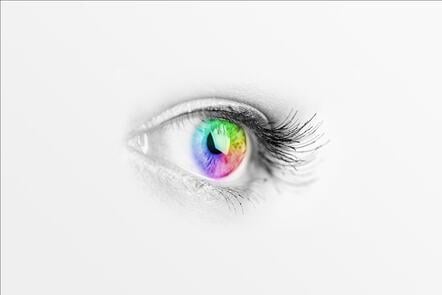
Gain insights into how we perceive sensory system input when it reaches our brains, and the factors affecting that process. Explore how our visual system and human psychology influence our world view. Our visual system is complicated; using our eyes and brains to convert external information into internal feelings and enabling us to see and interpret the world. On this four-week course from the National Chiao Tung University (NCTU), you’ll explore how our eyes and brains constitute the visual world for us and discover that seeing is not always believing.

Class Deals by MOOC List - Click here and see FutureLearn's Active Discounts, Deals, and Promo Codes.

Learn the basics of the human visual system
This course focuses on visual perception, and the first thing you’ll learn is how this sensory system works. You’ll look at how light rays are converted into neural signals, which are then sent to the brain.
You’ll also learn how depth, colour, and object perception occur once the visual system signals reach the brain, delving into the many factors (including age and gender) that influence what individuals ‘see’.

Investigate the relationship between sensory input and visual perception
Human psychology also has a huge impact on how sensory system signals are interpreted. You’ll get to unpack how what we feel, and the experiences we have had, influence what we perceive.
By looking at how psychologists interpret sensation and perception, you’ll see how interrelated they are and how they influence our attention and other mental processes.

Understand how your sensory perception impacts the way you experience the world
Finally, NCTU will guide you in applying the theory you’ve learnt to your own life. By the end of this course, you’ll have much greater insights into human psychology in general, and into your unique mind in particular.

Syllabus

Week 1: How lights are converted into neural signals
Week 2: Color perception
Week 3: Depth perception
Week 4: Object perception

What will you achieve?
By the end of the course, you‘ll be able to...
Explain how the retina and cortex work when receiving information from the world.
Explore how we receive color and how the light influence the perception.
Explain the depth and size differentiation in human visual system.
Classify the way we perceive objects and scenes.
Who is the course for?
This course is designed for anyone interested in human psychology, and understanding more about how the visual system works.
Go to Class
MOOC List is learner-supported. When you buy through links on our site, we may earn an affiliate commission.

Related Courses

Ageing and The Brain: The Impact of Neurodegenerative Diseases (FutureLearn) FutureLearn
Complutense University of Madrid

Ageing and The Brain: The Impact of Neurodegenerative Diseases (FutureLearn)

Learn what happens to the brain as neurodegenerative diseases progress and study the latest research on brain disorder prevention. Explore the challenges of treating and preventing neurodegenerative diseases. There is a distinct difference between normal brain ageing and a brain affected by a neurodegenerative disease. This course will show you how patients diagnosed with brain and neurological disorders are affected and consider the impact of neurodegenerative disorders on our society.

Available now
5-12 Weeks
America Through Foreign Eyes (Coursera) Coursera
Rice University

America Through Foreign Eyes (Coursera)

The United States has always been a source of fascination — both attraction and repulsion — for the people of France, Mexico, China, and African countries such as Nigeria, Ghana, and Sudan. "America Through Foreign Eyes" is a rich, interdisciplinary, international course that features Rice University faculty from a variety of disciplines and area studies. Focused on perceptions of America abroad, the course is a cross between World Cultures and American Studies. The course features five core modules, each covering the perceptions and interactions of particular regions with America, Americans and Americanization.

Jul 27th 2026
5-12 Weeks
Introduction to Psychology (Coursera) Coursera
Yale University

Introduction to Psychology (Coursera)

What are people most afraid of? What do our dreams mean? Are we natural-born racists? What makes us happy? What are the causes and cures of mental illness? This course tries to answer these questions and many others, providing a comprehensive overview of the scientific study of thought and behavior. It explores topics such as perception, communication, learning, memory, decision-making, persuasion, emotions, and social behavior. We will look at how these aspects of the mind develop in children, how they differ across people, how they are wired-up in the brain, and how they break down due to illness and injury.

Aug 3rd 2026
5-12 Weeks
What is a Mind? (FutureLearn) FutureLearn
University of Cape Town

What is a Mind? (FutureLearn)

Explore the most pertinent scientific and philosophical concepts for understanding our own minds with this free online course. This free online course will bring together learners and practitioners interested in how the mind works. It aims to build bridges between traditionally antagonistic approaches to understanding the mind.

Jul 25th 2022
5-12 Weeks
Philosophy and the Sciences: Introduction to the Philosophy of Physical Sciences (Coursera) Coursera
University of Edinburgh

Philosophy and the Sciences: Introduction to the Philosophy of Physical Sciences (Coursera)

What is the origin of our universe? What are dark matter and dark energy? This is the first part of the course 'Philosophy and the Sciences', dedicated to Philosophy of the Physical Sciences. Scientific research across the physical sciences has raised pressing questions for philosophers. The goal of this course is to introduce you to some of the main areas and topics at the key juncture between philosophy and the physical sciences.

Jul 27th 2026
4 Weeks
Good Brain, Bad Brain: Parkinson's Disease (FutureLearn) FutureLearn
University of Birmingham

Good Brain, Bad Brain: Parkinson's Disease (FutureLearn)

Learn the fundamentals of Parkinson's disease with this online course. What causes it and what we can do to treat it? This online course is aimed at anyone who wants to find out the fundamentals of Parkinson’s disease. We will look at how Parkinson’s disease affects people; what causes it; what we can do to try to ameliorate the symptoms of Parkinson’s; and what we don’t yet know about it.

No sessions available
3 Weeks
Introduction to Neurohacking In R (Coursera) Coursera
Johns Hopkins University

Introduction to Neurohacking In R (Coursera)

Neurohacking describes how to use the R programming language and its associated package to perform manipulation, processing, and analysis of neuroimaging data. We focus on publicly-available structural magnetic resonance imaging (MRI). We discuss concepts such as inhomogeneity correction, image registration, and image visualization.

Aug 10th 2026
4 Weeks
Visual Perception (Coursera) Coursera
Columbia University

Visual Perception (Coursera)

The ultimate goal of a computer vision system is to generate a detailed symbolic description of each image shown. This course focuses on the all-important problem of perception. We first describe the problem of tracking objects in complex scenes. We look at two key challenges in this context. The first is the separation of an image into object and background using a technique called change detection.

Jul 27th 2026
5-12 Weeks
Introduction to Philosophy (Coursera) Coursera
University of Edinburgh

Introduction to Philosophy (Coursera)

This course will introduce you to some of the main areas of research in contemporary philosophy. Each module a different philosopher will talk you through some of the most important questions and issues in their area of expertise. We’ll begin by trying to understand what philosophy is – what are its characteristic aims and methods, and how does it differ from other subjects? Then we’ll spend the rest of the course gaining an introductory overview of several different areas of philosophy.

Aug 10th 2026
5-12 Weeks
Visual Perception for Self-Driving Cars (Coursera) Coursera
University of Toronto

Visual Perception for Self-Driving Cars (Coursera)

Welcome to Visual Perception for Self-Driving Cars, the third course in University of Toronto’s Self-Driving Cars Specialization. This course will introduce you to the main perception tasks in autonomous driving, static and dynamic object detection, and will survey common computer vision methods for robotic perception. By the end of this course, you will be able to work with the pinhole camera model, perform intrinsic and extrinsic camera calibration, detect, describe and match image features and design your own convolutional neural networks.

Jul 27th 2026
5-12 Weeks
The Bilingual Brain (Coursera) Coursera
University of Houston System

The Bilingual Brain (Coursera)

This course explores the brain bases of bilingualism by discussing literature relevant to differences in age of initial learning, proficiency, and control in the nonverbal, single language and dual-language literature. Participants will learn about the latest research related to how humans learn one or two languages and other cognitive skills.

Aug 10th 2026
5-12 Weeks
Principles of fMRI 2 (Coursera) Coursera
Johns Hopkins University,University of Colorado Boulder

Principles of fMRI 2 (Coursera)

Functional Magnetic Resonance Imaging (fMRI) is the most widely used technique for investigating the living, functioning human brain as people perform tasks and experience mental states. It is a convergence point for multidisciplinary work from many disciplines. Psychologists, statisticians, physicists, computer scientists, neuroscientists, medical researchers, behavioral scientists, engineers, public health researchers, biologists, and others are coming together to advance our understanding of the human mind and brain. This course covers the analysis of Functional Magnetic Resonance Imaging (fMRI) data.

Jul 27th 2026
4 Weeks