The Meat We Eat (Coursera)

Offered by University of Florida,
The Meat We Eat (Coursera)

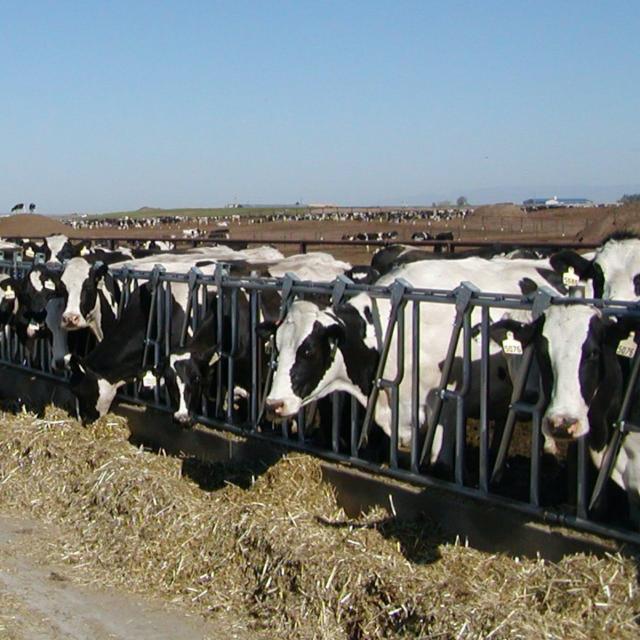
The Meat We Eat is a course designed to create a more informed consumer about the quality, safety, healthfulness and sustainability of muscle foods and address current issues in animal agriculture in developed and developing countries.

Class Deals by MOOC List - Click here and see Coursera's Active Discounts, Deals, and Promo Codes.

Syllabus

WEEK 1: This week we'll get a basic overview of the US meat industry, and see how it compares to the European system.
WEEK 2: This week, we'll learn about humane animal slaughter, and about converting muscle to meat.
WEEK 3: This week we'll learn about meat inspection, slaughter inspection, and food safety.
WEEK 4: This week we'll learn about meat quality, fabrication, and packaging.
WEEK 5: This week we'll learn about cooking meat!
WEEK 6: This week we'll learn about the dietary benefits of meat, the sustainability of the meat industry, and meat byproducts.
WEEK 7: This week you'll complete your final project.

Go to Class
MOOC List is learner-supported. When you buy through links on our site, we may earn an affiliate commission.

Related Courses

Understanding Obesity (Coursera) Coursera
University of Edinburgh

Understanding Obesity (Coursera)

In this course, we’ll look at the facts and misconceptions around obesity and discuss key physiological and psychological concepts around the brain’s control of appetite and body weight. We’ll consider the biological and environmental pressures that make it easy to gain weight (and hard to lose it!). Most importantly, we'll give you the opportunity to reflect on your own knowledge and assumptions around the subject.

Jun 1st 2026
4 Weeks
Global Warming I: The Science and Modeling of Climate Change (Coursera) Coursera
University of Chicago

Global Warming I: The Science and Modeling of Climate Change (Coursera)

This class describes the science of global warming and the forecast for humans’ impact on Earth’s climate. Intended for an audience without much scientific background but a healthy sense of curiosity, the class brings together insights and perspectives from physics, chemistry, biology, earth and atmospheric sciences, and even some economics—all based on a foundation of simple mathematics (algebra).

Jun 1st 2026
5-12 Weeks
Herbal Medicine (Coursera) Coursera
University of Minnesota

Herbal Medicine (Coursera)

There is strong demand for alternatives to pharmaceuticals for a variety of common illnesses due to concerns of safety, efficacy, and a desire for more “natural” products. Despite this growing interest, “conventional” healthcare providers may have little to no knowledge about herbal medicines, which is further compounded by the sometimes misleading information in the media and on the internet. This course provides the necessary background for providers to begin to incorporate herbal medicines into their practice, particularly in regards to their therapeutic properties, efficacy (or lack thereof), and safety concerns, including quality control and potential adverse effects.

Jun 3rd 2026
5-12 Weeks
Global Postharvest Loss Prevention: Fundamentals, Technologies, and Actors (Coursera) Coursera
University of Illinois at Urbana-Champaign

Global Postharvest Loss Prevention: Fundamentals, Technologies, and Actors (Coursera)

This course provides an overview of the issue of postharvest loss of grains by exploring essential physical, technical, and social dimensions of postharvest supply chains and loss prevention methods globally. Each year, estimates suggest that 1/3 of all food produced is lost or wasted, making postharvest loss a critical global food security and sustainability issue of today. Key knowledge areas are presented including: an overview of postharvest loss; supply chain activities such as harvesting, drying, and storage; economics and markets; an introduction to the network of actors working in this field.

Jun 1st 2026
4 Weeks
Systems Science and Obesity (Coursera) Coursera
Johns Hopkins University

Systems Science and Obesity (Coursera)

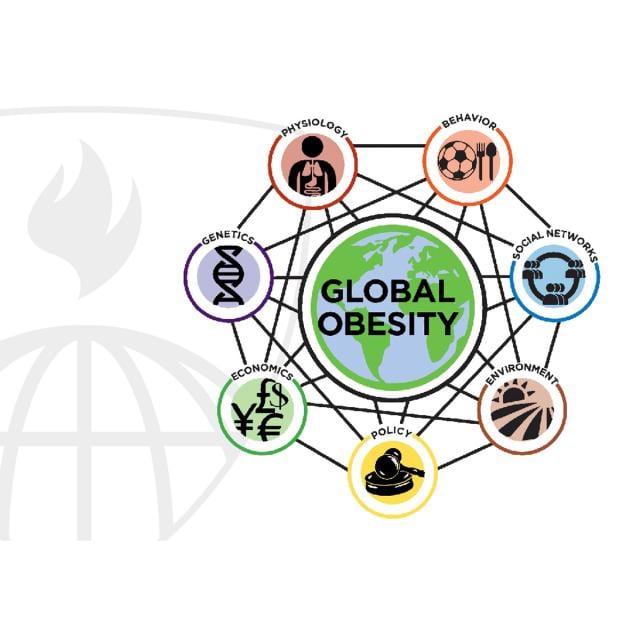
Systems science has been instrumental in breaking new scientific ground in diverse fields such as meteorology, engineering and decision analysis. However, it is just beginning to impact public health. This seminar is designed to introduce students to basic tools of theory building and data analysis in systems science and to apply those tools to better understand the obesity epidemic in human populations.

Jun 1st 2026
4 Weeks
Ebola: Essential knowledge for health professionals (Coursera) Coursera
University of Amsterdam,Universiteit Utrecht

Ebola: Essential knowledge for health professionals (Coursera)

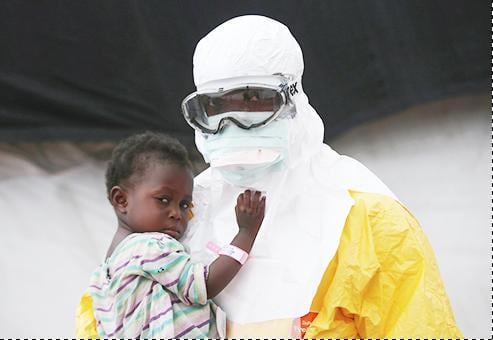
March 2014 marked the starting point of the largest outbreak of Ebola virus disease in history. Although the disease seems to be on a decrease, we are not there yet and new outbreaks will surely emerge. New efforts to combat the outbreak are necessary. This is why we developed this online course about Ebola, targeted at health professionals across the world. In this course you will cover the fundamental knowledge any health professional should have with expected or confirmed cases or a general interest in the Ebola disease.

Jun 1st 2026
5-12 Weeks
Guided Imagery (Coursera) Coursera
University of Minnesota

Guided Imagery (Coursera)

In this course, you will learn how you can use imagery and imagery interventions to help with symptom management and healing, as well as to enhance overall health and wellbeing. You will experience a variety of imagery interventions and evaluate how they might be helpful in providing relief or enhancing quality of life.

Jun 3rd 2026
5-12 Weeks