EdX

Light, Spike, and Sight: The Neuroscience of Vision (edX)

Offered by MIT,
Light, Spike, and Sight: The Neuroscience of Vision (edX)

A journey through the eye, retina and brain, revealing how light translates into nerve signals that encode the visual world.

Class Deals by MOOC List - Click here and see EdX's Active Discounts, Deals, and Promo Codes.

Vision may feel effortless: you open your eyes, and the world appears. But the process of focusing light into image on the back of the eye and translating it into meaningful nerve signals is incredibly complex. The retina and visual cortex are packed with intricate processing circuitry, and have been a mystery to neuroscientists for centuries. Now, answers are beginning to emerge.
Today, the visual system is often called the model system for neuroscience: its findings are relevant to all other areas and to investigating the deeper mysteries of the brain’s microstructure and function. In this course, we take you from the physics of focusing light onto the retina, to the processing of colors, form, and motion, and finally to the interpretation of visual information in the cortex. We distill the mysteries of the visual system by posing questions and investigating them in a series of thematic, animated videos. This month-long journey through the eye, retina and brain will (quite literally) change how you see the world.

Go to Class
MOOC List is learner-supported. When you buy through links on our site, we may earn an affiliate commission.

Related Courses

Cellular Mechanisms of Brain Function (edX) EdX
École Polytechnique Fédérale de Lausanne,EPFLx

Cellular Mechanisms of Brain Function (edX)

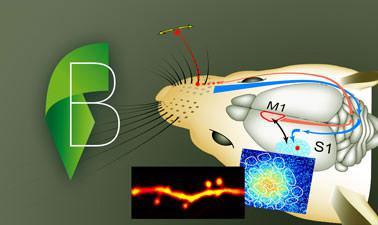
This course aims for a mechanistic description of mammalian brain function at the level of individual nerve cells and their synaptic interactions. Brain and behavior are inextricably linked in neuroscience. The function of the brain is to govern behavior, and the aim of this course is to causally link biophysical mechanisms with simple behaviors studied in mice.

Self Paced
Self-Paced
AP® Psychology - Course 3: How the Mind Works (edX) EdX
The University of British Columbia,UBCx

AP® Psychology - Course 3: How the Mind Works (edX)

Learn about the neuroscience and psychology of the mind including memory, thinking, reasoning, and language. In this psychology course, you will learn about the mind and the psychology of learning, including coverage of classical conditioning, operant conditioning, and social learning. We will look at the psychology and neuroscience of cognition — including memory, thinking and reasoning. The course will conclude with the coverage of language.

Self Paced
Self-Paced
Fundamental Neuroscience for Neuroimaging (Coursera) Coursera
Johns Hopkins University

Fundamental Neuroscience for Neuroimaging (Coursera)

Neuroimaging methods are used with increasing frequency in clinical practice and basic research. Designed for students and professionals, this course will introduce the basic principles of neuroimaging methods as applied to human subjects research and introduce the neuroscience concepts and terminology necessary for a basic understanding of neuroimaging applications.

Oct 5th 2026
4 Weeks
Computational Neuroscience (Coursera) Coursera
University of Washington

Computational Neuroscience (Coursera)

This course provides an introduction to basic computational methods for understanding what nervous systems do and for determining how they function. We will explore the computational principles governing various aspects of vision, sensory-motor control, learning, and memory. Specific topics that will be covered include representation of information by spiking neurons, processing of information in neural networks, and algorithms for adaptation and learning.

Oct 12th 2026
5-12 Weeks
Artificial Intelligence (AI) (edX) EdX
Columbia University,ColumbiaX

Artificial Intelligence (AI) (edX)

Learn the fundamentals of Artificial Intelligence (AI), and apply them. Design intelligent agents to solve real-world problems including, search, games, machine learning, logic, and constraint satisfaction problems. What do self-driving cars, face recognition, web search, industrial robots, missile guidance, and tumor detection have in common? They are all complex real world problems being solved with applications of intelligence (AI).

This course is archived
5-12 Weeks
Fundamentals of Neuroscience, Part 3: The Brain (edX) EdX
HarvardX,Harvard University

Fundamentals of Neuroscience, Part 3: The Brain (edX)

Discover what makes your brain tick in this third part of a four-part introductory series in Neuroscience. The human brain is a fantastically complex system, capable of transforming a torrent of incoming information into thought and action. In this course, we will look at how the various subsystems of the brain work together to enable us to survive and thrive in a changing world.

Self Paced
Self-Paced
The Productization of a Vision: Linking Operations to Strategy (edX) EdX
University of Maryland, College Park,University System of Maryland - USM,USMx,UMD

The Productization of a Vision: Linking Operations to Strategy (edX)

Having a clear long-term vision is crucial for any organization to guide decision-making, but translating that vision into business goals, metrics, and product roadmaps requires a well-thought-out strategy that balances and aligns four key pillars: performance measurement and goal setting, team structures and empowerment, rewards and incentives, and corporate culture. This course will take Chief Product Officers and their direct reports into how they can close the gap between long term vision and big ideas and unleashing product design that delights customers and stakeholders.

Self Paced
Self-Paced
Philosophy, Science and Religion: Science and Philosophy (Coursera) Coursera
University of Edinburgh

Philosophy, Science and Religion: Science and Philosophy (Coursera)

Philosophy, Science and Religion mark three of the most fundamental modes of thinking about the world and our place in it. Are these modes incompatible? Put another way: is the intellectually responsible thing to do to ‘pick sides’ and identify with one of these approaches at the exclusion of others? Or, are they complementary or mutually supportive? As is typical of questions of such magnitude, the devil is in the details. For example, it is important to work out what is really distinctive about each of these ways of inquiring about the world. In order to gain some clarity here, we’ll be investigating what some of the current leading thinkers in philosophy, science and religion are actually doing.

Oct 5th 2026
5-12 Weeks