Information Gathering and Vetting (Coursera)

Information Gathering and Vetting (Coursera)

Information is key to every decision and every strategic move you make. But ensuring you have the right information takes work. Don’t look in every direction for an answer, and don’t force the solution you’re looking for. Instead, you can use a hypothesis and test it with data until the data fits the situation you’re looking at.

Class Deals by MOOC List - Click here and see Coursera's Active Discounts, Deals, and Promo Codes.

With the expertise of Dr. Timiebi Aganaba from the ASU School for the Future of Innovation in Society, the Information Gathering and Vetting course will put the tools, knowledge and strategies for high-quality research directly into your hands. You’ll learn the fundamentals and get acquainted with your research toolkit. Then, you’ll directly apply them in hands-on scenarios.
Data collection is not about using every source you come across. It’s about finding relevant information after testing multiple points of view — in other words, vetting your information. You will need to test data against your assumptions and dig for the insights you can share — skills that anyone can learn and apply anywhere. Jump-start your research journey today!
Course 2 of 4 in the Strategic Thinking for Everyone Specialization.

Syllabus

WEEK 1: Welcome to Information Gathering and Vetting!
WEEK 2: Collecting data with a hypothesis
WEEK 3: Getting the most of data you collect
WEEK 4: Sharing new insights from data
WEEK 5: Course Conclusion
Go to Class
MOOC List is learner-supported. When you buy through links on our site, we may earn an affiliate commission.

Related Courses

The Analyze Phase for the 6 σ Black Belt (Coursera) Coursera
University System of Georgia

The Analyze Phase for the 6 σ Black Belt (Coursera)

This course is designed for professionals interested in learning the principles of Lean Sigma, the DMAIC process and DFSS. This course is number 5 of 8 in this specialization dealing with topics in the Analyze Phase of Six Sigma. Professionals with some completed coursework in statistics and a desire to drive continuous improvement within their organizations would find this course and the others in this specialization appealing. Method of assessment consists of several formative and summative quizzes and a multi-part peer reviewed project completion regiment.

Sep 21st 2026
5-12 Weeks
Data Collection: Online, Telephone and Face-to-face (Coursera) Coursera
University of Michigan

Data Collection: Online, Telephone and Face-to-face (Coursera)

This course presents research conducted to increase our understanding of how data collection decisions affect survey errors. This is not a “how–to-do-it” course on data collection, but instead reviews the literature on survey design decisions and data quality in order to sensitize learners to how alternative survey designs might impact the data obtained from those surveys.

Sep 21st 2026
4 Weeks
Six Sigma Advanced Define and Measure Phases (Coursera) Coursera
University System of Georgia

Six Sigma Advanced Define and Measure Phases (Coursera)

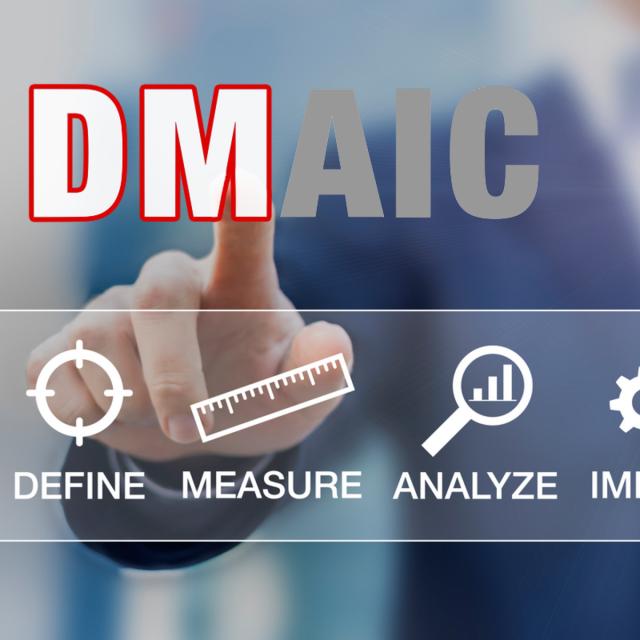
This course is for you if you are looking to dive deeper into Six Sigma or strengthen and expand your knowledge of the basic components of green belt level of Six Sigma and Lean. Six Sigma skills are widely sought by employers both nationally and internationally. These skills have been proven to help improve business processes and performance. This course will take you deeper into the principles and tools associated with the "Design" and "Measure" phases of the DMAIC structure of Six Sigma.

Sep 14th 2026
5-12 Weeks
Muestreo de personas, redes y registros (Coursera) Coursera
University of Michigan

Muestreo de personas, redes y registros (Coursera)

Para hacer una buena recopilación de datos se necesitan buenas muestras. Pero las muestras pueden elegirse de muchas maneras. Pueden ser selecciones fortuitas o convenientes de personas, registros, redes u otras unidades, pero uno se cuestiona la calidad de tales muestras, especialmente cómo se relacionan estos métodos de selección con el hecho de sacar buenas conclusiones sobre una población tras la recopilación y el análisis de los datos. Las muestras pueden seleccionarse con más cuidado según el criterio del investigador, pero entonces uno se pregunta si ese criterio puede estar sesgado por factores personales.

Sep 14th 2026
5-12 Weeks
Infonomics I: Business Information Economics and Data Monetization (Coursera) Coursera
University of Illinois at Urbana-Champaign

Infonomics I: Business Information Economics and Data Monetization (Coursera)

Thriving in the Information Age compels organizations to deploy information as an actual business asset, not as an IT asset or merely as a business byproduct. This demands creativity in conceiving and implementing new ways to generate economic benefits from the wide array of information assets available to an organization. Unfortunately, information too frequently is underappreciated and therefore underutilized.

Sep 14th 2026
4 Weeks
Algorithms, Data Collection, and Starting to Code (Coursera) Coursera
University of Colorado System

Algorithms, Data Collection, and Starting to Code (Coursera)

This course starts you on your journey learning about computational thinking and beginning C programming. If you’d like to explore how we can interact with the world in a rigorous, computational way, and would also like to start learning to program, this is the course for you!

Sep 21st 2026
4 Weeks
Gender Foundations in Health Data: A Data for Health Course (Coursera) Coursera
Johns Hopkins University

Gender Foundations in Health Data: A Data for Health Course (Coursera)

Welcome to Gender Foundations in Health Data: A Data for Health course. This course was developed from an online seminar series of the same name, that was hosted by Johns Hopkins University Bloomberg School of Health in 2021-22. The course instructors are Drs. Michelle Kaufman and Tahilin Sanchez Karver. This course will raise learners' awareness of the necessity of utilizing a gender lens in global public health data, policy, and practice, feature how-tos and key examples of integration of gender in data collection, analysis, and use from Data for Health partners.

Sep 28th 2026
1 Week
Introduction to the Threat Intelligence Lifecycle (Coursera) Coursera
IBM

Introduction to the Threat Intelligence Lifecycle (Coursera)

Today, we are faced with the increasing challenges of dealing with more aggressive and persistent threat actors, while being inundated with information, which is full of misinformation and false flags across multiple, unconnected systems. With information coming from such a wide variety of sources, how do you tell what is reliable and actionable, and what isn't?

Sep 28th 2026
4 Weeks
Data Collection and Root Cause Analysis (Coursera) Coursera
SkillUp EdTech

Data Collection and Root Cause Analysis (Coursera)

The course will equip you with the competencies and essential skills required to excel in the American Society for Quality (ASQ) Certified Six Sigma Yellow Belt (CSSYB) exam and contribute to process improvement programs. This course focuses on various data collection tools and techniques to analyze data, identify the root causes of a problem, and explore the concepts of measurement system analysis (MSA), and hypothesis testing.

Sep 21st 2026
4 Weeks
Data Use for Disease Control & Global Health Decision-Making (Coursera) Coursera
Johns Hopkins University

Data Use for Disease Control & Global Health Decision-Making (Coursera)

This informative three-week course will prepare you to meet the challenges of conducting epidemiologic surveillance to gather data to inform decision-making and planning. Using the polio eradication effort as a case study, you’ll address the application of surveillance systems in a wide variety of settings.

Sep 28th 2026
3 Weeks