Six Sigma Advanced Define and Measure Phases (Coursera)

Six Sigma Advanced Define and Measure Phases (Coursera)

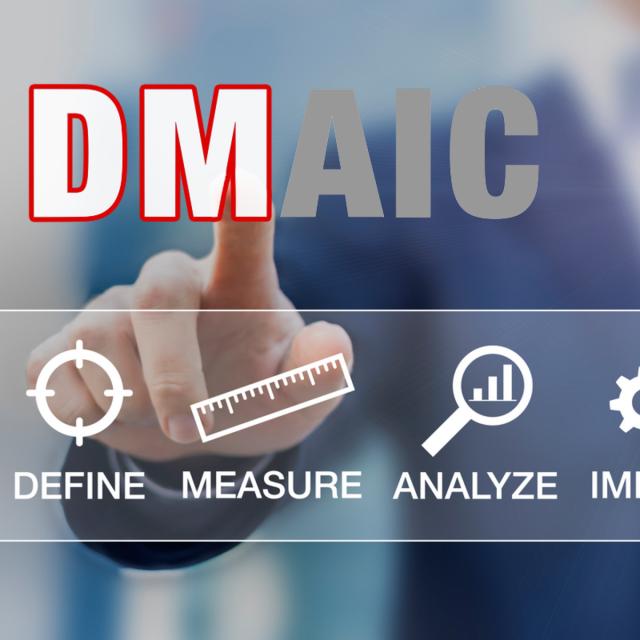
This course is for you if you are looking to dive deeper into Six Sigma or strengthen and expand your knowledge of the basic components of green belt level of Six Sigma and Lean. Six Sigma skills are widely sought by employers both nationally and internationally. These skills have been proven to help improve business processes and performance. This course will take you deeper into the principles and tools associated with the "Design" and "Measure" phases of the DMAIC structure of Six Sigma.

Class Deals by MOOC List - Click here and see Coursera's Active Discounts, Deals, and Promo Codes.

It is highly recommended that you complete the "Yellow Belt Specialization" and the course "Six Sigma and the Organization (Advanced)" before beginning this course.
In this course, your instructors will introduce you to, and have you apply, some of the tools and metrics that are critical components of Six Sigma. This course will provide you with the advanced knowledge of team dynamics and performance, process analysis, probability, statistics, statistical distributions, collecting and summarizing data, measurement systems analysis, process and performance capability, and exploratory data analysis associated with Six Sigma and Lean.
Every module will include readings, videos, and quizzes to help make sure you understand the material and concepts that are studied.
Course 2 of 4 in the Six Sigma Green Belt Specialization

Syllabus

WEEK 1
Yellow Belt Refresher - Team Basics
This module is a Yellow Belt Refresher Area, since some learners may have entered this course without having taken the previous yellow belt material. This refresher area does not serve as a "replacement" for taking the yellow belt specialization. It is only a "patch" for those who already have some knowledge of six sigma, but find the yellow belt specialization to be too introductory for their current situation. If you find yourself struggling with the green belt material in this course, it is highly recommended that you travel through the yellow belt specialization before attempting the green belt content. In this module you will learn about team development, different types of teams, tools for decision making, and tools for communication.

WEEK 2
Process Analysis and Documentation
In this module you will learn the application of process maps and flow charts swim lane. You will also about the application of: written procedures and works instructions, CEDAC, the Pareto diagram, and the relationship matrix.

WEEK 3
Probability and Statistics - pt1
In this module, you will learn how mutually-exclusive events and independent events relate to probability. You will also learn how to solve basic probability problems, including those that require the addition, multiplicative, and conditional rules of probability.

WEEK 4
Probability and Statistics - pt2
In this module, you will learn how to solve probability problems related to combinations and permutations. You will also learn about central limit theorem and how to apply it to the concept of confidence intervals. This module also touches on descriptive and inferential statistics.

WEEK 5
Statistical Distribution
In this module, you will learn about the basic characteristics of probability distributions. You will also learn about binomial, normal, Poisson, t-, chi-square, and F-distributions.

WEEK 6
Collecting and summarising data & measuring system analysis
In this module, you will learn the different types and sources of data. You will also learn: how to classify groups of data for descriptive statistics analysis, different ways to graphically display data, how to express the importance of measurement systems analysis, and the difference between precision and accuracy. This module also begins with a Yellow Belt Refresher Area, since some learners may have entered this course without having taken the previous yellow belt material. This refresher area does not serve as a "replacement" for taking the yellow belt material. It is only a "patch" for those who already have some knowledge of six sigma, but find the yellow belt specialization to be too introductory for their current situation. If you find yourself struggling with the green belt material in this course, it is highly recommended that you travel through the yellow belt specialization before attempting the green belt content.

WEEK 7
Process and performance capability & exploratory data analysis
In this module, you will learn how to use statistical tools and analyze data, including skills like: how to distinguish between natural process limits and specification limits, how to calculate the value of Cp and Ck, how to deal with process capability studies. This module also addresses multi-vari studies, the the correlation coefficient, and linear regression.

Go to Class
MOOC List is learner-supported. When you buy through links on our site, we may earn an affiliate commission.

Related Courses

Business Intelligence Concepts, Tools, and Applications (Coursera) Coursera
University of Colorado System

Business Intelligence Concepts, Tools, and Applications (Coursera)

This is the fourth course in the Data Warehouse for Business Intelligence specialization. Ideally, the courses should be taken in sequence. In this course, you will gain the knowledge and skills for using data warehouses for business intelligence purposes and for working as a business intelligence developer. You’ll have the opportunity to work with large data sets in a data warehouse environment and will learn the use of MicroStrategy's Online Analytical Processing (OLAP) and Visualization capabilities to create visualizations and dashboards.

Jun 8th 2026
5-12 Weeks
Regression Models (Coursera) Coursera
Johns Hopkins University

Regression Models (Coursera)

Linear models, as their name implies, relates an outcome to a set of predictors of interest using linear assumptions. Regression models, a subset of linear models, are the most important statistical analysis tool in a data scientist’s toolkit. This course covers regression analysis, least squares and inference using regression models.

Jun 8th 2026
4 Weeks
Text Retrieval and Search Engines (Coursera) Coursera
University of Illinois at Urbana-Champaign

Text Retrieval and Search Engines (Coursera)

Recent years have seen a dramatic growth of natural language text data, including web pages, news articles, scientific literature, emails, enterprise documents, and social media such as blog articles, forum posts, product reviews, and tweets. Text data are unique in that they are usually generated directly by humans rather than a computer system or sensors, and are thus especially valuable for discovering knowledge about people’s opinions and preferences, in addition to many other kinds of knowledge that we encode in text.

Jun 8th 2026
5-12 Weeks
Reproducible Research (Coursera) Coursera
Johns Hopkins University

Reproducible Research (Coursera)

This course focuses on the concepts and tools behind reporting modern data analyses in a reproducible manner. Reproducible research is the idea that data analyses, and more generally, scientific claims, are published with their data and software code so that others may verify the findings and build upon them. The need for reproducibility is increasing dramatically as data analyses become more complex, involving larger datasets and more sophisticated computations.

Jun 8th 2026
4 Weeks
Introduction to Data Analysis Using Excel (Coursera) Coursera
Rice University

Introduction to Data Analysis Using Excel (Coursera)

The use of Excel is widespread in the industry. It is a very powerful data analysis tool and almost all big and small businesses use Excel in their day to day functioning. This course is designed to give you a working knowledge of Excel with the aim of getting to use it for more advance topics in Business Statistics. The course is designed keeping in mind two kinds of learners - those who have very little functional knowledge of Excel and those who use Excel regularly but at a peripheral level and wish to enhance their skills.

Jun 8th 2026
4 Weeks
Operations Management: Strategy and Quality Management for the Digital Age (Coursera) Coursera
University of Illinois at Urbana-Champaign

Operations Management: Strategy and Quality Management for the Digital Age (Coursera)

In this course you will focus on process improvement. You will learn how to set organizational priorities for continuous process improvement, how to execute process improvement projects, and how to sustain the initiative for continuous improvements. Upon successful completion of this course, you will be able to: understand the roles of process improvement; relate underlying principles to frameworks and techniques used for process improvement; synthesize information to make decisions for organizational initiatives and process improvement; apply analytical techniques for tactical decisions in a process improvement project

Jun 8th 2026
4 Weeks
Infonomics II: Business Information Management and Measurement (Coursera) Coursera
University of Illinois at Urbana-Champaign

Infonomics II: Business Information Management and Measurement (Coursera)

Even decades into the Information Age, accounting practices yet fail to recognize the financial value of information. Moreover, traditional asset management practices fail to recognize information as an asset to be managed with earnest discipline. This has led to a business culture of complacence, and the inability for most organizations to fully leverage available information assets. This second course in the two-part Infonomics series explores how and why to adapt well-honed asset management principles and practices to information, and how to apply accepted and new valuation models to gauge information’s potential and realized economic benefits.

Jun 10th 2026
4 Weeks
Graph Analytics for Big Data (Coursera) Coursera
University of California, San Diego

Graph Analytics for Big Data (Coursera)

Want to understand your data network structure and how it changes under different conditions? Curious to know how to identify closely interacting clusters within a graph? Have you heard of the fast-growing area of graph analytics and want to learn more? This course gives you a broad overview of the field of graph analytics so you can learn new ways to model, store, retrieve and analyze graph-structured data.

Jun 8th 2026
5-12 Weeks
Marketing Analytics (Coursera) Coursera
University of Virginia

Marketing Analytics (Coursera)

Organizations large and small are inundated with data about consumer choices. But that wealth of information does not always translate into better decisions. Knowing how to interpret data is the challenge -- and marketers in particular are increasingly expected to use analytics to inform and justify their decisions. Marketing analytics enables marketers to measure, manage and analyze marketing performance to maximize its effectiveness and optimize return on investment (ROI). Beyond the obvious sales and lead generation applications, marketing analytics can offer profound insights into customer preferences and trends, which can be further utilized for future marketing and business decisions.

Jun 8th 2026
5-12 Weeks
Basic Statistics (Coursera) Coursera
University of Amsterdam

Basic Statistics (Coursera)

Understanding statistics is essential to understand research in the social and behavioral sciences. In this course you will learn the basics of statistics; not just how to calculate them, but also how to evaluate them. This course will also prepare you for the next course in the specialization - the course Inferential Statistics. In the first part of the course we will discuss methods of descriptive statistics. You will learn what cases and variables are and how you can compute measures of central tendency (mean, median and mode) and dispersion (standard deviation and variance). Next, we discuss how to assess relationships between variables, and we introduce the concepts correlation and regression.

Jun 8th 2026
5-12 Weeks