FUN

Histoire des représentations et du traitement de la folie (FUN)

Histoire des représentations et du traitement de la folie (FUN)

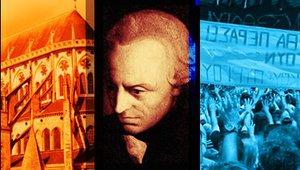
Vous vous demandez ce qu’est la folie? Une maladie que l’on peut diagnostiquer et soigner? Le résultat d’une possession maléfique? Le produit d’un contexte social et politique? Le “fou” est-il responsable de ses actes? La folie révèle-t-elle une vérité présente dans la société et en chacun de nous? A travers l’histoire, les grands penseurs, qu’ils soient philosophes, théologiens, médecins, psychologues, anthropologues, sociologues, historiens ou artistes se sont posé ces mêmes questions et ont développé des théories et des outils pour leur apporter des réponses. Avec le Mooc “Histoire des représentations et du traitement de la folie”, nous vous invitons à les découvrir.

En 6 séances documentaires, des spécialistes du monde universitaire, médical, et de la culture vous présenteront 6 thématiques essentielles pour répondre à vos interrogations sur les représentations et le traitement de la folie.
Si vous souhaitez acquérir et valider des connaissances sur les différentes approches de la folie à travers l’histoire et comprendre les grands débats contemporains autour de la santé mentale, ce MOOC pourrait bien être pour vous !

Plan du cours

Séance 1 : Folie et possession
Séance 2 : Les lieux de la folie
Séance 3 : Classifications
Séance 4 : La responsabilité en question
Séance 5 : Soins
Séance 6 : Folie et effets de vérité
Go to Class
MOOC List is learner-supported. When you buy through links on our site, we may earn an affiliate commission.

Related Courses

Søren Kierkegaard - Subjectivity, Irony and the Crisis of Modernity (Coursera) Coursera
University of Copenhagen

Søren Kierkegaard - Subjectivity, Irony and the Crisis of Modernity (Coursera)

In this course created by former associate professor at the Søren Kierkegaard Research Centre, Jon Stewart, we will explore how Kierkegaard deals with the problems associated with relativism, the lack of meaning and the undermining of religious faith that are typical of modern life. His penetrating analyses are still highly relevant today and have been seen as insightful for the leading figures of Existentialism, Post-Structuralism and Post-Modernism.

Aug 17th 2026
5-12 Weeks
The Modern and the Postmodern (Part 2) (Coursera) Coursera
Wesleyan University

The Modern and the Postmodern (Part 2) (Coursera)

This course examines how the idea of "the modern" develops at the end of the 18th century in European philosophy and literature, and how being modern (or progressive, or hip) became one of the crucial criteria for understanding and evaluating cultural change. Are we still in modernity, or have we moved beyond the modern to the postmodern?

Aug 10th 2026
5-12 Weeks
Découper le temps : les périodes de l'histoire (FUN) FUN
Université Paris 1 Panthéon-Sorbonne

Découper le temps : les périodes de l'histoire (FUN)

L’objet du cours est de comprendre les raisons qui poussent l’historien à découper le temps. L’enseignement de l’histoire en France est traditionnellement découpé en quatre périodes canoniques : histoire ancienne, médiévale, moderne et contemporaine. Que signifient ces époques qui sont le produit d’une histoire avant tout européenne et méditerranéenne ? Ce qui pose la question de la pertinence de cette périodisation pour d’autres aires géographiques.

No sessions available
5-12 Weeks
Magic in the Middle Ages (Coursera) Coursera
University of Barcelona

Magic in the Middle Ages (Coursera)

Magical thought has always attracted human imagination. In this course we will introduce you to the Middle Ages through a wide conception of magic. Students will have an approach to medieval culture, beliefs and practices from the perspective of History and History of Science. Popular magic, as well as learned magic (alchemy, geomancy and necromancy) will be addressed. Moreover, we will also deal with how eastern practices and texts influenced western culture. In July 2016, the course will contain a brand-new module devoted to astrology. Magic in the Middle Ages offers a captivating overview of medieval society and promotes reflection about certain stereotypes associated with this period.

Aug 17th 2026
5-12 Weeks
Structuring Values in Modern China (Coursera) Coursera
The Chinese University of Hong Kong

Structuring Values in Modern China (Coursera)

This sequence of four courses will propose a multi-disciplinary approach to the study of Chinese cultural history conceived of as a succession of modes of rationality (philosophical, bureaucratic, and economic). The focus will be on the moments of paradigm shift from one mode of rationality to another. For each of these moments, cultural facts and artifacts—thought, literature, ritual—will be examined in relationship to changing social, political, and economic systems.

Aug 17th 2026
5-12 Weeks
Global Diplomacy – Diplomacy in the Modern World (Coursera) Coursera
University of London,SOAS University of London

Global Diplomacy – Diplomacy in the Modern World (Coursera)

The Global Diplomacy course is a unique offering to the MOOC environment. Bringing together cutting edge research in the broad fields of Diplomatic and International Studies, award winning distance learning delivery and the instructors previous experience of delivering a successful MOOC. Please see the volume Global Diplomacy: Theories, Types and Models authored with Dr Alison Holmes, (Westview, 2016), and the Understanding Research Methods MOOC from Coursera.

Aug 10th 2026
5-12 Weeks
Applied Public History: Places, People, Stories (Coursera) Coursera
University of London

Applied Public History: Places, People, Stories (Coursera)

This course introduces learners to applied public history: understanding and interpreting the past today, and engaging diverse communities in the practice of making and sharing histories. The course draws on project case studies, expert insights and diverse perspectives to model exciting approaches to researching and sharing the history of places and people. Learners will develop a toolkit to apply in their own practice, by participating in discussion, quizzes, creative activities and mini masterclasses. What kinds of stories can we discover through research into the history of places and people?

Aug 10th 2026
5-12 Weeks
Egiptología (Egyptology) (Coursera) Coursera
Universitat Autònoma de Barcelona

Egiptología (Egyptology) (Coursera)

¿Sientes curiosidad por la civilización del antiguo Egipto? ¿Eres un apasionado de su cultura e historia? En este curso nos acercaremos a los templos de los antiguos faraones, a sus complejos funerarios, a sus ciudades, a su escritura jeroglífica, a su religión y a muchos otros aspectos de esta gran civilización.

Aug 3rd 2026
5-12 Weeks
Reimagining Blackness and Architecture (Coursera) Coursera
The Museum of Modern Art

Reimagining Blackness and Architecture (Coursera)

Architecture structures our daily lives. It shapes our homes, streets, neighborhoods, cities and more. But who gets to create and occupy these spaces? In the United States, a long history of anti-Black racism has created spatial inequalities that are built into the physical environment and erased the stories of Black architects and communities. Reimagining Blackness and Architecture explores the relationship between architecture and Blackness as an identity and a lived experience.

Aug 10th 2026
5-12 Weeks
The Kennedy Half Century (Coursera) Coursera
University of Virginia

The Kennedy Half Century (Coursera)

When John F. Kennedy entered the presidential limousine at Love Field in Dallas, Texas on November 22, 1963, he began his ride into history. That journey continues even today and we call it the Kennedy legacy. This course will explore the Presidency, assassination, and lasting legacy of President John F. Kennedy. Students will learn how JFK’s life, administration, and tragic death have influenced the general public, the media, and each of the nine U.S. presidents who followed.

Aug 3rd 2026
4 Weeks
Soul Beliefs: Causes and Consequences - Unit 2: Belief Systems (Coursera) Coursera
Rutgers University

Soul Beliefs: Causes and Consequences - Unit 2: Belief Systems (Coursera)

Throughout history, the vast majority of people around the globe have believed they have, however defined, a “soul.” While the question of whether the soul exists cannot be answered by science, what we can study are the causes and consequences of various beliefs about the soul and its prospects of surviving the death of the body. Why are soul and afterlife beliefs so common in human history? Are there adaptive advantages to assuming souls exist?

Aug 3rd 2026
5-12 Weeks