EdX

General Chemistry I: Atoms, Molecules, and Bonding (edX)

Offered by MIT, MITx,
General Chemistry I: Atoms, Molecules, and Bonding (edX)

Learn about the world at the molecular level by exploring chemical structure and bonding from a quantum mechanical perspective. Topics include wave-particle duality, electronic structure of atoms, chemical bonding models, and intermolecular interactions.

Class Deals by MOOC List - Click here and see EdX's Active Discounts, Deals, and Promo Codes.

Chemistry is the study of the properties, structure, behavior, and reactivity of matter. As the central science, chemistry has connections to fields from physics to biology, from environmental science to nano-science. A fundamental understanding of chemistry is the basis on which cutting-edge research in many fields rests. This course is designed to build core skills in chemistry, including drawing chemical structures and predicting molecular properties and reactivities, as well as to gain the necessary fundamental knowledge for advanced courses such as Organic Chemistry, Physical Chemistry, Biochemistry, or Materials Science.
This chemistry course is the first in a series of two courses that together cover first-year, University-level chemistry. In this course, you will uncover the principles of chemical bonding, in the way it historically occurred: starting from the first experiments that revealed the fundamental dual wave-particle nature of energy and matter. Using the machinery of quantum chemistry, you will learn to:

  • build models to describe the electronic structure of atoms,
  • examine how atoms can be combined into molecules through different chemical bonding models,
  • predict the structure and geometry of molecules,
  • analyze how molecular geometry determines molecular properties,
  • explore how molecules interact with each other and analyze how these interactions impact properties in a variety of phases

This course is based on material in MIT’s Principles of Chemical Science course, which fulfills the General Institute Requirement in Chemistry for all MIT undergraduates.

What you'll learn

  • Wave-Particle Duality of Energy and Matter
  • Introductory Quantum Mechanics
  • Electronic Structure of Atoms
  • Molecular Bonding and Structure
  • Intermolecular and Interatomic Interactions
Go to Class
MOOC List is learner-supported. When you buy through links on our site, we may earn an affiliate commission.

Related Courses

Quantum Mechanics of Molecular Structures (edX) EdX
The University of Tokyo,UTokyoX

Quantum Mechanics of Molecular Structures (edX)

Learn two methods used to determine molecular structures and their properties in this introduction to Quantum Mechanics. Knowing the geometrical structure of the molecules around us is one of the most important and fundamental issues in the field of chemistry. This course introduces the two primary methods used to determine the geometrical structure of molecules: molecular spectroscopy and gas electron diffraction.

Self Paced
Self-Paced
Reacciones de oxidación-reducción: conceptos básicos (edX) EdX
Universitat Politècnica de València,UPValenciaX

Reacciones de oxidación-reducción: conceptos básicos (edX)

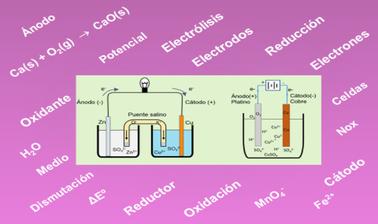
En este curso online reconocerás las reacciones rédox, su ajuste y sus cálculos estequiométricos, comprenderás el funcionamiento de las celdas electroquímicas y los conceptos más importantes relacionados con las celdas electrolíticas. Las reacciones de oxidación-reducción, comunmente denominadas reacciones rédox, se producen diariamente en numerosos procesos.

Self Paced
Self-Paced
Energía eléctrica: conceptos y principios básicos (edX) EdX
Tecnológico de Monterrey,TecdeMonterreyX

Energía eléctrica: conceptos y principios básicos (edX)

Aprende los conceptos básicos de la electricidad, para comprenderla, saber medirla y utilizarla de manera eficiente. Actualmente el uso de la electricidad es algo cotidiano, sin embargo, muy pocas personas conocen los conceptos y principios básicos que permiten comprender como funciona, cuáles son sus parámetros básicos, cómo se miden o cómo hacer un mejor uso de la energía. Este curso de electricidad presenta conceptos básicos como voltaje, corriente y resistencia que te permitirán comprender cómo se mide la potencia y el consumo de energía.En este curso entenderás que es la energía eléctrica y su importancia.

Self Paced
Self-Paced
Introduction to Environmental Science (edX) EdX
DartmouthX,Dartmouth College

Introduction to Environmental Science (edX)

A scientific study of the natural world and how it is influenced by people. Major topics include: food, energy, human population, biodiversity and global change. Environmental science is the study of patterns and processes in the natural world and their modification by human activity. To understand current environmental problems, we need to consider physical, biological and chemical processes that are often the basis of those problems.

Self Paced
4 Weeks
The Hidden Side of Energy Access: Understanding Clean Cooking (Virtual Knowledge Exchange) (edX) EdX
World Bank Group,WBGx

The Hidden Side of Energy Access: Understanding Clean Cooking (Virtual Knowledge Exchange) (edX)

This course is based on the World Bank’s “ The Hidden Side of Energy Access: Understanding Clean Cooking ”. This course explores the hidden side of energy access by uncovering the reality that over 4 billion people around the world currently lack access to modern energy cooking services (MECS) for their daily cooking needs. Throughout the developing world, households still cook with firewood and charcoal on rudimentary stoves in poorly ventilated rooms, resulting in significant negative impacts for health, gender, the environment, and our climate.

Self Paced
Self-Paced
Understanding Nuclear Energy (edX) EdX
Delft University of Technology,DelftX

Understanding Nuclear Energy (edX)

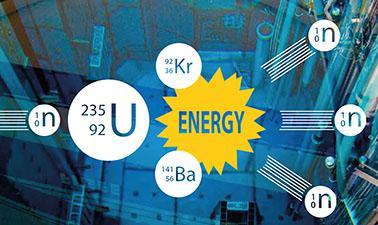
Learn the science and technology behind nuclear energy and the special features of this energy source. In this nuclear energy course, we will tackle provocative questions such as: Is nuclear energy a good substitute for fossil fuels to reduce our CO2 emission or not?; Can nuclear reactors operate safely without any harm to the public and environment?; How much nuclear waste is produced and how long does it need to be stored safely?; How can we make nuclear energy clean and more sustainable?; How much are nuclear energy costs?

Self Paced
Self-Paced
Energy and Thermodynamics (edX) EdX
HarvardX,Harvard University

Energy and Thermodynamics (edX)

Learn the fundamentals of chemistry and energy, from the types of energy to atomic mass and matter to enthalpy and thermodynamics. What is energy and why is it so important? How does chemistry inform energy efficiency and sustainability? Energy and Thermochemistry is an interdisciplinary, online course that introduces you to the concept of energy. Providing a foundational understanding of energy, this course shows you how energy at the molecular level forms the basis of nearly every scientific discussion of chemical, physical, and biological change.

Self Paced
Self-Paced
Basic Analytical Chemistry (edX) EdX
The University of Tokyo,UTokyoX

Basic Analytical Chemistry (edX)

Gain a physical understanding of the principles of analytical chemistry and their application in scientific research. Analytical chemistry takes a prominent position among all fields of experimental sciences, ranging from fundamental studies of Nature to industrial or clinical applications. Analytical chemistry covers the fundamentals of experimental and analytical methods and the role of chemistry around us.

Self Paced
Self-Paced
Using Photovoltaic (PV) Technology in Desert Climates (edX) EdX
Hamad Bin Khalifa University - HBKU,HBKUx

Using Photovoltaic (PV) Technology in Desert Climates (edX)

Learn how to mitigate the challenges related to PV technology and enhance the performance of solar cells and PV modules in desert climates. The high insolation in desert regions can result in a lower cost of solar energy. While this may be a key motivation to deploying PV in desert climates, there are also several challenges related to the technology that must be considered.

Self Paced
Self-Paced
Electrochemistry (edX) EdX
HarvardX,Harvard University

Electrochemistry (edX)

Learn the significance of electrochemistry, understanding how electrical, chemical, and mechanical energy are linked. What is the chemistry and mechanics behind an electric car versus a gas-powered car — and why do you feel a difference driving them? The discipline of electrochemistry is not new, but it has regained prominence due to the emergence of energy production, energy storage, and technological innovations driven by both science and public policy. Given the rise of global energy demand, research and inventions aim to meet these challenges.

Self Paced
Self-Paced
Entropy and Equilibria (edX) EdX
HarvardX,Harvard University

Entropy and Equilibria (edX)

Expand your learning of chemistry and thermodynamics by exploring entropy, free energy, and equilibrium. Nature is driven by spontaneity — processes that move forward without external intervention. In this course, Entropy and Equilibria , you will explore the Second Law of Thermodynamics and get an introduction to the concepts of entropy and equilibrium states.

Self Paced
Self-Paced
Introduction to Energy Management Powered by RETScreen (edX) EdX
HECMontrealX,HEC Montréal

Introduction to Energy Management Powered by RETScreen (edX)

The objective of this MOOC is to help organizations combat climate change through effective energy management. It explains proven strategies to reduce greenhouse gases and encourage the transition to a low carbon economy. It also provides an introduction to RETScreen Expert – the world’s leading software to empower cleaner energy decisions.

Self Paced
Self-Paced