EdX

The Hidden Side of Energy Access: Understanding Clean Cooking (Virtual Knowledge Exchange) (edX)

Offered by World Bank Group, WBGx,
The Hidden Side of Energy Access: Understanding Clean Cooking (Virtual Knowledge Exchange) (edX)

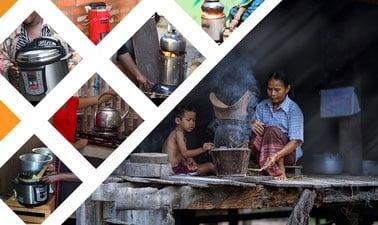
This course is based on the World Bank’s “ The Hidden Side of Energy Access: Understanding Clean Cooking ”. This course explores the hidden side of energy access by uncovering the reality that over 4 billion people around the world currently lack access to modern energy cooking services (MECS) for their daily cooking needs. Throughout the developing world, households still cook with firewood and charcoal on rudimentary stoves in poorly ventilated rooms, resulting in significant negative impacts for health, gender, the environment, and our climate.

Class Deals by MOOC List - Click here and see EdX's Active Discounts, Deals, and Promo Codes.

Access to clean cooking solutions, including modern stoves and cooking fuels, is often overlooked as part of the wider energy access agenda. This is surprising, given that four billion people – over half the world’s population – lack access to modern energy cooking service, also known as MECS, for their daily cooking practices. This means that families around the world continue to rely on fuels like wood or charcoal and rudimentary stoves, leading to devastating health, climate, environmental and gender impacts that cost the world an estimated 2.4 trillion dollars each year.
While the imperatives are clear, attention and focus on clean cooking have not been commensurate. To address this gap, the World Bank’s Open Learning Campus (OLC) and the Energy Sector Management Assistance Program (ESMAP) are partnering in a virtual Knowledge Exchange (KE) that builds on the recently launched, first-of-its-kind self-paced e-learning course titled The Hidden Side of Energy Access: Understanding Clean Cooking. The KE is a month-long interactive workshop series that will feature speaker presentations from various clean cooking innovators and practitioners, discussion forums, and self-paced exercises across the four modules of the e-learning.

What you'll learn
The core objective of this course is to improve awareness and bring renewed attention to the state of access to modern energy cooking services, while also drawing attention to the first comprehensive course on clean cooking. This is the first step to address critical sustainable development challenges and opportunities related to energy, health, the environment, the climate, and gender equality.

Syllabus

Week 1: Making the Case for Modern Energy Cooking Services (MECS)
Ensuring universal access to affordable, reliable, and modern energy cooking services (MECS) is a critical development objective from a health, environment, climate, and gender equality perspective. This session will make the case for clean cooking and introduce you to the concept of MECS and the Multi-Tier Framework.

Week 2: The Entrepreneurial Journey
There are several key demand- and supply-side barriers that stand in the way of greater progress on the clean cooking agenda. This session will explore the entrepreneurial journey in the clean cooking sector, reflecting on both challenges and successes.

Week 3: Innovating Financing Instruments for Clean Cooking
Financing remains a critical challenge in the clean cooking sector, and historical investment levels have not been commensurate with needs. This session will investigate the level of investment needed to achieve universal access to MECS and explore key innovations when it comes to financing.

Week 4: Accelerating Access to MECS: Systems-level Priorities and the Role of Policy
Looking ahead, there are several systems-level priority areas that will move the needle on clean cooking access. This session will explore these sector-wide, systems-level recommendations, while also examining the role of policy in accelerating access to MECS.
Go to Class
MOOC List is learner-supported. When you buy through links on our site, we may earn an affiliate commission.

Related Courses

The Transition to the Decarbonised Economy of Tomorrow (edX) EdX
Delft University of Technology,DelftX

The Transition to the Decarbonised Economy of Tomorrow (edX)

Dive into the economic strategies for promoting the energy transition: technologies, policies, pricing, emission trading and more. How can economic strategies bring our current, fossil fuel based energy system into a carbon neutral future? According to the International Panel on Climate Change, we have only limited time left to keep global temperatures below 1.50 C and to avoid a climate crisis. How do we go about decarbonizing our economy? What are the best renewable energy sources to bring about this transition? And how do we convince investors that renewables really are the best option?

Apr 30th 2024
5-12 Weeks
Feeding a Hungry Planet: Agriculture, Nutrition and Sustainability (edX) EdX
SDGAcademyX,SDG Academy

Feeding a Hungry Planet: Agriculture, Nutrition and Sustainability (edX)

How do we create a healthy and sustainable diet for the growing world population? Agriculture is more than waving fields of wheat; our ability to grow food from existing natural resources – and without decimating those resources – is key to sustainably feeding the world. In this course, learn about food security worldwide, the effects of malnutrition, how we manage ecosystems that provide food resources and more.

Self Paced
Self-Paced
Electric Cars: Policy (edX) EdX
Delft University of Technology,DelftX

Electric Cars: Policy (edX)

Learn about the role of public policy in steering technological innovation and infrastructural change toward zero-emission mobility. Electric cars are more than a novel means of mobility. They have been recognized as an essential building block of the energy transition. Fulfilling their promise will imply a significant change in the technical, digital and social dimensions of transport and energy infrastructure.

Self Paced
Self-Paced
The Next Generation of Infrastructure (edX) EdX
Delft University of Technology,DelftX

The Next Generation of Infrastructure (edX)

Explore the challenges and complexity of both global and local infrastructure (IT/Telecom, Energy, Water and Transportation) and how to make the best decisions to improve it. We increasingly depend on reliable and affordable supply of energy, water, transport, telecommunication and information services to improve livability and facilitate economic development. However, today's infrastructure systems are drastically changing. They are becoming more and more web-based, interconnected and transnational, with increasingly fragmented public and private ownership, while new technologies are on their way.

This course is archived
5-12 Weeks
The Science and Practice of Sustainable Development (edX) EdX
University of Queensland,UQx

The Science and Practice of Sustainable Development (edX)

Learn the critical foundations of sustainable development and how to achieve the UN’s Sustainable Development Goals that are deeply interconnected in the field. This course introduces the origin and key concepts of sustainability and how to apply those to sustainable development practice. Sustainable development will be explored through theories and case studies from a range of Disciplines. You also will learn about planetary boundaries, urbanisation and growing inequality, to show how integral sustainable development is to our everyday existence.

Self Paced
Self-Paced
Energy Markets of Today (edX) EdX
Delft University of Technology,DelftX

Energy Markets of Today (edX)

Understand the European energy market and the economic principles behind it. This course will help you understand the functioning of energy markets as the necessary first step to promotion of the energy transition. By using the European electricity market as an example, you will obtain a deeper understanding of its principles and effectiveness.

Mar 12th 2024
5-12 Weeks
Science & Cooking: From Haute Cuisine to Soft Matter Science (chemistry) (edX) EdX
HarvardX,Harvard University

Science & Cooking: From Haute Cuisine to Soft Matter Science (chemistry) (edX)

Top chefs and Harvard researchers explore how everyday cooking and haute cuisine can illuminate basic principles in chemistry, physics, and engineering. Learn about food molecules and how chemical reactions can affect food texture and flavor. During each module of this course, chefs reveal the secrets behind some of their most famous culinary creations — often right in their own restaurants. Inspired by such cooking mastery, the Harvard team will then explain the science behind the recipe.

Self Paced
Self-Paced
Plasma Physics: Introduction (edX) EdX
École Polytechnique Fédérale de Lausanne,EPFLx

Plasma Physics: Introduction (edX)

Learn the basics of plasma, one of the fundamental states of matter, and the different types of models used to describe it, including fluid and kinetic. Plasma, the fourth state of matter, is by far the most abundant form of known matter in the universe. Its behavior is very different from the other states of matter we are usually familiar with.

Self Paced
Self-Paced
Sustainability in Everyday Life (edX) EdX
Chalmers University of Technology,ChalmersX

Sustainability in Everyday Life (edX)

This course will arm you with the information and skills required to make more sustainable choices everyday! Daily headlines warn of new chemical dangers, species on the edge of extinction, global warming-- framing our planet as “at risk.” Some people stop listening, others get alarmed, while some others want to learn more in hopes of making a difference in the world.

No sessions available
5-12 Weeks
Energía: pasado, presente y futuro (edX) EdX
Tecnológico de Monterrey,TecdeMonterreyX

Energía: pasado, presente y futuro (edX)

Presenta una panorámica histórica y prospectiva sobre cómo la energía es un factor de cambio en el desarrollo de la sociedad. Nuestras economías están sedientas de energía. Sin energía la economía mundial simplemente se detendría en seco; no habría generación suficiente de electricidad, combustibles para los automóviles, transporte público, transporte terrestre de mercancías, ya sea por ferrocarril o autobús.

Self Paced
Self-Paced