EdX

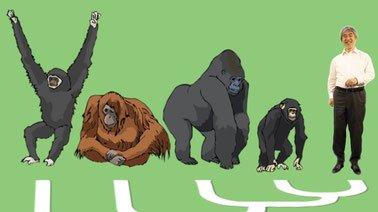
Evolution of the Human Sociality: A Quest for the Origin of Our Social Behavior (edX)

Offered by Kyoto University, KyotoUx,
Evolution of the Human Sociality: A Quest for the Origin of Our Social Behavior (edX)

Learn about human evolution and primatology, the scientific study of primates. Through the process of evolution, animals have developed their biological features and their cultures based on their surrounding environments. How we live our lives today is a direct result of features developed from our primate ancestors as they adapted to new environments. In primatology, it is essential to think about how cultural development and biological natures are inseparable.

Class Deals by MOOC List - Click here and see EdX's Active Discounts, Deals, and Promo Codes.

This course will help you rediscover the process of evolution and will introduce primatological studies conducted by researchers at Kyoto University, Japan. Based on carefully conducted research on primate species, we will explore the origins of human beings and provide you with examples of common similarities between human beings and non-human primates.

We will analyze basic features, such as foraging, mating, aggression, and communication from the primatological viewpoint. Furthermore, cultural and social aspects of human society, from the formation of family groups to community activities, will be considered thoroughly, in comparison to those of monkeys and apes.
Our goal is to broaden your view of humans to a wider extent and think dynamically about your biology in terms of human evolution. Through acquiring knowledge of basic primatology in this course, you will establish a viewpoint to think and discuss the evolutionary process of human, and human society, in conjunction with those of our close relatives.

What you'll learn:

  • Basic concepts and scientific evidences of primatology
  • The process of human evolution in conjunction with those of primates.
  • Ability to discuss the process of human evolution through the history of primate evolution

Syllabus

Week 1: History & Concept of Japanese Primatology

  • The Dawn of Primatology
  • The History of Japanese Primatology
  • "Culture" of Non-Human Animals
  • Studies on Gorillas

Week 2: What Primatologists Found on Japanese Macaques

  • Different Models for the Social Evolution in Non-Human Primates
  • Living in the Northern Limit: Japanese Macaques
  • Society of Japanese Macaques and Effects of Provisioning
  • Forests Make Society: A Comparative Study of Japanese Macaques
  • Social Differences between Kinkazan and Yakushima
  • New Findings from Yakushima and Conclusion

Week 3: The Places Where Humans and Primates Evolved

  • Tropical Rain Forest Where Primates Evolved
  • Humans Exited from the Forest
  • Adaptation of Primates in African Tropical Forest
  • Co-Evolution of Plants and Primates
  • Evolution of Human Ancestors
  • How do Gorillas and Chimpanzees Coexist?
  • My Study on Sympatric Gorillas and Chimpanzees in DR Congo

Week 4: Food and Sex Shape Primate Sociality

  • Influences of Food on Primate Society
  • Inter-Individual Relationships and Food Transfer
  • The New Discovery of Food Sharing among Adult Gorillas
  • Human Evolution and Food Sharing
  • How Does Sex Shape Primate Sociality
  • Human Sexuality and Evolution of Social Structure

Week 5: Aggression and Society

  • Has Human Evolved as an Excellent Hunter?
  • Aggression and Social Intelligence of Old World Monkeys
  • Face to Face Communication in Great Apes and Humans
  • Infanticide in Non-Human Primates
  • Infanticide Affects Social Behavior

Week 6: Evolution of Life History Strategy

  • Primates Are Mammals of Slow Life History and Careful Nurturing
  • Female Dispersal Versus Female Philopatry
  • Life History in Human and Great Apes: Similarity and Uniqueness
  • Human Evolution: From Bipedalism to Family Formation
  • Synthesis: Evolution of Human Sociality
Go to Class
MOOC List is learner-supported. When you buy through links on our site, we may earn an affiliate commission.

Related Courses

Understanding and Teaching Evolution (FutureLearn) FutureLearn
University of Bath

Understanding and Teaching Evolution (FutureLearn)

Learn key concepts in biological evolution and find out how to integrate them into the classroom. Find out how to teach evolution to 7–16 year olds. How does evolution happen? Can we observe it in real time? How do new species come about and how long does this take? When you think about evolution, you may think of Darwin, but modern genetics has transformed our understanding of how evolution happens. This course uses this new genetics-centred approach to explain key concepts in our scientific understanding of evolution.

Self Paced
3 Weeks
Primate Conservation (Coursera) Coursera
University of Colorado Boulder

Primate Conservation (Coursera)

We are presently facing a potential extinction crisis for the order Primates (and many other life forms). In this course we will learn about threats to primate conservation globally. We will be using the, “Primates in Peril: The World’s 25 Most Endangered Primates 2018-2020” by Schwitzer et al (2019) as a basis for the discussion of global primate populations.

Aug 3rd 2026
5-12 Weeks
Advanced Transport Phenomena (edX) EdX
Delft University of Technology,DelftX

Advanced Transport Phenomena (edX)

Learn how to tackle complex mass and heat transfer problems and apply the results in your own environment. How can you reduce the energy loss of your home? What is the underlying science of energy loss in pipes? Which heat and mass transfer problems do we have to tackle to make consumer products? In this engineering course, you will learn about the engineering principles that play an important role in all of these and more phenomena. You will learn about microbalances, radiation, convection, diffusion and more and their applications in everyday life.

Self Paced
Self-Paced
Dynamic Programming: Applications In Machine Learning and Genomics (edX) EdX
University of California, San Diego,UC San DiegoX

Dynamic Programming: Applications In Machine Learning and Genomics (edX)

Learn how dynamic programming and Hidden Markov Models can be used to compare genetic strings and uncover evolution. If you look at two genes that serve the same purpose in two different species, how can you rigorously compare these genes in order to see how they have evolved away from each other?

Self Paced
Self-Paced
A Question of Time: How We Date Human Evolution (FutureLearn) FutureLearn
Griffith University

A Question of Time: How We Date Human Evolution (FutureLearn)

Discover the role that dating human fossils plays in the reconstruction of human evolution: explore examples from around the world. Uncover the history of our ancestors by dating human fossils. Trace your origins and develop your understanding of human evolution, with this course from the world-leading experts at Griffith University.

No sessions available
2 Weeks
High-Dimensional Data Analysis (edX) EdX
HarvardX,Harvard University

High-Dimensional Data Analysis (edX)

A focus on several techniques that are widely used in the analysis of high-dimensional data. If you’re interested in data analysis and interpretation, then this is the data science course for you. We start by learning the mathematical definition of distance and use this to motivate the use of the singular value decomposition (SVD) for dimension reduction and multi-dimensional scaling and its connection to principle component analysis.

Self Paced
Self-Paced
Science & Cooking: From Haute Cuisine to Soft Matter Science (physics) (edX) EdX
HarvardX,Harvard University

Science & Cooking: From Haute Cuisine to Soft Matter Science (physics) (edX)

Top chefs and Harvard researchers explore how traditional and modernist cooking techniques can illuminate basic principles in chemistry, physics, and engineering. Learn about elasticity, viscosity, mayonnaise, baking, and more! In this course, which investigates physical transformations in food, we will be visited by world-famous chefs who use a number of different styles and techniques in their cooking. Each chef will demonstrate how he or she prepares delicious and interesting creations, and we will explore how fundamental scientific principles make them possible.

Self Paced
Self-Paced
Statistical Inference and Modeling for High-throughput Experiments (edX) EdX
HarvardX,Harvard University

Statistical Inference and Modeling for High-throughput Experiments (edX)

A focus on the techniques commonly used to perform statistical inference on high throughput data. In this course you’ll learn various statistics topics including multiple testing problem, error rates, error rate controlling procedures, false discovery rates, q-values and exploratory data analysis. We then introduce statistical modeling and how it is applied to high-throughput data. In particular, we will discuss parametric distributions, including binomial, exponential, and gamma, and describe maximum likelihood estimation.

Self Paced
Self-Paced
Bipedalism: The Science of Upright Walking (edX) EdX
DartmouthX

Bipedalism: The Science of Upright Walking (edX)

Upright walking is a hallmark of being human. Explore how this unusual form of locomotion evolved and why. Have you ever wondered why humans walk on two legs rather than four? In this course, we will explore how science investigates this unusual form of locomotion. We will start our investigation by looking at the mechanics of upright walking in humans and comparing that to bipedal locomotion in large birds, bears, and apes.

Self Paced
5-12 Weeks
Industrial Biotechnology (edX) EdX
Delft University of Technology,DelftX

Industrial Biotechnology (edX)

Learn the basics of sustainable processing for biobased products to further understand their impact on global sustainability. As fossil-based fuels and raw materials contribute to climate change, the use of renewable materials and energy as an alternative is increasingly important and common. This transition is not a luxury, but rather a necessity.

Self Paced
Self-Paced