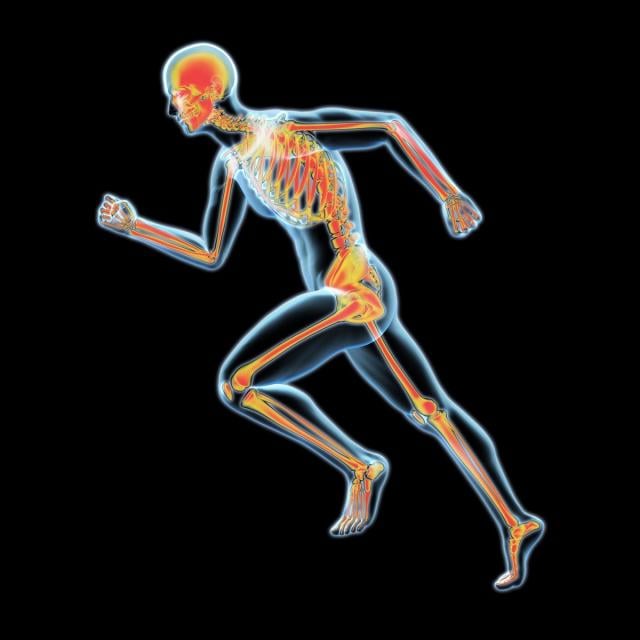
Inquiries Into Bipedalism (Coursera)

Offered by Dartmouth College,
Inquiries Into Bipedalism (Coursera)

This course will help you learn that the shapes of bones reflect adaptations and the behaviors that animals frequently participate in. Understanding this relationship is critical for reconstructing the activities of animals in the past.

Class Deals by MOOC List - Click here and see Coursera's Active Discounts, Deals, and Promo Codes.

In this course, you will participate in two such activities. You will examine the femurs from a number of different species. You will also explore how footprint data is used to estimate the height of a species. You will participate in a dig at the Koobi Fora fossil site in Kenya. Furthermore, you will explore what a phylogenetic tree is and how they help in discovering the relative relatedness of a group of species. Virtually you will visit the Hall of Human Origins at the Smithsonian's National Museum of Natural History. This course will also help you understand the world of fossils. How fossils are formed, how paleontologists find fossils, how they are examined to find information will also be discussed here.
Every module of this course has been created with the intention of a “hands-on” learner experience, where you can play around with and learn from 3D renditions of different human and animal fossils. You will explore fossil sites as well.
This course is part of the Bipedalism: The Science of Upright Walking Specialization.

Syllabus

Module 1: Inquiry Activities
This module provides an introduction to the human skeleton and explores the scientific usage of footprint data. It also takes you to some fossil sites. You also learn about the phylogenetic tree activity based on anatomy and genetics.

Module 2: Visiting the Smithsonian National Museum of Natural History
This module explores the history of human evolution as seen in the "Hall of Human Origins" in the Smithsonian National Museum of Natural History.

Module 3: Science in Action
This module provides an understanding of how and what we learn from fossils. You will also explore the history of human origin in South Africa.


Go to Class
MOOC List is learner-supported. When you buy through links on our site, we may earn an affiliate commission.

Related Courses

Science Literacy (Coursera) Coursera
University of Alberta

Science Literacy (Coursera)

Fake news or good science? In a world where we have access to unlimited information, it is hard to sift through the echo chamber of opinions fueled by emotions and personal biases, rather than scientific evidence. Science Literacy will teach you about the process of science, how to think critically, how to differentiate science from pseudoscience, how indigenous wisdom can inform science, how to understand and design a scientific study, and how to critically evaluate scientific communication in the media.

Sep 21st 2026
5-12 Weeks
Philosophy, Science and Religion: Religion and Science (Coursera) Coursera
University of Edinburgh

Philosophy, Science and Religion: Religion and Science (Coursera)

Philosophy, Science and Religion mark three of the most fundamental modes of thinking about the world and our place in it. Are these modes incompatible? Put another way: is the intellectually responsible thing to do to ‘pick sides’ and identify with one of these approaches at the exclusion of others? Or, are they complementary or mutually supportive? As is typical of questions of such magnitude, the devil is in the details. For example, it is important to work out what is really distinctive about each of these ways of inquiring about the world. In order to gain some clarity here, we’ll be investigating what some of the current leading thinkers in philosophy, science and religion are actually doing.

Oct 6th 2026
5-12 Weeks
Structuring Values in Modern China (Coursera) Coursera
The Chinese University of Hong Kong

Structuring Values in Modern China (Coursera)

This sequence of four courses will propose a multi-disciplinary approach to the study of Chinese cultural history conceived of as a succession of modes of rationality (philosophical, bureaucratic, and economic). The focus will be on the moments of paradigm shift from one mode of rationality to another. For each of these moments, cultural facts and artifacts—thought, literature, ritual—will be examined in relationship to changing social, political, and economic systems.

Oct 12th 2026
5-12 Weeks
Intellectual Humility: Science (Coursera) Coursera
University of Edinburgh

Intellectual Humility: Science (Coursera)

It’s clear that the world needs more intellectual humility. But how do we develop this virtue? And why do so many people still end up so arrogant? Do our own biases hold us back from becoming as intellectually humble as we could be—and are there some biases that actually make us more likely to be humble? Which cognitive dispositions and personality traits give people an edge at being more intellectually humble - and are they stable from birth, learned habits, or something in between? And what can contemporary research on the emotions tell us about encouraging intellectual humility in ourselves and others?

Oct 12th 2026
4 Weeks
Science & Religion 101 (Coursera) Coursera
University of Alberta

Science & Religion 101 (Coursera)

This course examines the nature of both science and religion and attempts to explore the possible relationships between them. The primary purpose is to dispel the popular myth that science and religion are entrenched in a never-ending conflict. As a result, this course argues that if the limits of both science and religion are respected, then their relationship can be complementary.

Sep 28th 2026
5-12 Weeks
Philosophy, Science and Religion: Science and Philosophy (Coursera) Coursera
University of Edinburgh

Philosophy, Science and Religion: Science and Philosophy (Coursera)

Philosophy, Science and Religion mark three of the most fundamental modes of thinking about the world and our place in it. Are these modes incompatible? Put another way: is the intellectually responsible thing to do to ‘pick sides’ and identify with one of these approaches at the exclusion of others? Or, are they complementary or mutually supportive? As is typical of questions of such magnitude, the devil is in the details. For example, it is important to work out what is really distinctive about each of these ways of inquiring about the world. In order to gain some clarity here, we’ll be investigating what some of the current leading thinkers in philosophy, science and religion are actually doing.

Oct 5th 2026
5-12 Weeks
Philosophy, Science and Religion: Philosophy and Religion (Coursera) Coursera
University of Edinburgh

Philosophy, Science and Religion: Philosophy and Religion (Coursera)

Philosophy, Science and Religion mark three of the most fundamental modes of thinking about the world and our place in it. Are these modes incompatible? Put another way: is the intellectually responsible thing to do to ‘pick sides’ and identify with one of these approaches at the exclusion of others? Or, are they complementary or mutually supportive? As is typical of questions of such magnitude, the devil is in the details. For example, it is important to work out what is really distinctive about each of these ways of inquiring about the world. In order to gain some clarity here, we’ll be investigating what some of the current leading thinkers in philosophy, science and religion are actually doing.

Oct 12th 2026
5-12 Weeks
Pensamiento Científico (Coursera) Coursera
Universidad Nacional Autónoma de México

Pensamiento Científico (Coursera)

¿El pensamiento científico es sólo para científicos? Su utilidad va mucho más allá, ayudando a las personas a tomar mejores decisiones todos los días. El objetivo de este curso es fomentar en pensamiento científico en los alumnos para ayudarles a tomar mejores decisiones profesionales, personales y sociales.

Sep 28th 2026
5-12 Weeks
Writing in the Sciences (Coursera) Coursera
Stanford University

Writing in the Sciences (Coursera)

This course teaches scientists to become more effective writers, using practical examples and exercises. Topics include: principles of good writing, tricks for writing faster and with less anxiety, the format of a scientific manuscript, peer review, grant writing, ethical issues in scientific publication, and writing for general audiences.

Sep 21st 2026
5-12 Weeks
Teaching in University Science Laboratories (Developing Best Practice) (Coursera) Coursera
University of Amsterdam

Teaching in University Science Laboratories (Developing Best Practice) (Coursera)

This course is developed to improve the effectiveness of laboratory classes in higher education. It aims to support teachers to improve their teaching skills for active learning in university science laboratory courses. It will show you how laboratory sessions can differ with respect to their aim and expected learning outcomes, how to engage students for learning and how to cope with their different levels of pre-knowledge and experience and probe their understanding. Last but not least it will show how you could assess students in laboratory courses.

Sep 28th 2026
5-12 Weeks
Experiments and Variations in Bipedalism (Coursera) Coursera
Dartmouth College

Experiments and Variations in Bipedalism (Coursera)

This course will help you learn how fossils give us an insight into how the early members of our lineage walked bipedally. The four million years old bone of Australopithecus anamensis is the oldest undisputed evidence for bipedalism in our lineage. Similarly, Lucy’s, who was Australopithecus afarensis, fossil also helped scientists discover a lot about how bipedalism evolved over time.

Sep 21st 2026
4 Weeks