A Question of Time: How We Date Human Evolution (FutureLearn)

Offered by Griffith University,
A Question of Time: How We Date Human Evolution (FutureLearn)

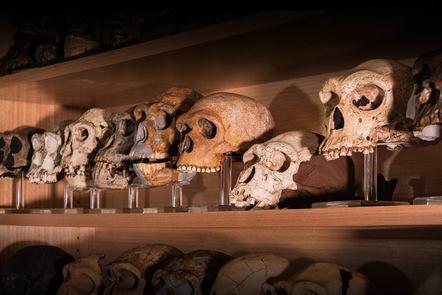
Discover the role that dating human fossils plays in the reconstruction of human evolution: explore examples from around the world. Uncover the history of our ancestors by dating human fossils. Trace your origins and develop your understanding of human evolution, with this course from the world-leading experts at Griffith University.

Class Deals by MOOC List - Click here and see FutureLearn's Active Discounts, Deals, and Promo Codes.

This course will introduce you to the history of human evolution and discuss the importance of dating human fossils. You’ll learn the basic principles of dating fossils, including the methods used by professionals, and find out why dating is not always reliable.
You’ll study authentic archaeological examples from all over the world, and reflect on discoveries which have challenged our existing knowledge of human evolution.

What topics will you cover?

  • Introduction to human evolution
  • How dating works (methods available)
  • Principles of radiocarbon, U-series and ESR dating
  • The specific challenges of dating valuable human fossils
  • Dating controversies
  • How dating changed the story of human evolution
  • Explore examples from around the world

What will you achieve?
By the end of the course, you'll be able to...

  • Describe the basic principles of three dating methods
  • Explain why dating is not always reliable
  • Discuss the importance of dating for human evolution
  • Explore the ever-changing reconstruction of human evolution
  • Reflect upon how new discoveries challenge existing knowledge
Go to Class
MOOC List is learner-supported. When you buy through links on our site, we may earn an affiliate commission.

Related Courses

Lancaster Castle and Northern English History: The View from the Stronghold (FutureLearn) FutureLearn
Lancaster University

Lancaster Castle and Northern English History: The View from the Stronghold (FutureLearn)

We will use the iconic building of Lancaster Castle to investigate how 2000 years of history has shaped the north-west of England. This course takes an innovative approach to exploring history, focusing on Lancaster Castle as a microcosm of broader trends. This fascinating location provides a wealth of evidence from the remains of Roman forts to its life as a prison and visitor attraction.

Oct 18th 2021
5-12 Weeks
Terrorism and Counterterrorism: Comparing Theory and Practice (FutureLearn) FutureLearn
Leiden University

Terrorism and Counterterrorism: Comparing Theory and Practice (FutureLearn)

Delve into the research behind terrorism as you unpack the assumptions and impacts of both terrorism and counterterrorism. Explore terrorism and counterterrorism studies. Terrorism has arguably been one of the defining factors of our age. It frequently makes headlines, threatening or attacking governments, private businesses, and ordinary citizens. In many parts of the world, it has been one of the most important threats to peace, security, and stability – but what does this mean exactly? On this six-week course from Leiden University, you’ll explore the essence of terrorism and discover why it is so difficult to define.

Apr 25th 2022
5-12 Weeks
Film, Images & Historical Interpretation in the 20th Century: The Camera Never Lies (Coursera) Coursera
University of London,Royal Holloway, University of London

Film, Images & Historical Interpretation in the 20th Century: The Camera Never Lies (Coursera)

This course is a short taster on the topic of the use of Images, Film, and their use in historical interpretation in the 20th century. It is primarily provided for those who have a general interest in history that draws on photojournalism as primary evidence, and films based on historical events.

Oct 5th 2026
5-12 Weeks
The Modern and the Postmodern (Part 2) (Coursera) Coursera
Wesleyan University

The Modern and the Postmodern (Part 2) (Coursera)

This course examines how the idea of "the modern" develops at the end of the 18th century in European philosophy and literature, and how being modern (or progressive, or hip) became one of the crucial criteria for understanding and evaluating cultural change. Are we still in modernity, or have we moved beyond the modern to the postmodern?

Oct 5th 2026
5-12 Weeks
Christian-Muslim Relations (FutureLearn) FutureLearn
University of Edinburgh

Christian-Muslim Relations (FutureLearn)

Uncover important themes in the history of Christian-Muslim relations and understand the politics that continue to shape it. Gain an insight into the academic study of Christian-Muslim Relations. On this innovative four-week course, you’ll be introduced to the academic study of Christian-Muslim Relations with the School of Divinity at the University of Edinburgh.

Oct 3rd 2022
4 Weeks
Teaching the Holocaust: Innovative Approaches to the Challenges We Face (FutureLearn) FutureLearn
University College London,Yad Vashem

Teaching the Holocaust: Innovative Approaches to the Challenges We Face (FutureLearn)

Explore history, delve into pedagogical challenges revealed by research, and find practical solutions for teaching the Holocaust. The Holocaust was the murder of approximately 6 million Jews perpetrated by Nazi Germany and its collaborators. That this atrocity proved possible raises many complex questions which remain relevant for young people today.

Self Paced
3 Weeks
World War 1: Aviation Comes of Age (FutureLearn) FutureLearn
University of Birmingham

World War 1: Aviation Comes of Age (FutureLearn)

Investigate how the white heat of innovation in World War 1 shaped the history of human flight. Investigate how the early days of aviation gripped the imagination of the general public, galvanised industry and excited far-sighted members of the military, with this free online course from the University of Birmingham’s Centre for War Studies.

No sessions available
3 Weeks
Understanding and Teaching Evolution (FutureLearn) FutureLearn
University of Bath

Understanding and Teaching Evolution (FutureLearn)

Learn key concepts in biological evolution and find out how to integrate them into the classroom. Find out how to teach evolution to 7–16 year olds. How does evolution happen? Can we observe it in real time? How do new species come about and how long does this take? When you think about evolution, you may think of Darwin, but modern genetics has transformed our understanding of how evolution happens. This course uses this new genetics-centred approach to explain key concepts in our scientific understanding of evolution.

Self Paced
3 Weeks
Casing the Joint: Introducing Histories of Crime (FutureLearn) FutureLearn
The University of Newcastle, Australia

Casing the Joint: Introducing Histories of Crime (FutureLearn)

Learn about historical approaches to the study of crime and punishment, particularly in Australia. Delve beyond true crime podcasts, books and television series Crime holds a special place in Australian history, having facilitated colonisation, provided its most celebrated anti-hero in Ned Kelly and been used to sell millions of newspapers, books and movie tickets.

No sessions available
3 Weeks