Preserving Norwegian Stave Churches (FutureLearn)

Preserving Norwegian Stave Churches (FutureLearn)

Stave churches are an important part of Norway's heritage. Discover how Norwegian Stave Churches have been restored and preserved. What are the challenges of preserving Stave Churches? Find out on this course.

Class Deals by MOOC List - Click here and see FutureLearn's Active Discounts, Deals, and Promo Codes.

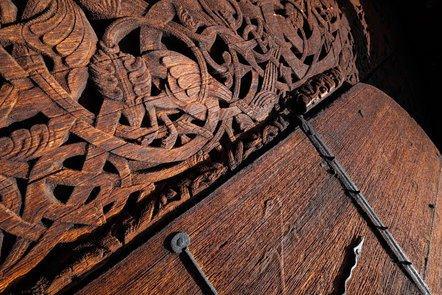
Stave Churches in Norway are admired worldwide for their rich history and intricate architecture. Some have been standing for almost 1,000 years and one, the Urnes Stave Church, is a UNESCO World Heritage Site.
On this course, you will explore what makes Norwegian Stave Churches unique and how they have been preserved.
You will learn the definition of Stave Churches and what makes them different from each other. With real-life examples, you will explore the traditional craftmanship and tools used to restore Stave Churches in Norway, as well as understand the challenges in preserving them.

What topics will you cover?

  • The definition of a Stave Church
  • Different types of Stave Churches
  • Challenges in preserving Stave Churches
  • Examples of restoring Stave Churches

What will you achieve?
By the end of the course, you'll be able to...

  • Identify the characteristics of a Stave Church
  • Explain the remaining groups of Stave Churches in Norway
  • Reflect upon the challenges in preserving the Norwegian Stave Churches
  • Explore a national cultural heritage initiative exemplified by the Norwegian Stave Church Restoration Programme
Go to Class
MOOC List is learner-supported. When you buy through links on our site, we may earn an affiliate commission.

Related Courses

Cities of Yesterday, Today and Tomorrow: Why Heritage Conservation Matters (FutureLearn) FutureLearn
Griffith University

Cities of Yesterday, Today and Tomorrow: Why Heritage Conservation Matters (FutureLearn)

Get an introduction to what heritage conservation is, and why it's important to you and your local community. We are able to make sense of who we are and the world around us because of our past. Find out why heritage conservation is so important to us all, with this course from Griffith University.

No sessions available
2 Weeks
Hadrian's Wall: Life on the Roman Frontier (FutureLearn) FutureLearn
Newcastle University

Hadrian's Wall: Life on the Roman Frontier (FutureLearn)

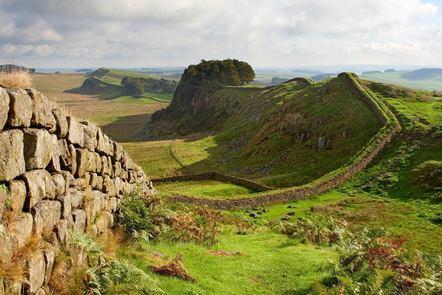
Explore the archaeology of the most heavily fortified frontier in the Roman Empire, its people and their lives. Hadrian’s Wall stretches over 73 miles (117 km), from coast to coast in what is now Northern England. The Wall, complemented by a sophisticated system of outposts and coastal watch stations, offers a remarkable glimpse of ancient society. In addition to housing one of the largest concentrations of Roman soldiers anywhere in the Empire’s provinces, Hadrian’s frontier system was home to an incredibly cosmopolitan array of civilians. This six week course offers a comprehensive introduction to Hadrian’s Wall and its people and raises fascinating issues concerning colonisation, cultural transformation, immigration, integration and imperialism.

No sessions available
5-12 Weeks
Heart of Scotland: History & Heritage of Stirling at 900 Years (FutureLearn) FutureLearn
University of Stirling

Heart of Scotland: History & Heritage of Stirling at 900 Years (FutureLearn)

Explore Stirling, the 'Gateway to the Highlands', and discover 900 years of history in the city of Scottish kings and queens. On this four-week course, spanning the 12th century to the modern era, gain an expansive understanding of one of Scotland’s most important and beloved cities. Hit all the stops on this heritage tour of Stirling.

Oct 21st 2024
4 Weeks
World War 1: Paris 1919 - A New World Order? (FutureLearn) FutureLearn
University of Glasgow

World War 1: Paris 1919 - A New World Order? (FutureLearn)

This course reassesses the legacy of the Paris Peace Conference (1919) and how it sought to create a new world order. The Paris Peace Conference of 1919 ended a Great War, but it also designed the post-war future. In 1919, world leaders assembled in Paris redrew the map of the world, partitioned and created countries, and ushered in a new era of international relations. The naivety of the peace-makers of 1919 has been justly criticised. However, in setting up a permanent ‘world organisation’, the League of Nations, they changed the management of world affairs forever…

No sessions available
3 Weeks
New Zealand History, Culture and Conflict: A Museum Perspective (FutureLearn) FutureLearn
Museum of New Zealand Te Papa Tongarewa

New Zealand History, Culture and Conflict: A Museum Perspective (FutureLearn)

Discover the social history of Aotearoa New Zealand, learning how the country’s bicultural national consciousness was formed. Identify the factors that have contributed to New Zealand’s cultural identity. New Zealand’s social history is built on a foundation of exploration and colonial conflict. On this three-week course, you’ll access artefacts, treasures, and exhibitions within Te Papa Tongarewa’s collections to discover how New Zealand culture has evolved over time, identifying key historical moments that have impacted the formation of a national identity.

Nov 27th 2023
3 Weeks
Cultural Heritage and the City (FutureLearn) FutureLearn
European University Institute - EUI,Global Governance Programme

Cultural Heritage and the City (FutureLearn)

Discover how cities develop their own unique cultures and explore key concepts related to cultural heritage. Cultural heritage is usually discussed in national or religious terms: we speak of Italian culture, Greek civilization, Islamic art, and so on. But today cities are creating their own heritage through museums, galleries, markets of artistic goods, and urban networks.

Oct 10th 2022
3 Weeks
Lancaster Castle and Northern English History: The View from the Stronghold (FutureLearn) FutureLearn
Lancaster University

Lancaster Castle and Northern English History: The View from the Stronghold (FutureLearn)

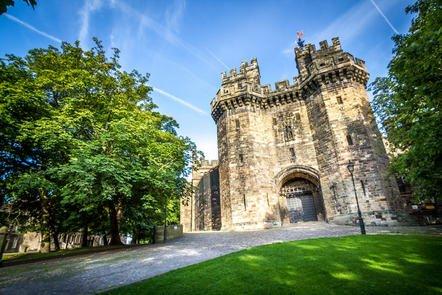
We will use the iconic building of Lancaster Castle to investigate how 2000 years of history has shaped the north-west of England. This course takes an innovative approach to exploring history, focusing on Lancaster Castle as a microcosm of broader trends. This fascinating location provides a wealth of evidence from the remains of Roman forts to its life as a prison and visitor attraction.

Oct 18th 2021
5-12 Weeks
Terrorism and Counterterrorism: Comparing Theory and Practice (FutureLearn) FutureLearn
Leiden University

Terrorism and Counterterrorism: Comparing Theory and Practice (FutureLearn)

Delve into the research behind terrorism as you unpack the assumptions and impacts of both terrorism and counterterrorism. Explore terrorism and counterterrorism studies. Terrorism has arguably been one of the defining factors of our age. It frequently makes headlines, threatening or attacking governments, private businesses, and ordinary citizens. In many parts of the world, it has been one of the most important threats to peace, security, and stability – but what does this mean exactly? On this six-week course from Leiden University, you’ll explore the essence of terrorism and discover why it is so difficult to define.

Apr 25th 2022
5-12 Weeks
The Scottish Highland Clans: Origins, Decline and Transformation (FutureLearn) FutureLearn
University of Glasgow

The Scottish Highland Clans: Origins, Decline and Transformation (FutureLearn)

Explore fascinating Scottish history by learning about the Highland clans and how clanship has changed across hundreds of years. Discover the important history of the Highland clans. The Highland, Gaelic speaking clans are a vital part of Scotland’s history. They also shape how the world imagines Scotland today.

Apr 3rd 2023
3 Weeks
Accounting for Death in War: Separating Fact from Fiction (FutureLearn) FutureLearn
Royal Holloway, University of London,Every Casualty Counts

Accounting for Death in War: Separating Fact from Fiction (FutureLearn)

Discover the main methods used to account for war deaths, how they've been used and practice using them yourself. Calculating the number of deaths during a war is a difficult, but necessary, task - having accurate information is crucial for political and societal debates and decisions. On this course you will explore the methods currently used to account for war deaths and then apply these methods to particular wars.

Available now
3 Weeks