Enabling infrastructure in Africa for the Next Production Revolution (POK)

Offered by Politecnico di Milano,
Enabling infrastructure in Africa for the Next Production Revolution (POK)

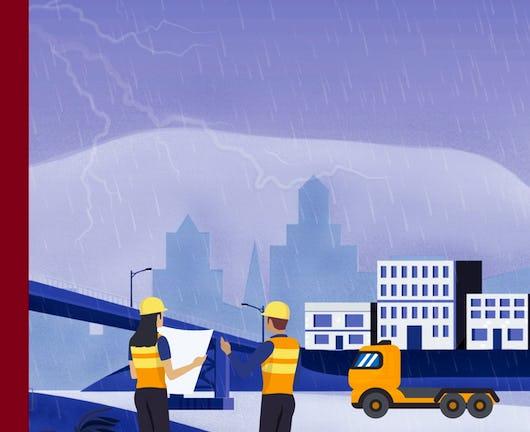
A short introduction to smart and integrated infrastructures as an asset for prosperity in Africa: energy, digital and mobility infrastructures - the lifeblood, nerve and skeleton of modern societies. The course is part of a series of Sprint MOOC addressing the Next production Revolution (NPR) paradigma, as new wave of technological innovation. It addresses people from anywhere in the world, from industrialized economies as well as from “developing countries” and particularly from Africa.

This specific course describes enabling infrastructures for the Next Production Revolution. New infrastructure development cannot retrace old paradigms that are inappropriate from a variety of perspectives including environmental, social and economic sustainability.

In this course, you will learn to recognize how smart and integrated infrastructure can support the introduction of the Next Production Revolution while ensuring a sustainable path. The focus will be on digital and green infrastructures that have been recognized as the most effective to achieve sustainable development goals.
The course addresses emerging digital infrastructure including communication networks and technical requirements for NPR applications. Furthermore, it focuses on green infrastructures including the field of energy with distributed renewable energy power sources and the transport sector with greener solutions in both transportation of people and goods.
After taking this Sprint MOOC you’ll be able to understand how smart and integrated infrastructure can boost the Next Production Revolution by creating a network of things, services, data and people.


Go to Class
MOOC List is learner-supported. When you buy through links on our site, we may earn an affiliate commission.

Related Courses

Financing Infrastructure in African Cities (Coursera) Coursera
Erasmus University Rotterdam,United Cities and Local Governments of Africa,African Local Government Academy,Institute for Housing and Urban Development

Financing Infrastructure in African Cities (Coursera)

The world is urbanizing fast. In less than a century more than 1 billion people have been urbanized. That translates into the fact that more than half of the world’s population is already living in cities. Experts forecast that very soon Africa will become one of the most urbanized continents. However, almost 70% of world’s urban population is living in the cities where governments are struggling to provide basic services like sanitation, schools, hospitals, and adequate clean water.

Oct 5th 2026
5-12 Weeks
Water: an essential resource (POK) Polimi OPEN KNOWLEDGE
Politecnico di Milano

Water: an essential resource (POK)

The challenge of protection from chemical and microbiological hazards. This MOOC wants to communicate the challenge of protecting water and then human health from chemical and microbiological hazards, as well as the multidisciplinarity required by this challenge by providing some key elements about water quality, protection and remediation, sustainable drinking water production, online monitoring, and finally advanced computing for process control.

Available
3 Weeks
The Next Generation of Infrastructure (edX) EdX
Delft University of Technology,DelftX

The Next Generation of Infrastructure (edX)

Explore the challenges and complexity of both global and local infrastructure (IT/Telecom, Energy, Water and Transportation) and how to make the best decisions to improve it. We increasingly depend on reliable and affordable supply of energy, water, transport, telecommunication and information services to improve livability and facilitate economic development. However, today's infrastructure systems are drastically changing. They are becoming more and more web-based, interconnected and transnational, with increasingly fragmented public and private ownership, while new technologies are on their way.

This course is archived
5-12 Weeks
Mécanique Lagrangienne (Coursera) Coursera
École Polytechnique Fédérale de Lausanne

Mécanique Lagrangienne (Coursera)

Le formalisme de Lagrange permet une résolution efficace de problèmes complexes de mécanique. Il permet aussi d'apporter un éclairage plus fondamental sur les lois de conservation (théorème de Noether). A titre d'illustration de la méthode de Lagrange, on traitera le problème très important des oscillateurs harmoniques couplés, exprimé comme un problème de valeurs propres et de vecteurs propres. On termine avec un formalisme permettant d'analyser les résonances paramétriques, notion illustrée par l'expérience montrant la stabilité d'un pendule inversé forcé.

Oct 5th 2026
5-12 Weeks
Particle-Laden Flows: Theory and Engineering Applications (POK) Polimi OPEN KNOWLEDGE
Politecnico di Milano

Particle-Laden Flows: Theory and Engineering Applications (POK)

Solid particles carried along in a fluid flow: physical fundamentals, measurement techniques, and modelling frameworks in an application-oriented view. The MOOC, developed in the context of a collaborative research project, will provide an application-oriented yet theoretically rigorous overview of particle-laden flows, i.e., two-phase flows of solid particles within a carrier fluid (liquid or gas). These flows are encountered in many engineering fields, including but not limited to the mining industry, the oil & gas industry, and the hydraulic engineering.

Available
4 Weeks
Railway Engineering: An Integral Approach (edX) EdX
Delft University of Technology,DelftX

Railway Engineering: An Integral Approach (edX)

Discover the science and complexity behind the exciting world of metro, tram and railway systems. Have you ever wondered what it takes to get your train on the right platform at the scheduled time every day? Understanding the complexity behind today’s sophisticated railway systems will give you a better insight into how this safe and reliable transportation system works. We will show you the many factors which are involved and how multiple people, behind the scenes, have a daily task that enables you to get from home to work. Journey with us into the world of rail - a complex system that connects people, cities and countries.

Oct 14th 2026
5-12 Weeks
Advanced Engineering Systems in Motion: Dynamics of Three Dimensional (3D) Motion (Coursera) Coursera
Georgia Institute of Technology

Advanced Engineering Systems in Motion: Dynamics of Three Dimensional (3D) Motion (Coursera)

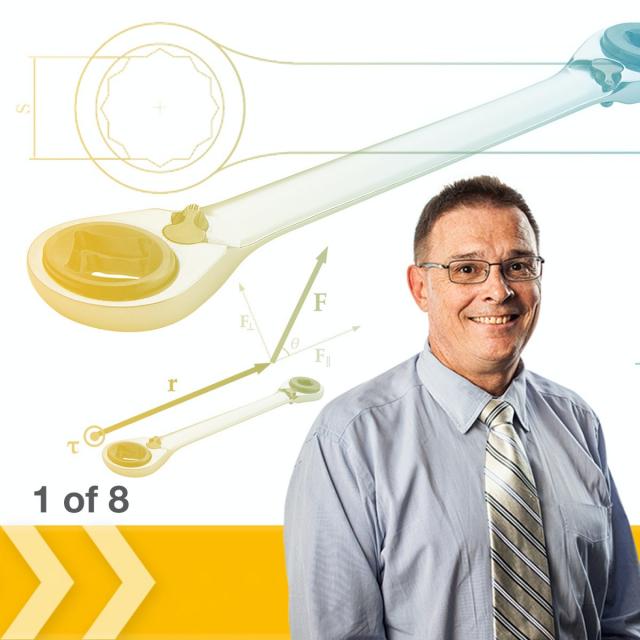
This course is an advanced study of bodies in motion as applied to engineering systems and structures. We will study the dynamics of rigid bodies in 3D motion. This will consist of both the kinematics and kinetics of motion. Kinematics deals with the geometrical aspects of motion describing position, velocity, and acceleration, all as a function of time. Kinetics is the study of forces acting on these bodies and how it affects their motion.

Oct 5th 2026
5-12 Weeks
Fundamentals of Fluid-Solid Interactions (Coursera) Coursera
École Polytechnique

Fundamentals of Fluid-Solid Interactions (Coursera)

What is fluid-solid interactions ? It is what happens when the motions of a fluid and of a solid are somehow coupled. This happens all the time, around you when leaves flutter in the wind, inside you when your heart beats, above you when wings of a plane vibrate, under the sea... The idea behind this MOOC is to give you the basic tools to be able to predict and eventually mitigate things called flutter, galloping, sloshing, vortex-induced vibrations, added mass, to cite a few. We are going to consider any possible domains of applications such as civil engineering, aerospace engineering, nuclear engineering , ocean engineering, biomechanics and even food processing !

Oct 5th 2026
5-12 Weeks
The Finite Element Method for Problems in Physics (Coursera) Coursera
University of Michigan

The Finite Element Method for Problems in Physics (Coursera)

This course is an introduction to the finite element method as applicable to a range of problems in physics and engineering sciences. The treatment is mathematical, but only for the purpose of clarifying the formulation. The emphasis is on coding up the formulations in a modern, open-source environment that can be expanded to other applications, subsequently.

Oct 5th 2026
13-24 Weeks
Introduction to Digital Transformation Part 2 (Coursera) Coursera
Darden School of Business, University of Virginia

Introduction to Digital Transformation Part 2 (Coursera)

This course was designed to further your understanding of digital transformation so you can leverage digitization to improve business function performance. You'll learn how to build out your core digital infrastructure, with a focus on cloud computing, data integrity and digital platforms. You'll explore how digitization is transforming various business functions and organization units and learn how to

Sep 21st 2026
4 Weeks