Cyber-Physical Systems: Modeling and Simulation (Coursera)

Cyber-Physical Systems: Modeling and Simulation (Coursera)

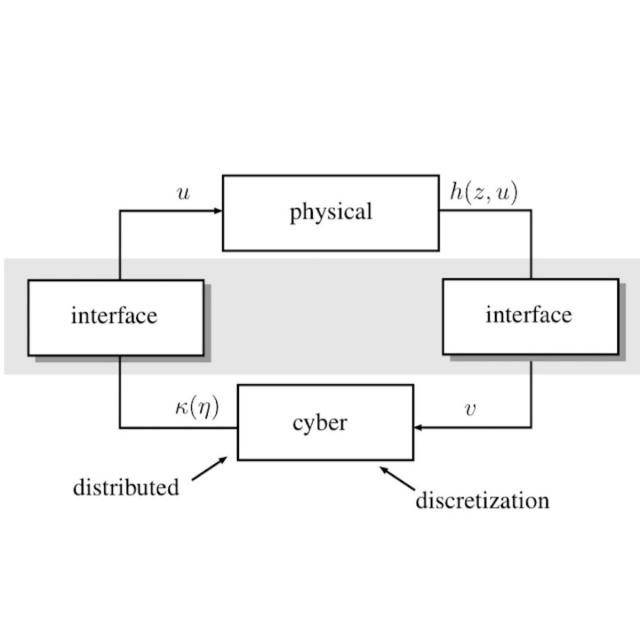
Cyber-physical systems (CPS for short) combine digital and analog devices, interfaces, networks, computer systems, and the like, with the natural and man-made physical world. The inherent interconnected and heterogeneous combination of behaviors in these systems makes their analysis and design a challenging task.

Class Deals by MOOC List - Click here and see Coursera's Active Discounts, Deals, and Promo Codes.

CPS: Modeling and Simulation provides you with an introduction to modeling and simulation of cyber-physical systems. The main focus is on models of physical process, finite state machines, computation, converters between physical and cyber variables, and digital networks. The instructor of this course is Ricardo Sanfelice, Associate Professor in the Department of Computer Engineering at the University of California Santa Cruz.

Syllabus

WEEK 1: Basic Modeling Concepts: Discrete-time and Continuous-Time Systems
WEEK 2: Modeling Cyber Components: Finite State Machines, Computations, Algorithms, and a First CPS Model
WEEK 3: Modeling Interfaces for Cyber-Physical Systems: Conversion, Networks, and Complete CPS Models
WEEK 4: Trajectories in CPS and Simulations: Time Domains, Executions, and Complete CPS Models
Go to Class
MOOC List is learner-supported. When you buy through links on our site, we may earn an affiliate commission.

Related Courses

Machine Learning for Accounting with Python (Coursera) Coursera
University of Illinois at Urbana-Champaign

Machine Learning for Accounting with Python (Coursera)

This course, Machine Learning for Accounting with Python, introduces machine learning algorithms (models) and their applications in accounting problems. It covers classification, regression, clustering, text analysis, time series analysis. It also discusses model evaluation and model optimization. This course provides an entry point for students to be able to apply proper machine learning models on business related datasets with Python to solve various problems.

Sep 21st 2026
5-12 Weeks
Practical Steps for Building Fair AI Algorithms (Coursera) Coursera
Fred Hutchinson Cancer Center

Practical Steps for Building Fair AI Algorithms (Coursera)

Algorithms increasingly help make high-stakes decisions in healthcare, criminal justice, hiring, and other important areas. This makes it essential that these algorithms be fair, but recent years have shown the many ways algorithms can have biases by age, gender, nationality, race, and other attributes. This course will teach you ten practical principles for designing fair algorithms. It will emphasize real-world relevance via concrete takeaways from case studies of modern algorithms, including those in criminal justice, healthcare, and large language models like ChatGPT. You will come away with an understanding of the basic rules to follow when trying to design fair algorithms, and assess algorithms for fairness.

Sep 14th 2026
4 Weeks
Particle Dynamics (Coursera) Coursera
Korea Advanced Institute of Science and Technology - KAIST

Particle Dynamics (Coursera)

This course teaches dynamics, one of the basic mechanics subjects of Mechanical Engineering. Students would be able to organize their knowledge about force and motion, work-energy, impulse-momentum in view of Newton's 2nd law and its integration over time and displacement. The Engineering Dynamics consists of two parts: particle dynamics and rigid body dynamics.

Sep 14th 2026
13-24 Weeks
Introduction to Data Networks and the Internet - Bachelor's (Coursera) Coursera
Illinois Tech

Introduction to Data Networks and the Internet - Bachelor's (Coursera)

This course covers current and evolving data network technologies, protocols, network components, and the networks that use them, focusing on communication to and from the Internet and Local area networks. Course content includes Internet architecture, organization, and protocols including Ethernet, 802.11, routing, switching, OSI and TCP models, DNS, SNMP, DHCP, and more.

Sep 14th 2026
5-12 Weeks
Machine Learning (Coursera) Coursera
Stanford University

Machine Learning (Coursera)

Machine learning is the science of getting computers to act without being explicitly programmed. In the past decade, machine learning has given us self-driving cars, practical speech recognition, effective web search, and a vastly improved understanding of the human genome. Machine learning is so pervasive today that you probably use it dozens of times a day without knowing it. Many researchers also think it is the best way to make progress towards human-level AI. In this class, you will learn about the most effective machine learning techniques, and gain practice implementing them and getting them to work for yourself. More importantly, you'll learn about not only the theoretical underpinnings of learning, but also gain the practical know-how needed to quickly and powerfully apply these techniques to new problems.

Sep 7th 2026
5-12 Weeks
Rigid Body Dynamics (Coursera) Coursera
Korea Advanced Institute of Science and Technology - KAIST

Rigid Body Dynamics (Coursera)

This course teaches dynamics, one of the basic mechanics subjects of Mechanical Engineering. Students would be able to organize their knowledge about force and motion, work-energy, impulse-momentum in view of Newton's 2nd law and its integration over time and displacement. The Engineering Dynamics consists of two parts: particle dynamics and rigid body dynamics. This is the second part of the dynamics: rigid body dynamics.

Sep 14th 2026
13-24 Weeks
An Introduction to Cryptography (Coursera) Coursera
University of Leeds

An Introduction to Cryptography (Coursera)

Cryptography is an essential part of secure but accessible communication that's critical for our everyday life and organisations use it to protect their privacy and keep their conversations and data confidential. This course provides a comprehensive introduction to the fascinating world of cryptography, covering both historical cyphers and modern-day cryptographic techniques.

Sep 21st 2026
2 Weeks
Introduction to Engineering Mechanics (Coursera) Coursera
Georgia Institute of Technology

Introduction to Engineering Mechanics (Coursera)

This course is an introduction to learning and applying the principles required to solve engineering mechanics problems. Concepts will be applied in this course from previous courses you have taken in basic math and physics. The course addresses the modeling and analysis of static equilibrium problems with an emphasis on real world engineering applications and problem solving.

Sep 21st 2026
5-12 Weeks
Development of Real-Time Systems (Coursera) Coursera
EIT Digital

Development of Real-Time Systems (Coursera)

This course is intended for the Master's student and computer engineer who likes practical programming and problem solving! After completing this course, you will have the knowledge to plan and set-up a real-time system both on paper and in practice. The course centers around the problem of achieving timing correctness in embedded systems, which means to guarantee that the system reacts within the real-time requirements.

Sep 21st 2026
5-12 Weeks
Computational Neuroscience (Coursera) Coursera
University of Washington

Computational Neuroscience (Coursera)

This course provides an introduction to basic computational methods for understanding what nervous systems do and for determining how they function. We will explore the computational principles governing various aspects of vision, sensory-motor control, learning, and memory. Specific topics that will be covered include representation of information by spiking neurons, processing of information in neural networks, and algorithms for adaptation and learning.

Sep 14th 2026
5-12 Weeks
VLSI CAD Part II: Layout (Coursera) Coursera
University of Illinois at Urbana-Champaign

VLSI CAD Part II: Layout (Coursera)

A modern VLSI chip is a remarkably complex beast: billions of transistors, millions of logic gates deployed for computation and control, big blocks of memory, embedded blocks of pre-designed functions designed by third parties (called “intellectual property” or IP blocks). How do people manage to design these complicated chips? Answer: a sequence of computer aided design (CAD) tools takes an abstract description of the chip, and refines it step-wise to a final design.

Sep 21st 2026
5-12 Weeks