EdX

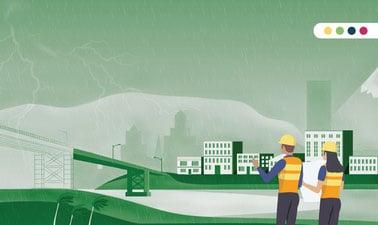
Análisis del riesgo de desastres y cambio climático en proyectos de infraestructura (edX)

Análisis del riesgo de desastres y cambio climático en proyectos de infraestructura (edX)

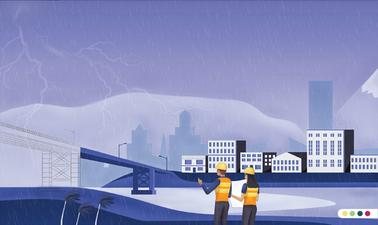
Fortalece tus capacidades técnicas y toma decisiones, incorporando el análisis de riesgo de desastres naturales y resiliencia al cambio climático en el diseño de proyectos de infraestructura. El cambio climático es un hecho y afecta a muchos aspectos de nuestra vida. Cada vez las temperaturas son más extremas y los desastres naturales más recurrentes. No podemos evitar que ocurran las inundaciones, terremotos, tornados…

Class Deals by MOOC List - Click here and see EdX's Active Discounts, Deals, and Promo Codes.

¿Qué podemos hacer para que estos daños tengan el menor impacto? ¿cómo podemos prevenir que las infraestructuras de nuestra ciudad sufran los mínimos daños y por tanto, ponga en peligro a menos gente? o ¿qué tipo de análisis previos a un proyecto son necesarios para afrontar futuros fenómenos del cambio climático?
El curso ha sido diseñado y organizado por el Instituto Interamericano para el Desarrollo Económico y Social (INDES) del Banco Interamericano de Desarrollo (BID) en el marco del Project Learning Academy, con el objeto de fortalecer la capacidad de los equipos de proyecto para gestionar anticipadamente los eventos que pueden afectar a un proyecto, con el fin de incrementar su probabilidad de éxito.

What you'll learn

  • Identificar los principales elementos del riesgo de desastres naturales en todas sus dimensiones de vulnerabilidad, exposición, características de las amenazas e interrelaciones entre estas.
  • Reconocer la importancia de la incorporación del análisis del riesgo de desastres naturales (incluyendo los efectos del cambio climático) en el ciclo de proyectos de infraestructura, identificando los riesgos que conlleva no implementarla adecuadamente.
  • Realizar evaluaciones cualitativas de riesgo de desastres para orientar la toma de decisiones en proyectos de infraestructura.
  • Interpretar evaluaciones cuantitativas de riesgo de desastres para orientar a la toma de decisiones en proyectos de infraestructura
  • Identificar cuándo es suficiente aplicar evaluaciones cualitativas y cuándo se deben realizar también evaluaciones cuantitativas para el análisis de riesgo en proyectos de infraestructura.
  • Identificar la viabilidad técnica y económica de los proyectos de infraestructura a través de un análisis cualitativo o cuantitativo.
  • Realizar recomendaciones informadas en riesgo para el diseño, construcción y operación de infraestructuras y en la gobernanza de riesgos de desastres.

Syllabus

Módulo 1: Bases conceptuales de la gestión del riesgo de desastres
Conocerás los principales retos actuales en la gobernanza y gestión de los riesgos de desastres y la adaptación al cambio climático en proyectos de infraestructura en América Latina y el Caribe. El propósito es mejorar la comprensión de sus dimensiones de vulnerabilidad, exposición y amenaza, y de su incorporación en los proyectos de infraestructura.

Módulo 2: Análisis del riesgo cualitativo
Aprenderás los conceptos clave relacionados con el análisis del riesgo cualitativo a fin de priorizar los riesgos que pueden afectar un proyecto de infraestructura. Se explica en qué circunstancias es suficiente aplicar evaluaciones cualitativas y cuándo se deben realizar también evaluaciones cuantitativas.

Módulo 3: Análisis del riesgo cuantitativo
Descubrirás los conceptos clave relacionados con el análisis del riesgo cuantitativo con el propósito de determinar y medir el impacto y probabilidad de los principales riesgos que pueden afectar los proyectos de infraestructura y se presentan herramientas para la representación del riesgo (curvas F-N y F-D) que apoyan la toma de decisiones para su realización.
Módulo 4: Toma de decisiones incorporando los análisis de riesgo de desastres y de viabilidad económica en proyectos de infraestructura
Aprenderás los conceptos de viabilidad técnica y económica de proyectos de infraestructuras para analizar alternativas de inversión. Se muestran diferentes indicadores cuantitativos para apoyar la toma de decisiones en la definición de secuencias de inversión. Se desarrollan además los principios de eficiencia y equidad.

Módulo 5: Gobernanza de riesgo de desastres y adaptación al cambio climático
Aprenderás los principales componentes de la gobernanza de riesgos de desastres. Se desarrolla el marco metodológico del caso del BID para la incorporación del análisis de riesgo en el ciclo de proyectos de infraestructura y se describen los aspectos clave para la definición de Términos de Referencia para potenciar la aplicación de análisis cuantitativo de riesgo en proyectos de infraestructuras.
Go to Class
MOOC List is learner-supported. When you buy through links on our site, we may earn an affiliate commission.

Related Courses

Climate Change: Carbon Capture and Storage (edX) EdX
University of Edinburgh,EdinburghX

Climate Change: Carbon Capture and Storage (edX)

Explore the technology that can provide a long-term solution to protect our atmosphere from an excess of carbon dioxide, in the context of global energy, our use of fossil fuels, and climate change. The atmosphere is a shared resource and the amount of greenhouse gases it can absorb is a finite resource. This introductory course to the technology of Carbon Capture and Storage is designed for a wider audience with an interest in energy, sustainability and climate change.

Self Paced
Self-Paced
Climate Change Education (edX) EdX
Inter-American Development Bank - IDB,IDBx

Climate Change Education (edX)

Learn how to work with your students to help them explore climate change through the use of interactive and engaging activities. These activities are designed for students at the primary and secondary levels. Our climate is changing rapidly, and now more than ever we need to be ready to act and prepare the next generation to take care of our planet. This course explores the basic science behind climate change and presents the tools to teach it in a positive, engaging and participatory way. The course also introduces some of the ethical and social issues around climate change.

Self Paced
Self-Paced
Climate Change: The Science (edX) EdX
The University of British Columbia,UBCx

Climate Change: The Science (edX)

Master the basics of climate science so you can better understand the news, evaluate scientific evidence, and explain global warming to anyone. Do you want to talk about climate change from an informed perspective? Are you interested in how global warming works? Climate change is the biggest challenge of our time, and climate science is critical to finding solutions. How can we make the best decisions about our present and future? By taking this course, you can be part of the global conversation.

No sessions available
5-12 Weeks
Essential Tools For The Low Carbon Economy (edX) EdX
University of Queensland,UQx

Essential Tools For The Low Carbon Economy (edX)

Investigate global climate change policies and learn the essential skills organisations need to be financially competitive in a low carbon economy. Want to be a key player in transitioning your organisation to the low carbon economy? This course is ideally suited to business managers, financial managers, business-intelligent analysts and data scientists interested in remaining competitive in a low carbon economy.

Self Paced
Self-Paced
Nutrition and Health: Food Risks (edX) EdX
Wageningen University,WageningenX

Nutrition and Health: Food Risks (edX)

Learn about bacteria, pesticides and health hazards present in food. Everyday reports of food scandals and recalls are published. One day it’s scary bacteria in meat, and another day it’s dangerous pesticides in fruits. According to some, meat needs to be cooked well to prevent food-borne illness while others warn not to heat food to prevent the formation of poisonous substances.

Self Paced
Self-Paced
Sustainable Soil Management: Soil for life (edX) EdX
Wageningen University,WageningenX

Sustainable Soil Management: Soil for life (edX)

Learn why soil is so important, how it’s being threatened and what we can do to protect this natural resource so vital to our lives. Soil is the earth’s fragile skin that anchors all life. We depend on soil to build our homes and cities, to grow crops for food and raise livestock, to support transportation and enable recreation. Yet we disregard this crucial and precious resource that lies right under our feet.

Self Paced
Self-Paced
Making Sense of Climate Science Denial (edX) EdX
University of Queensland,UQx

Making Sense of Climate Science Denial (edX)

Climate change is real, so why the controversy and debate? Learn to make sense of the science and to respond to climate change denial. In public discussions, climate change is a highly controversial topic. However, in the scientific community, there is little controversy with 97% of climate scientists concluding humans are causing global warming.

Self Paced
Self-Paced
Antarctica: From Geology to Human History (edX) EdX
Victoria University of Wellington,WellingtonX

Antarctica: From Geology to Human History (edX)

Take a virtual field trip to Antarctica, as we go on location to explore the geology and history of the coldest, driest, windiest continent on earth. Explore the continent of Antarctica and more than 500 million years of geological history and 250 years of geographical discovery and scientific endeavour. In this course, you will learn through lectures filmed on location on Ross Island and in the McMurdo Dry Valleys of Antarctica.

No sessions available
5-12 Weeks