EdX

Environmental Engineering: Air Pollution and Treatment (edX)

Environmental Engineering: Air Pollution and Treatment (edX)

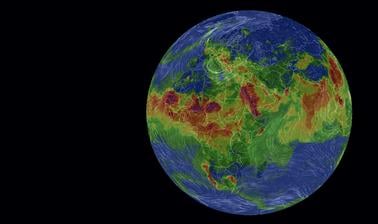
Understand different types of air pollution problems (including climate change), what causes them and how we can prevent or minimize these air problems. This course will cover fundamental science and engineering principles dealing with air environmental systems.

Class Deals by MOOC List - Click here and see EdX's Active Discounts, Deals, and Promo Codes.

First, we focus on what pollutants can be present in air and how these pollutants move and spread in the air. Second, we will investigate indoor air quality and macroscale air-related problems including acid rain, ozone depletion, and global warming. Finally, we will study the impact of climate change on our lives and our environment and how we can mitigate greenhouse gas emissions and adapt to the change.

What you'll learn

  • Types of air pollutants and how they spread in the air
  • Overview of microscale, mesoscale, and macroscale air problems
  • Impact of climate change to our lives and environment

Syllabus

Week 1. Air pollution intro
Week 2. Movement of air pollutants
Week 3. Indoor air quality and macroscale air-related problems
Week 4. Climate change and its impact on the environment
Week 5. Final exam


Go to Class
MOOC List is learner-supported. When you buy through links on our site, we may earn an affiliate commission.

Related Courses

Climate Change Science and Negotiations (edX) EdX
SDGAcademyX,SDG Academy

Climate Change Science and Negotiations (edX)

Humanity is up against a tight timeline to address climate change. Learn how we can deeply decarbonize the global energy systems, and put the world on a 2°C pathway. In this course, learn solutions to mitigate the effects of the global greenhouse gas emissions causing temperature rise, and how to apply these solutions in different national contexts improvements.

Self Paced
Self-Paced
Nitrogen: A Global Challenge (edX) EdX
University of Edinburgh,EdinburghX

Nitrogen: A Global Challenge (edX)

Learn about the global nitrogen challenge, how nitrogen has helped human civilization to develop, and how its misuse now threatens us. It’s a perfect storm. Limited food, water and energy unequally spread between an expanding population, and a warming climate as the bitter icing on the cake. In all these global challenges nitrogen has a leading role to play. Here you will learn just how hard-wired into all of human civilisation nitrogen is, and whether the future will see it as our quiet savior or the toxic villain of the piece.

Self Paced
Self-Paced
Climate Action: Solutions for a Changing Planet (edX) EdX
SDGAcademyX,SDG Academy

Climate Action: Solutions for a Changing Planet (edX)

How do we turn commitments to reducing the effects of climate change into action? Harmful emissions, the degradation of the earth’s resources and global warming have loomed large for decades. With the negotiation and ongoing ratification of the sweeping Paris Agreement, commitments to reducing the effects of climate change abound.

Self Paced
Self-Paced
Climate Change: Financial Risks and Opportunities (edX) EdX
Imperial College Business School,Imperial College London

Climate Change: Financial Risks and Opportunities (edX)

Explore the risks and opportunities that climate change presents to financial markets, hearing from a range of investment industry leaders and scientific researchers. Do you want to know more about how a warming planet is changing the landscape for investing? Geared towards professionals working in financial markets, this course provides a solid introduction to the financial risks and opportunities arising from man-made climate change.

Self Paced
Self-Paced
Water and Wastewater Treatment Engineering: Physicochemical Technology (edX) EdX
Tsinghua University,TsinghuaX

Water and Wastewater Treatment Engineering: Physicochemical Technology (edX)

Learn the basic principles and characteristics of physicochemical technology in water and wastewater treatment engineering. This course mainly talks about the basic principles, process composition, operation characteristics, process calculation methods and some engineering examples of the main physicochemical treatment methods in water and wastewater treatment.

Self Paced
Self-Paced
Introduction to Environmental Science (edX) EdX
DartmouthX,Dartmouth College

Introduction to Environmental Science (edX)

A scientific study of the natural world and how it is influenced by people. Major topics include: food, energy, human population, biodiversity and global change. Environmental science is the study of patterns and processes in the natural world and their modification by human activity. To understand current environmental problems, we need to consider physical, biological and chemical processes that are often the basis of those problems.

Self Paced
4 Weeks
Climate Change in Water and Sanitation Utilities (edX) EdX
Inter-American Development Bank - IDB,IDBx

Climate Change in Water and Sanitation Utilities (edX)

Did you know that some water and sanitation utilities are beginning to lead the transition towards a carbon-neutral future? If you are a professional or an active stakeholder in the water and sanitation sector and want to learn more about how to reduce greenhouse gas emissions at every stage of the urban water cycle, this course is for you. In this course, you will learn about the actions to reduce greenhouse gas emissions in urban water and sanitation utilities and the benefits this brings in terms of economics, environmental impact, and efficiency. Discover the unexplored potential of water and sanitation utilities in global greenhouse gas emissions reduction.

Self Paced
Self-Paced
Antarctica in a Changing Climate (edX) EdX
University of Canterbury,UCx

Antarctica in a Changing Climate (edX)

Explores the exceptional aspects of the Antarctic climate and its ecosystems, looking at the current and future impacts of environmental change, including climate change. This course introduces participants to the ecological and physical characteristics of the Antarctic environment and Antarctic governance.

Self Paced
Self-Paced
Environmental Engineering: Drinking Water Treatment (edX) EdX
Seoul National University,SNUx

Environmental Engineering: Drinking Water Treatment (edX)

Understand what makes water clean or dirty and what are being done at water treatment facilities to make water safe to drink. This course will cover fundamental science and engineering principles dealing with natural and water environmental systems. First, we focus on what influences water quality and what are sources, characteristics, and effects of water pollutants. Second, we will explore the basic chemical concepts needed to understand how pollutants may change their forms and influence water quality.

Self Paced
Self-Paced
Why Move Towards Cleaner Power (edX) EdX
Imperial College London,ImperialX

Why Move Towards Cleaner Power (edX)

Learn why we need to clean up our power supply, and why is it urgent that we take action now. Gain the tools you need to present arguments in favour of a cleaner power sector in your part of the world. This course looks at how increasing greenhouse gases are warming the climate and what it means to decarbonise - reduce the greenhouse gas intensity of - the power sector. It will also provide a range of arguments in favour of decarbonisation, including consideration of ease of access to a secure and affordable energy supply and improvements to health and the environment.

Self Paced
Self-Paced
Designing a Climate Neutral World: An Introduction (edX) EdX
Delft University of Technology,DelftX

Designing a Climate Neutral World: An Introduction (edX)

Learn about climate change strategies and the basic tools used for evaluating alternative options for mitigating greenhouse gas emissions.Mitigation of climate change is one of the most important challenges of our times. To prevent irreversible damage to human societies and the environment, it was agreed that world countries should limit the global average temperature rise. To avoid dangerous impacts of climate change, it is needed to limit global temperature rise to well below 2 °C or even to 1.5 °C above pre-industrial levels.

Self Paced
Self-Paced