EdX

Designing a Climate Neutral World: An Introduction (edX)

Designing a Climate Neutral World: An Introduction (edX)

Learn about climate change strategies and the basic tools used for evaluating alternative options for mitigating greenhouse gas emissions.Mitigation of climate change is one of the most important challenges of our times. To prevent irreversible damage to human societies and the environment, it was agreed that world countries should limit the global average temperature rise. To avoid dangerous impacts of climate change, it is needed to limit global temperature rise to well below 2 °C or even to 1.5 °C above pre-industrial levels.

Class Deals by MOOC List - Click here and see EdX's Active Discounts, Deals, and Promo Codes.

This requires cutting global greenhouse gas emissions to near-zero levels in the coming decades. Especially for the energy system, a drastic transformation is needed.
We know that such a transformation is possible, but it will require virtually every organization, whether it is a steel company or a hospital, a municipality, or a business, to tackle climate change challenges. The question that often arises is – where to start?
This course is designed for the professionals that might be the leaders of this transformation in their organization - policy makers, sustainability consultants or professionals from other fields - who want to familiarize themselves with climate change mitigation strategies so they can apply it to their projects.
In the first part of the course, you will obtain basic knowledge including greenhouse gas (GHG) emissions, the various types of GHG (CO2 and non-CO2), their concentration and about The Paris Agreement. You will also learn about current energy systems, electricity generation and the energy demand of various sectors.
Next, we will focus on courses of action and methods that will assist in selecting the best options in any type of project or organization. As alternatives are usually judged on their efficiency and cost, we will present methodologies for measurement of emissions and calculation of costs. Here we will introduce you to the concepts of “potentials and costs” which will help you analyze alternatives by comparing emission reduction potential with the costs involved. Finally, various options such as renewable energy, energy efficiency and electrification will be used to further elaborate on emission reduction strategies.
We invite you to join this journey and to bring your own experiences and challenges of your organization.

What you'll learn

  • Understand what is needed to limit global warming to below 2 °C compared to pre-industrial levels
  • Understand current energy systems and energy demand in various sectors
  • Choose alternatives for maximum mitigation for the lowest cost
  • Calculate emissions and emission reduction potentials
  • Determine mitigation costs
  • Elaborate marginal abatement cost curves
Go to Class
MOOC List is learner-supported. When you buy through links on our site, we may earn an affiliate commission.

Related Courses

Climate Solutions (edX) EdX
University of Edinburgh,EdinburghX

Climate Solutions (edX)

We are in a Climate Emergency. The actions we all choose to take over the next decade will decide whether we succeed or fail to meet the biggest challenge to our civilisation in the 21st century. Learn how you can help tackle climate change. The Climate Solutions course is designed and delivered by award-winning climate change experts and educators.

Self Paced
Self-Paced
Environmental Engineering: Drinking Water Treatment (edX) EdX
Seoul National University,SNUx

Environmental Engineering: Drinking Water Treatment (edX)

Understand what makes water clean or dirty and what are being done at water treatment facilities to make water safe to drink. This course will cover fundamental science and engineering principles dealing with natural and water environmental systems. First, we focus on what influences water quality and what are sources, characteristics, and effects of water pollutants. Second, we will explore the basic chemical concepts needed to understand how pollutants may change their forms and influence water quality.

Self Paced
Self-Paced
Antarctica in a Changing Climate (edX) EdX
University of Canterbury,UCx

Antarctica in a Changing Climate (edX)

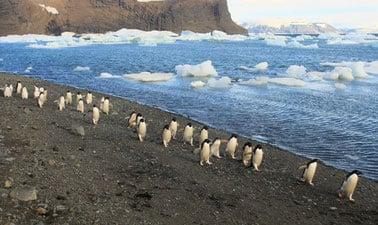
Explores the exceptional aspects of the Antarctic climate and its ecosystems, looking at the current and future impacts of environmental change, including climate change. This course introduces participants to the ecological and physical characteristics of the Antarctic environment and Antarctic governance.

Self Paced
Self-Paced
One Planet, One Ocean (edX) EdX
SDGAcademyX,SDG Academy

One Planet, One Ocean (edX)

A holistic view of how the ocean functions, how human interactions with the ocean can be understood, and what solutions are available to support both sustainable use and stewardship of our blue planet. Is the ocean the real final frontier? Humans have a greater understanding of the surface of the moon than they do of the depths of these waters.

Self Paced
Self-Paced
Stakeholder Outreach: Effective Communication of Complex Environmental Threats (edX) EdX
University of Maryland, College Park,University System of Maryland - USM,USMx,UMD,University of Maryland Center for Environmental Science - UMCES,UMCES

Stakeholder Outreach: Effective Communication of Complex Environmental Threats (edX)

Learn how to engage communities through powerful storytelling, data visualization, and persuasive presence to motivate action on complex environmental projects. In this course you’ll learn how to improve your project management communication in your work environment and motivate and engage communities with clear communication to address complex environmental problems.

Self Paced
Self-Paced
As above, so below: An introduction to soils, ecosystems and livelihoods in the Tropics (edX) EdX
KU Leuven University,KULeuvenX

As above, so below: An introduction to soils, ecosystems and livelihoods in the Tropics (edX)

The tropics are as beautiful and diverse below-ground as they are above-ground. Learn how to use knowledge about the natural variability in soil properties for the sustainable management of ecosystems and farms. Soils form the foundation of sustainable development. They grow our food, fiber and fuel, are a habitat for organisms, buffer and purify water and safeguard archaeological legacies.

Self Paced
Self-Paced
Salmon, People, and Place (edX) EdX
University of Alaska Fairbanks,AlaskaX

Salmon, People, and Place (edX)

This course explores the relationships between salmon and people with an emphasis on the special ties of salmon to Indigenous peoples and to Alaska Natives in particular. No wild animal has more profoundly influenced the cultures and well-being of societies in North America than salmon. Salmon and people have been entwined in a relationship for millennia. This six-week course is an exploration and celebration of this relationship, as well as an examination of the current major issues, including habitat alterations, climate change, and management actions currently straining the relationship between salmon and salmon-dependent people.

Self Paced
Self-Paced