Protecting the World: Introducing Corrosion Science and Engineering (Coursera)

Protecting the World: Introducing Corrosion Science and Engineering (Coursera)

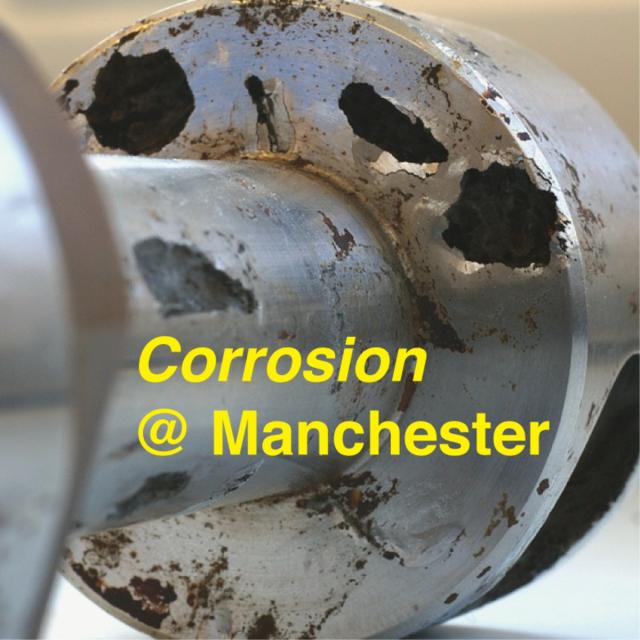
If you have ever encountered rusty car bodies, leaking pipes, tarnished silverware or the green patina of a copper roof then you have experienced corrosion in action. This course, from the Corrosion@Manchester team in collaboration with AkzoNobel, will teach you why metals corrode, what the environmental consequences are, how much corrosion costs and how corrosion can be controlled. It is designed for students, householders, teachers, professionals and anyone in-between.

Class Deals by MOOC List - Click here and see Coursera's Active Discounts, Deals, and Promo Codes.

The aim of the course is to introduce the complex world of corrosion and corrosion control. While a full appreciation of corrosion science involves elements of materials science, electrochemistry and physics while corrosion engineering requires a practical knowledge of corrosion failures and engineering design this course does not need an extensive background knowledge. The course mirrors elements of the Corrosion Control Engineering teaching programme at The University of Manchester for final-year undergraduates and masters-level postgraduates and is used as a supplementary learning resource by our students.

Syllabus

WEEK 1
Principles of Corrosion
In Week 1 we show you the scientific and engineering concepts that are important to an understanding of corrosion in practise. Section 1 provides a brief outline of what corrosion is, how much it costs and how corrosion engineers can help. Section 2 lists, with examples, the eight types of corrosion and shows the important of good engineering design on corrosion control. Section 3 focuses on materials properties and introduces how the corrosion of metals (zinc) may be understood. Section 4 looks directly at the economic and social consequences of corrosion. In section 5 we pick up the pace to focus on the science of electrochemical corrosion. Finally, in section 6, we wind up with a selection of corrosion failures chosen from the museum.

WEEK 2
Cathodic Protection
This week, will discuss how cathodic protection works and how it can be applied in practice to protect metallic structures.Firstly, we’ll discuss some of the basic principles behind cathodic protection, and we will see how some of the concepts you have learned in the other units are applied in a cathodic protection scenario.Subsequently, we’ll discuss some aspects related to the design of cathodic protection systems, such as for example the criteria that have to be satisfied to achieve a good level of corrosion protection, or the method used to assess the requirements for an existing structure in terms of cathodic protection current.Finally, we’ll touch on cathodic protection of reinforced concrete structures, discussing the factors that contribute to good concrete quality and discussing how we can protect the reinforcement steel bars by using cathodic protection.This week’s material is split into 6 sessions. Each session lasts approximately 20 minutes; at the end of each session, there will be a quiz to test your knowledge.

WEEK 3
Surface Engineering
In Week 3, we will introduce Surface Engineering. The learning materials for this week are organised into five sections. Throughout the week, we will clarify what surface engineering is and why surfaces are important. We will look into how coatings protect surfaces from corrosion and will discuss coating design criteria. We will also consider various Surface Engineering techniques. Finally, we will turn our attention to industrial applications of coatings for corrosion protection, coating performance and failure mechanisms.

WEEK 4
Oilfield Corrosion and Control
Week 4 provides an introduction to oilfield corrosion science and engineering. You will learn about pertinent corrosion phenomena, as well as other degradation processes, along with approaches to minimise facility degradation. Specific topics include: types of oilfield equipment; sweet/sour corrosion; seawater corrosion; scaling; erosion; corrosion prediction; corrosion inhibition; corrosion management. All content in this section is section is licensed under Creative Commons Atrribution-NonCommercial-NoDerivs 3.0 Unported License

Go to Class
MOOC List is learner-supported. When you buy through links on our site, we may earn an affiliate commission.

Related Courses

Industrial Biotechnology (Coursera) Coursera
University of Manchester

Industrial Biotechnology (Coursera)

Fossil fuels have been the primary energy source for society since the Industrial Revolution. They provide the raw material for the manufacture of many everyday products that we take for granted, including pharmaceuticals, food and drink, materials, plastics and personal care. As the 21st century progresses we need solutions for the manufacture of chemicals that are smarter, more predictable and more sustainable.

Aug 10th 2026
5-12 Weeks
Sistemas Digitales: De las puertas lógicas al procesador (Coursera) Coursera
Universitat Autònoma de Barcelona

Sistemas Digitales: De las puertas lógicas al procesador (Coursera)

En este curso aprenderemos los fundamentos del diseño de los circuitos digitales actuales, siguiendo una orientación eminentemente práctica. A diferencia de otros cursos más "clásicos" de Circuitos Digitales, nuestro interés se centrará más en el Sistema que en la Electrónica que lo sustenta. Este enfoque nos permitirá sentar las bases del diseño de Sistemas Digitales complejos.

Aug 3rd 2026
5-12 Weeks
Engineering Practices for Building Quality Software (Coursera) Coursera
University of Minnesota

Engineering Practices for Building Quality Software (Coursera)

Agile embraces change which means that team should be able to effectively make changes to the system as team learns about users and market. To be good at effectively making changes to the system, teams need to have engineering rigor and excellence else embracing change becomes very painful and expensive. In this course, you will learn about engineering practices and processes that agile and traditional teams use to make sure the team is prepared for change. In additional, you will also learn about practices, techniques and processes that can help team build high quality software. You will also learn how to calculate a variety of quantitative metrics related to software quality.

Aug 3rd 2026
4 Weeks
Applications in Engineering Mechanics (Coursera) Coursera
Georgia Institute of Technology

Applications in Engineering Mechanics (Coursera)

This course applies principles learned in my course “Introduction to Engineering Mechanics” to analyze real world engineering structures. You will need to have mastered the engineering fundamentals from that class in order to be successful in this course offering. This course addresses the modeling and analysis of static equilibrium problems with an emphasis on real world engineering systems and problem solving.

Aug 10th 2026
5-12 Weeks
Ferrous Technology II (Coursera) Coursera
Pohang University of Science and Technology - POSTECH

Ferrous Technology II (Coursera)

Steel, ever-evolving material, has been the most preeminent of all materials since it can provide wide range of properties that can meet ever-changing requirements. In this course, we explore both fundamental and technical issues related to steels, including iron and steelmaking, microstructure and phase transformation, and their properties and applications.

Aug 3rd 2026
5-12 Weeks
Engineering of Structures: Tension (Coursera) Coursera
Dartmouth College

Engineering of Structures: Tension (Coursera)

This course deals with tension. Tension is one of the easiest forces to understand. It is a pulling force. When we tend to pull an object, it is in tension. Different elements that resist tension in buildings are ropes, cables, and funicular forms. You will study different structures and identify what role tension plays in their designs. The first module explores tension and its importance in building structures.

Aug 3rd 2026
3 Weeks
Controle de Sistemas no Plano-s (Coursera) Coursera
Instituto Tecnológico de Aeronáutica

Controle de Sistemas no Plano-s (Coursera)

Após esse curso você será capaz de esboçar o Lugar Geométrico das Raízes (LGR - Root Locus) do denominador da Função de Transferência em Malha Fechada a partir dos polos e zeros da Função de Transferência em Malha aberta. Você também será capaz de projetar controladores de avanço de fase para atender simultaneamente requisitos de desempenho de amortecimento e de velocidade da resposta.

Aug 3rd 2026
5-12 Weeks
Engineering Systems in Motion: Dynamics of Particles and Bodies in 2D Motion (Coursera) Coursera
Georgia Institute of Technology

Engineering Systems in Motion: Dynamics of Particles and Bodies in 2D Motion (Coursera)

This course is an introduction to the study of bodies in motion as applied to engineering systems and structures. We will study the dynamics of particle motion and bodies in rigid planar (2D) motion. This will consist of both the kinematics and kinetics of motion. Kinematics deals with the geometrical aspects of motion describing position, velocity, and acceleration, all as a function of time. Kinetics is the study of forces acting on these bodies and how it affects their motion.

Aug 10th 2026
5-12 Weeks
Writing Skills for Engineering Leaders (Coursera) Coursera
Rice University

Writing Skills for Engineering Leaders (Coursera)

Engineering leaders must write extensively for their jobs, and their writing needs to be professional, reader-focused, and error-free. What leaders write in particular can affect productivity and the bottom line, so the written communication that leaders create must be clear and concise. In this course, you’ll learn essential writing skills that you can apply in your daily activities on the job as an engineering leader.

Aug 17th 2026
4 Weeks
Exploring Light: Hands-on Activities and Strategies for Teachers (Coursera) Coursera
Exploratorium

Exploring Light: Hands-on Activities and Strategies for Teachers (Coursera)

This is an Exploratorium teacher professional development course taught by Teacher Institute staff, open to any science teacher (particularly middle or high school level) and science enthusiast. This is a hands-on workshop that explores topics and strategies teachers can use to help their students become active investigators of light.

Aug 9th 2026
4 Weeks
Advanced Engineering Systems in Motion: Dynamics of Three Dimensional (3D) Motion (Coursera) Coursera
Georgia Institute of Technology

Advanced Engineering Systems in Motion: Dynamics of Three Dimensional (3D) Motion (Coursera)

This course is an advanced study of bodies in motion as applied to engineering systems and structures. We will study the dynamics of rigid bodies in 3D motion. This will consist of both the kinematics and kinetics of motion. Kinematics deals with the geometrical aspects of motion describing position, velocity, and acceleration, all as a function of time. Kinetics is the study of forces acting on these bodies and how it affects their motion.

Aug 10th 2026
5-12 Weeks