Introduction to Engineering Mechanics (Coursera)

Introduction to Engineering Mechanics (Coursera)

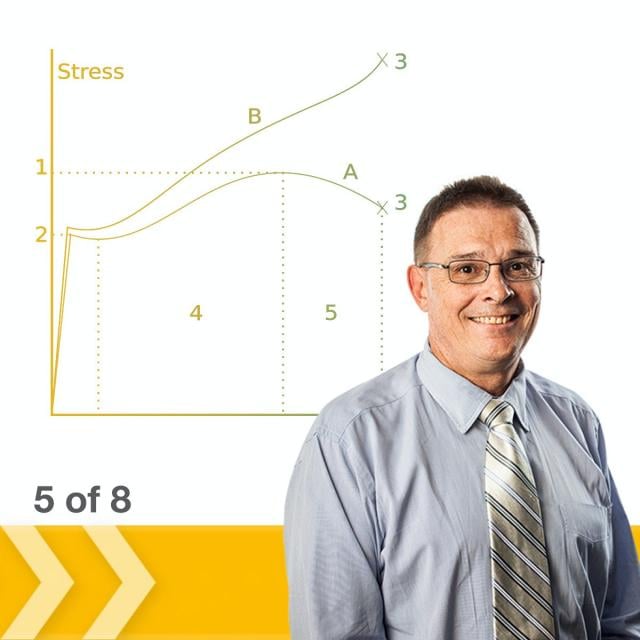
This course is an introduction to learning and applying the principles required to solve engineering mechanics problems. Concepts will be applied in this course from previous courses you have taken in basic math and physics. The course addresses the modeling and analysis of static equilibrium problems with an emphasis on real world engineering applications and problem solving.

Class Deals by MOOC List - Click here and see Coursera's Active Discounts, Deals, and Promo Codes.

The copyright of all content and materials in this course are owned by either the Georgia Tech Research Corporation or Dr. Wayne Whiteman. By participating in the course or using the content or materials, whether in whole or in part, you agree that you may download and use any content and/or material in this course for your own personal, non-commercial use only in a manner consistent with a student of any academic course.
Any other use of the content and materials, including use by other academic universities or entities, is prohibited without express written permission of the Georgia Tech Research Corporation. Interested parties may contact Dr. Wayne Whiteman directly for information regarding the procedure to obtain a non-exclusive license.

Syllabus

Week 1
Forces and Particle Equilibrium
In this section, students will learn the definition of a force and how to represent a force as a vector in two (2D) and three (3D) dimensions. Students will learn the concept of particle equilibrium and equilibrium of systems of particles. Concepts will be reinforced with example problems.

Week 2
Define and Calculate Moments
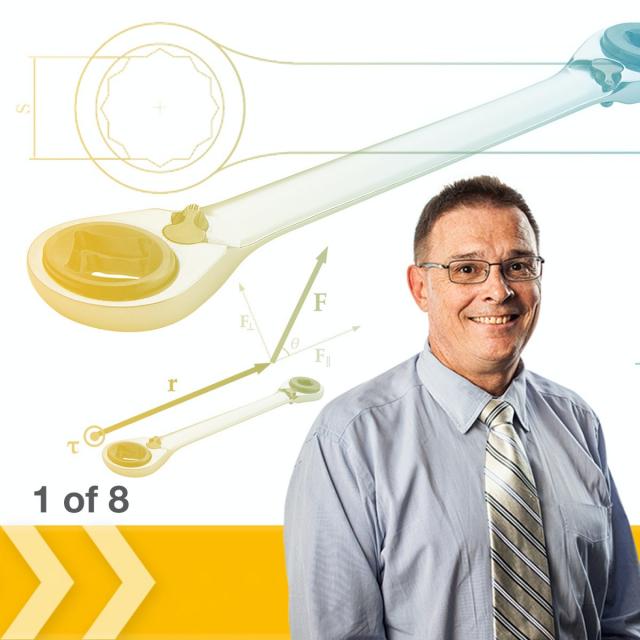
In this section, students will learn the definition of a moment. Students will calculate the moment of a force about a point, line or axis, and moment due to a couple.

Week 3
Equilibrium and Equivalence of Force Systems
In this section, students will learn the equilibrium equations in two (2D) and three (3D) dimensions. Students will solve equivalent system problems. System force results will be defined and calculated.

Week 4
Free Body Diagrams and Equilibrium Analysis Techniques
In this section, students will learn to analyze general equilibrium problems. Free Body Diagrams (FBD) will be defined. Concepts will be reinforced with example problems.

Week 5
Application of Static Equilibrium Equations
In this section, students will apply the equilibrium equations to solve two (2D) and three (3D) real world engineering problems. There will be an extensive use of example problems to reinforce concepts from the course.
Go to Class
MOOC List is learner-supported. When you buy through links on our site, we may earn an affiliate commission.

Related Courses

The Finite Element Method for Problems in Physics (Coursera) Coursera
University of Michigan

The Finite Element Method for Problems in Physics (Coursera)

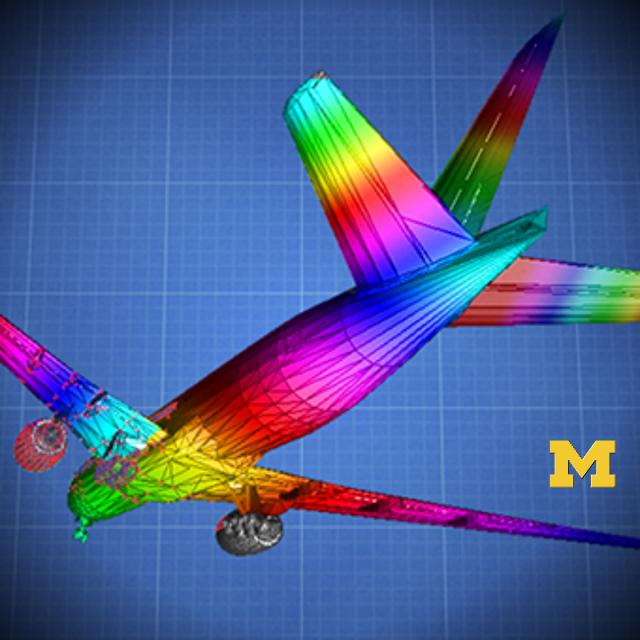
This course is an introduction to the finite element method as applicable to a range of problems in physics and engineering sciences. The treatment is mathematical, but only for the purpose of clarifying the formulation. The emphasis is on coding up the formulations in a modern, open-source environment that can be expanded to other applications, subsequently.

Oct 5th 2026
13-24 Weeks
Mechanics of Materials I: Fundamentals of Stress & Strain and Axial Loading (Coursera) Coursera
Georgia Institute of Technology

Mechanics of Materials I: Fundamentals of Stress & Strain and Axial Loading (Coursera)

This course explores the topic of solid objects subjected to stress and strain. The methods taught in the course are used to predict the response of engineering structures to various types of loading, and to analyze the vulnerability of these structures to various failure modes. Axial loading with be the focus in this course.

Oct 12th 2026
5-12 Weeks
Mécanique Lagrangienne (Coursera) Coursera
École Polytechnique Fédérale de Lausanne

Mécanique Lagrangienne (Coursera)

Le formalisme de Lagrange permet une résolution efficace de problèmes complexes de mécanique. Il permet aussi d'apporter un éclairage plus fondamental sur les lois de conservation (théorème de Noether). A titre d'illustration de la méthode de Lagrange, on traitera le problème très important des oscillateurs harmoniques couplés, exprimé comme un problème de valeurs propres et de vecteurs propres. On termine avec un formalisme permettant d'analyser les résonances paramétriques, notion illustrée par l'expérience montrant la stabilité d'un pendule inversé forcé.

Oct 5th 2026
5-12 Weeks
Fundamentals of Engineering Exam Review (Coursera) Coursera
Georgia Institute of Technology

Fundamentals of Engineering Exam Review (Coursera)

The purpose of this course is to review the material covered in the Fundamentals of Engineering (FE) exam to enable the student to pass it. It will be presented in modules corresponding to the FE topics, particularly those in Civil and Mechanical Engineering. Each module will review main concepts, illustrate them with examples, and provide extensive practice problems.

Oct 5th 2026
5-12 Weeks
Oral Communication for Engineering Leaders (Coursera) Coursera
Rice University

Oral Communication for Engineering Leaders (Coursera)

Taught by Rice University communication faculty from the Rice Center for Engineering Leadership (RCEL). This course covers core topics in oral communication: Communication strategy, content, data visualization, and delivery. You’ll learn key principles in: Creating a communication strategy; Developing a clear message and organizing persuasive content; Creating strong visual support; Presenting data effectively; Presenting professionally and confidently; Handling formal presentations, giving pitches, speaking extemporaneously, managing online presentations, and lowering public speaking anxiety.

Oct 19th 2026
5-12 Weeks
Machine Design Part I (Coursera) Coursera
Georgia Institute of Technology

Machine Design Part I (Coursera)

“Machine Design Part I” is the first course in an in-depth three course series of “Machine Design.” The “Machine Design” Coursera series covers fundamental mechanical design topics, such as static and fatigue failure theories, the analysis of shafts, fasteners, and gears, and the design of mechanical systems such as gearboxes. Throughout this series of courses we will examine a number of exciting design case studies, including the material selection of a total hip implant, the design and testing of the wing on the 777 aircraft, and the impact of dynamic loads on the design of an bolted pressure vessel. In this first course, you will learn robust analysis techniques to predict and validate design performance and life.

Oct 12th 2026
5-12 Weeks
Mécanique de Newton (Coursera) Coursera
École Polytechnique Fédérale de Lausanne

Mécanique de Newton (Coursera)

À l’École Polytechnique Fédérale de Lausanne, un cours de mécanique fait partie de la formation de tous les futurs ingénieurs et scientifiques. Il a pour but de leur apprendre à transcrire sous forme mathématique un phénomène physique, afin de pouvoir en formuler une analyse raisonnée. Cette partie couvrira notamment la cinématique du point matériel, la balistique dans le champ de la pesanteur et l’oscillateur harmonique.

Oct 5th 2026
5-12 Weeks
Rigid Body Dynamics (Coursera) Coursera
Korea Advanced Institute of Science and Technology - KAIST

Rigid Body Dynamics (Coursera)

This course teaches dynamics, one of the basic mechanics subjects of Mechanical Engineering. Students would be able to organize their knowledge about force and motion, work-energy, impulse-momentum in view of Newton's 2nd law and its integration over time and displacement. The Engineering Dynamics consists of two parts: particle dynamics and rigid body dynamics. This is the second part of the dynamics: rigid body dynamics.

Oct 12th 2026
13-24 Weeks
Ethics in Engineering (Coursera) Coursera
University of Michigan

Ethics in Engineering (Coursera)

e.g. This is primarily aimed at first- and second-year undergraduates interested in engineering or science, along with high school Explore unique case studies in engineering ethics. On this four-week course, you’ll examine different historical case studies and understand how they led to classic engineering failures. Though each case is unique and has a distinct context, they all share common themes; a backstory, a disastrous event, a post-event with ramifications, and outcomes.

Oct 19th 2026
4 Weeks
Thermodynamique : fondements (Coursera) Coursera
École Polytechnique Fédérale de Lausanne

Thermodynamique : fondements (Coursera)

Ce cours vous apportera une compréhension des concepts fondamentaux de la thermodynamique du point de vue de la physique, de la chimie et de l’ingénierie. Il est scindé un deux MOOCs. Dans la première partie, le Professeur J.-Ph. Ansermet de l’EPFL et son collaborateur le Dr. Sylvain Bréchet ont rassemblé en quatre leçons tous les principes fondamentaux de la thermodynamique. La deuxième partie du MOOC illustre l’approche thermodynamique par une série d’applications présentées par des spécialistes provenant de diverses institutions partenaires du réseau RESCIF.

Oct 12th 2026
4 Weeks