The Critical Role of IT Support Staff in Healthcare (Coursera)

The Critical Role of IT Support Staff in Healthcare (Coursera)

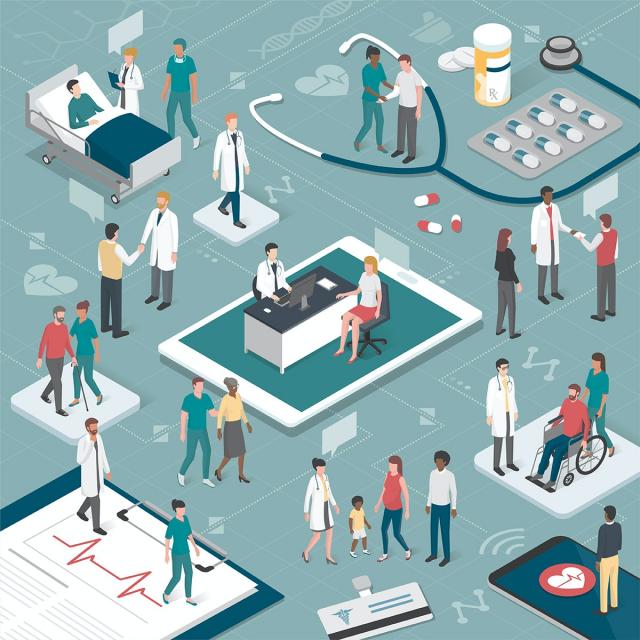
This is a very exciting time to be exploring a career in Health IT Support! In this introductory course, you’ll learn about various roles in IT support that are common in healthcare. IT support staff play critical roles in many different healthcare venues. In addition to helping clinics, hospitals, and emergency rooms, you may end up providing support in a skilled nursing facility, ambulatory surgical centers, virtual care settings, or even a patient’s home!

Class Deals by MOOC List - Click here and see Coursera's Active Discounts, Deals, and Promo Codes.

On any given day, you may interact with nurses, physicians, pharmacists, physical therapists, social workers, other allied health professionals, patients or caregivers. Each of these individuals rely on IT support specialists to help them maintain a high reliability healthcare organization. As you learn about what makes Health IT unique, we hope you find inspiration in the stories shared by some of our very own IT support staff at Johns Hopkins.
They’ll talk to you about the most common problems they help resolve as well as the complexity and range of issues that arise. Whether you dream of being an end-user computer support specialist, working at a healthcare help desk, or rising to an analyst role, we’re thrilled that you are embarking upon this journey. Welcome again!
Course 1 of 4 in the Healthcare IT Support Specialization

Syllabus

WEEK 1
Why Health IT?
This first module is designed to pique your interest about the exciting world of Health Information Technology, or HIT. Over the past decade, technology has had a tremendous impact on the way healthcare is delivered. As the work of clinicians, hospitals, and health systems has been re-imagined, the need for IT Support Specialists has grown. As you learn about what’s unique when working in Health IT (HIT) and what some common roles are, you’ll even see some examples of what a day-in-the life of an IT support specialist in healthcare looks like. You'll watch a help desk agent field a call from a very frustrated surgeon and through empathy and clear communication, helps to resolve the matter. During this module, you’ll be introduced to Johns Hopkins employees who are passionate about the critical role they play every day. They’ll share stories of inspiration and words of advice on how you can get your foot in the door as a Health IT support specialist. What are some examples of difficult calls they’ve handled? What are some of their proudest moments on the job? What are the most common IT issues they've helped troubleshoot? What kinds of tickets will you be helping to close someday? Get started to hear the answers to these questions and many more!

WEEK 2
Roles for Health IT Support Staff
There are a variety of IT support roles that are important for keeping a hospital or health system running. In this module, you’ll learn about the kind of work that’s involved in this important and growing field. You’ll hear about what it means to be a high reliability organization and the kinds of leadership and communication skills you need to have to work in this space. You’ll get to see behind-the-scenes footage in the hospital where an IT support staff member helps a patient with their request. In another scene, you’ll see an IT support team member calmly troubleshoot an error message that a nervous employee is receiving. One of the unique aspects of healthcare compared to other fields is that there are so many clinical terms and topics that might be new to you. We want you to slowly gain exposure to the language used in hospitals as well as familiarity with terms such as chest x-rays, CT scans, second opinions, HIPAA, patient portals. Continue along to gain a better understanding of what’s involved in being an end-user computer support specialist, a help desk agent, or a healthcare IT analyst. No matter what step you take next in your career journey, just know that the rapidly growing field of health IT support has a place for you!
Go to Class
MOOC List is learner-supported. When you buy through links on our site, we may earn an affiliate commission.

Related Courses

Service Transformed: Lessons in U.S. Veteran Centered Care (Coursera) Coursera
University of Michigan

Service Transformed: Lessons in U.S. Veteran Centered Care (Coursera)

Improving health care for veterans has become a matter of national attention and has gained increasing attention from the medical community. With the current surge of veterans reintegrating into civilian society it is critical to improve the training of the next cadre of providers who will provide care for our veterans. It is widely known that veterans receive care in all aspects of the health system, thus providers in veteran focused care facilities, military health serves and civilian locals must be aware of the unique needs of veterans. It is perhaps even more important to educate civilian providers who may be unfamiliar with the unique physical, mental and emotional needs related to military service.

Sep 28th 2026
5-12 Weeks
AI in Healthcare Capstone (Coursera) Coursera
Stanford University

AI in Healthcare Capstone (Coursera)

This capstone project takes you on a guided tour exploring all the concepts we have covered in the different classes up till now. We have organized this experience around the journey of a patient who develops some respiratory symptoms and given the concerns around COVID19 seeks care with a primary care provider. We will follow the patient's journey from the lens of the data that are created at each encounter, which will bring us to a unique de-identified dataset created specially for this specialization. The data set spans EHR as well as image data and using this dataset, we will build models that enable risk-stratification decisions for our patient.

Sep 14th 2026
5-12 Weeks
Personalised Medicine from a Nordic Perspective (Coursera) Coursera
University of Iceland,University of Copenhagen

Personalised Medicine from a Nordic Perspective (Coursera)

The technical revolution has generated large amounts of data in healthcare and research, and a rapidly increasing knowledge about factors of importance for the individual’s health. This holds great potential to support a change from the one-size-fits-all paradigm to personalised or precision medicine, to guide and thereby improve each health decision of expected benefit for the patient.

Sep 21st 2026
5-12 Weeks
Interprofessional Healthcare Informatics (Coursera) Coursera
University of Minnesota

Interprofessional Healthcare Informatics (Coursera)

Interprofessional Healthcare Informatics is a graduate-level, hands-on interactive exploration of real informatics tools and techniques offered by the University of Minnesota and the University of Minnesota's National Center for Interprofessional Practice and Education. We will be incorporating technology-enabled educational innovations to bring the subject matter to life. Over the 10 modules, we will create a vital online learning community and a working healthcare informatics network.

Sep 14th 2026
5-12 Weeks
Designing Engaging Dashboards for Healthcare Analytics (Coursera) Coursera
Northeastern University

Designing Engaging Dashboards for Healthcare Analytics (Coursera)

Introduces processes and design principles for creating meaningful displays of information that support effective business decision-making. Studies how to collect and process data; create visualizations (both static and interactive); and use them to provide insight into a problem, situation, or opportunity. Introduces methods to critique visualizations along with ways to answer the elusive question: “What makes a visualization effective?” Discusses the challenges of making data understandable across a wide range of audiences.

Sep 28th 2026
4 Weeks
Healthcare Data Management and Information Systems (Coursera) Coursera
Northeastern University

Healthcare Data Management and Information Systems (Coursera)

This course is the continuation of the Health Informatics for Healthcare Professionals course. If you have not yet taken the introductory course, it is recommend that you complete that course prior to this course. The foundational knowledge from the introduction is carried through in this deeper dive into informatics in healthcare.

Sep 14th 2026
4 Weeks
HI-FIVE: Health Informatics For Innovation, Value & Enrichment (Social/Peer Perspective) (Coursera) Coursera
Columbia University

HI-FIVE: Health Informatics For Innovation, Value & Enrichment (Social/Peer Perspective) (Coursera)

HI-FIVE (Health Informatics For Innovation, Value & Enrichment) Training is an approximately 10-hour online course designed by Columbia University in 2016, with sponsorship from the Office of the National Coordinator for Health Information Technology (ONC). The training is role-based and uses case scenarios. Our nation’s healthcare system is changing at a rapid pace. Transformative health care delivery programs depend heavily on health information technology to improve and coordinate care, maintain patient registries, support patient engagement, develop and sustain data infrastructure necessary for multi-payer value-based payment, and enable analytical capacities to inform decision making and streamline reporting.

Sep 28th 2026
4 Weeks
Introduction to Healthcare (Coursera) Coursera
Stanford University

Introduction to Healthcare (Coursera)

Solving the problems and challenges within the U.S. healthcare system requires a deep understanding of how the system works. Successful solutions and strategies must take into account the realities of the current system. This course explores the fundamentals of the U.S. healthcare system. It will introduce the principal institutions and participants in healthcare systems, explain what they do, and discuss the interactions between them. The course will cover physician practices, hospitals, pharmaceuticals, and insurance and financing arrangements.

Sep 14th 2026
5-12 Weeks
The Social and Technical Context of Health Informatics (Coursera) Coursera
Johns Hopkins University

The Social and Technical Context of Health Informatics (Coursera)

Improving health and healthcare institutions requires understanding of data and creation of interventions at the many levels at which health IT interact and affect the institution. These levels range from the external “world” in which the institution operates down to the specific technologies. Data scientists find that, when they aim at implementing their models in practice, it is the “socio” components that are both novel to them and mission critical to success. At the end of this course, students will be able to make a quick assessment of a health informatics problem—or a proposed solution—and to determine what is missing and what more needs to be learned.

Sep 14th 2026
4 Weeks
Healthcare Data Security, Privacy, and Compliance (Coursera) Coursera
Johns Hopkins University

Healthcare Data Security, Privacy, and Compliance (Coursera)

In the final course of the Healthcare IT Support program, we will focus on the types of healthcare data that you need to be aware, complexities of security and privacy within healthcare, and issues related to compliance and reporting. As a health IT support specialist, you’ll be exposed to different types of data sources and data elements that are utilized in healthcare. It’s important for you to understand the basic language of healthcare data and for you to recognize the sensitive nature of protected health information (PHI). Maintaining data privacy and security is everyone’s responsibility, including IT support staff!

Sep 14th 2026
4 Weeks
Operations and Patient Safety for Healthcare IT Staff (Coursera) Coursera
Johns Hopkins University

Operations and Patient Safety for Healthcare IT Staff (Coursera)

Now that you've been introduced to the world of Health IT and the important role played by electronic health records (EHRs), we'll focus on other technologies that play a role in maintaining ongoing operations in healthcare. Telemedicine, patient portals, barcode scanners, printers, and medical devices are just some of the technologies that impact providers and patients. As an IT support specialist, you’ll be asked to troubleshoot issues with a wide variety of tools. You'll see a scenario with a medical device installation where issues related to IP addresses, networking, and MAC addresses come up.

Sep 14th 2026
4 Weeks