Healthcare Data Literacy (Coursera)

Healthcare Data Literacy (Coursera)

This course will help lay the foundation of your healthcare data journey and provide you with knowledge and skills necessary to work in the healthcare industry as a data scientist. Healthcare is unique because it is associated with continually evolving and complex processes associated with health management and medical care.

Class Deals by MOOC List - Click here and see Coursera's Active Discounts, Deals, and Promo Codes.

We'll learn about the many facets to consider in healthcare and determine the value and growing need for data analysts in healthcare. We'll learn about the Triple Aim and other data-enabled healthcare drivers. We'll cover different concepts and categories of healthcare data and describe how ontologies and related terms such as taxonomy and terminology organize concepts and facilitate computation. We'll discuss the common clinical representations of data in healthcare systems, including ICD-10, SNOMED, LOINC, drug vocabularies (e.g., RxNorm), and clinical data standards. We’ll discuss the various types of healthcare data and assess the complexity that occurs as you work with pulling in all the different types of data to aid in decisions. We will analyze various types and sources of healthcare data, including clinical, operational claims, and patient generated data as well as differentiate unstructured, semi-structured and structured data within health data contexts. We'll examine the inner workings of data and conceptual harmony offer some solutions to the data integration problem by defining some important concepts, methods, and applications that are important to this domain.
Course 1 of 4 in the Health Information Literacy for Data Analytics Specialization.

Syllabus

WEEK 1
Healthcare 101
In this module, you will be able to identify how biological and social systems are features of human well-being and health. You'll be able to describe important organizations in the US healthcare system and be able to discuss specific examples that document high cost and possible waste in the US healthcare system. You'll be able to identify and discuss the knowing-doing gap and be able to describe evidence-based efforts to transform fragmented care processes into coordinated patient-centered activities.

WEEK 2
Concepts and Categories
In this module, you will be able to compare forms of communication and describe why people us ontologies to describe the world. You'll be able to describe the evolution of standardized railroads in the US and recognize why the evolution of railroad tracks also applies to medical terminologies. You'll be able to analyze a dataset with disease codes and also be able to select which codes refer to specific diseases. You'll be able to match different terminologies with different descriptive domains as well as be able to contrast the different ways of organizing information into hierarchies or other categories.

WEEK 3
Healthcare Data
In this module, you will be able to identify different types of medical processes and be able to explain why specific data formats emerged from these varied processes. You'll be able to list numerous data types that are found within EHRs and link specific clinical processes that created these outputs. You'll be able to trace why various types of administrative data are collected and describe the value of this data for analytics. You'll be able to identify the common ways that gene sequences are stored in computer readable files and be able to describe how big data formats are different than common relational database technologies that require a lot of data modeling and planning.

WEEK 4
Data and Conceptual Harmony
In this module, you will be able to tell leaders and coworkers why they should invest time in creating data dictionaries and other meta-data. You'll be able to describe why one burn registry had data fragmentation issues, and how a variety of standardization and centralization processes helped to achieve data harmony. You'll be able to answer why it is necessary to integrate data, even though the data is coming from disparate sources. You'll be able to perform data mapping as well as communicate the technical terms used to describe and perform record linkages.
Go to Class
MOOC List is learner-supported. When you buy through links on our site, we may earn an affiliate commission.

Related Courses

Living with Dementia: Impact on Individuals, Caregivers, Communities and Societies (Coursera) Coursera
Johns Hopkins University

Living with Dementia: Impact on Individuals, Caregivers, Communities and Societies (Coursera)

Health professionals and students, family caregivers, friends of and affected individuals, and others interested in learning about dementia and quality care will benefit from completing the course. Led by Drs. Nancy Hodgson and Laura Gitlin, participants will acquire foundational knowledge in the care of persons with Alzheimer’s Disease and other neurocognitive disorders.

Sep 28th 2026
5-12 Weeks
The Oral Cavity: Portal to Health and Disease (Coursera) Coursera
University of Pennsylvania

The Oral Cavity: Portal to Health and Disease (Coursera)

This course will focus on the interprofessional realtionship of dentistry and medicine. For each session, the medical specialist will present a broad overview of specific disease entity which will be followed by a dental educator discussing the relevant oral manifestations and implications. The final module of each session will be devoted to the interaction between the dental and other health care professionals.

Oct 5th 2026
5-12 Weeks
Navigating Healthcare Supply Chain Operations (Coursera) Coursera
Northeastern University

Navigating Healthcare Supply Chain Operations (Coursera)

This course is the continuation of "Introduction to Healthcare Supply Chain Operations". If you have not visited the first part yet, please check it out before starting this course. If you have finished the first part of this series: Introduction to Healthcare Supply Chain Operations, you will be able to apply what you learned to your own career. The foundational knowledge and project plan from the introduction are carried through in this deeper dive into healthcare supply chain operations.

Oct 5th 2026
4 Weeks
Lymphoedema: Monitoring & Intervention After Breast Cancer (Coursera) Coursera
Macquarie University

Lymphoedema: Monitoring & Intervention After Breast Cancer (Coursera)

Lymphoedema following breast cancer treatment is a poorly understood and under-researched condition which can significantly impact physical and psychological function, reduce quality of life and result in substantial cost burdens to both patients and the healthcare system. In these interactive modules we will cover an introduction to lymphoedema, lymphatic physiology and anatomy, assessment and treatment, as well as utilise case studies to understand the prospective surveillance and early intervention model of care in breast cancer rehabilitation.

Oct 5th 2026
4 Weeks
Cybersecurity in Healthcare (Hospitals & Care Centres) (Coursera) Coursera
Erasmus University Rotterdam

Cybersecurity in Healthcare (Hospitals & Care Centres) (Coursera)

The Cybersecurity in Healthcare MOOC was developed as part the SecureHospitals.eu project. This project has received funding from the European Union’s Horizon 2020 Coordination Research and Innovation Action under Grant Agreement No. 826497. The course "Cybersecurity in Healthcare" has been developed to raise awareness and understanding the role of cybersecurity in healthcare (e.g., hospitals, care centres, clinics, other medical or social care institutions and service organisations) and the challenges that surround it.

Oct 5th 2026
5-12 Weeks
PrEParing: PrEP for Providers and Patients (Coursera) Coursera
Johns Hopkins University

PrEParing: PrEP for Providers and Patients (Coursera)

Pre-Exposure Prophylaxis (PrEP) using the antiretroviral medication emtricitibine/tenofovir approved in countries around the world is a highly effective means of reducing transmission of HIV through sexual encounters and needle sharing. This Johns Hopkins University course PrEPares you with essential information, concepts and practical advice regarding PrEP from leaders in the field. A first of its kind learning opportunity, both providers and patients learn from the same experts through content that meets the needs of both audiences, while facilitating the opportunity for a shared community space.

Oct 12th 2026
5-12 Weeks
Service Transformed: Lessons in U.S. Veteran Centered Care (Coursera) Coursera
University of Michigan

Service Transformed: Lessons in U.S. Veteran Centered Care (Coursera)

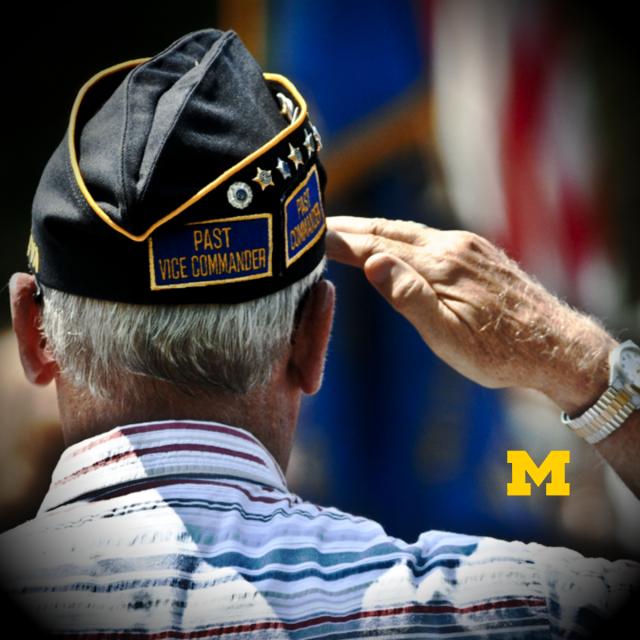
Improving health care for veterans has become a matter of national attention and has gained increasing attention from the medical community. With the current surge of veterans reintegrating into civilian society it is critical to improve the training of the next cadre of providers who will provide care for our veterans. It is widely known that veterans receive care in all aspects of the health system, thus providers in veteran focused care facilities, military health serves and civilian locals must be aware of the unique needs of veterans. It is perhaps even more important to educate civilian providers who may be unfamiliar with the unique physical, mental and emotional needs related to military service.

Sep 28th 2026
5-12 Weeks
Healthcare Information Design and Visualizations (Coursera) Coursera
Northeastern University

Healthcare Information Design and Visualizations (Coursera)

Introduces processes and design principles for creating meaningful displays of information that support effective business decision-making. Studies how to collect and process data; create visualizations (both static and interactive); and use them to provide insight into a problem, situation, or opportunity. Introduces methods to critique visualizations along with ways to answer the elusive question: “What makes a visualization effective?”

Oct 5th 2026
4 Weeks
Take the Lead on Healthcare Quality Improvement (Coursera) Coursera
Case Western Reserve University

Take the Lead on Healthcare Quality Improvement (Coursera)

In this course you will learn about the importance of quality in healthcare and how you can contribute by implementing a quality improvement (QI) project to improve processes of care and patient outcomes. You will learn about powerful tools to add to your QI ‘toolbox’ during short lectures and reflective exercises. You will apply these tools to the implementation of a QI project in your own practice setting or an area of personal improvement. At the completion of the course, you will have a storyboard that captures your QI project success to share with others.

Sep 28th 2026
5-12 Weeks
HI-FIVE: Health Informatics For Innovation, Value & Enrichment (Administrative/IT Perspective) (Coursera) Coursera
Columbia University

HI-FIVE: Health Informatics For Innovation, Value & Enrichment (Administrative/IT Perspective) (Coursera)

HI-FIVE (Health Informatics For Innovation, Value & Enrichment) Training is an approximately 10-hour online course designed by Columbia University in 2016, with sponsorship from the Office of the National Coordinator for Health Information Technology (ONC). The training is role-based and uses case scenarios. No additional hardware or software are required for this course. Our nation’s healthcare system is changing at a rapid pace.

Sep 28th 2026
4 Weeks