Value-Based Care: Quality Improvement in Organizations (Coursera)

Offered by University of Houston,
Value-Based Care: Quality Improvement in Organizations (Coursera)

Fragmented healthcare has created the need for healthcare reform, changing how healthcare is delivered and managed by shifting the structure and culture of healthcare organizations across the U.S. In this course, you will explore ways that provider organizations can successfully move from volume to value through implementing Quality Improvement plans and Continuous Quality Improvement. Organizational improvement is a continuous process. To be successful means coming to grips with things you have to do, how they get done, and who needs to be involved. Paramount to the process is recognizing that every role—every team member—in the organization is important to a successful VBC strategy. You will also learn about adaptive leadership and how to advance vision and innovation through collaboration.

Class Deals by MOOC List - Click here and see Coursera's Active Discounts, Deals, and Promo Codes.

Collaborative relationships between team members and leadership are critical to the transformation. You will explore strategies to gain buy-in, agreement, and understanding about the organization’s vision of value-based care and learn to engage team members in developing solutions to challenges. In the summative assignment, you will identify a measurable value-based care goal that would benefit from process improvement, describe how that goal will be communicated with the care team, and explain your role in leading the targeted improvements.
What You Will Learn

  • Formulate an understanding of the relationship between using a PDSA cycle for quality improvement and the fundamental premise of value-based care.
  • Articulate the importance of organizational effectiveness in transitioning to and maintaining a value-based care organization.
  • Articulate the importance of building a high-performing care team for achieving quality improvement in healthcare.

Course 6 of 7 in the Value-Based Care Specialization

Syllabus

WEEK 1
Quality and Process Improvement to Evolve the Practice
If you participated in earlier courses, you have learned that the journey from volume to value for any provider organization is one of continuous improvement and change. Successfully moving to a value-based care agreement with a health plan takes many steps and is not completed all at once. In Course 5, new competencies, new roles and responsibilities for staff, and new financial and other measures required for a successful transition to and ongoing maintenance of a value-based care organization were examined, in addition to some of the challenges in the transition and ongoing work. Throughout, it was clearly noted that a big part of success is adopting a Quality Improvement (QI) plan. Why? What does that even mean for you and your organization? In this module, we look more closely at continuous quality improvement, or CQI. In this course, you will again hear the theme, “This is not once and done.” Organizational improvement is a continuous process. To be successful means coming to grips with things you have to do, how they get done, and who needs to be involved. This statement is not intended to overwhelm, as often a small change can make a huge difference. However, paramount to the process is recognizing that every role—every team member—in the organization is important to a successful VBC strategy. Remember, as you read or hear terms or concepts that are new to you, have your digital (Word doc) or analog (paper) notepad handy to write them down. At any time, you can use your favorite search engine to learn more. Be a self-directed learner!

WEEK 2
Building a High-Performing Care Team
Fragmented healthcare has created the need for healthcare reform. This requires changing how healthcare is delivered and managed by changing the structure and culture of healthcare organizations across the U.S. However, as you explored in previous courses or may know from experience, successful transformation of the current system of fragmented, high-cost, ineffective care to one that is built on coordinated, efficient, and effective care cannot be accomplished quickly. While decisions must be made to determine strategic directions and obstacles have to be resolved, the process is a steady, thoughtful, and reflective journey. And, the key to success is an adaptive leadership able to advance vision and innovation through collaboration. Collaborative relationships between team members and leadership are critical to the transformation. This is not the time to direct teams, but instead to gain buy-in, agreement, and understanding about the organization’s strategy for and vision of value-based care. Listen, understand, and engage team members in developing solutions to challenges, workflows, etc. that directly impact them. Empowering, inspiring, respecting, and valuing team members will lead to the best decisions, care, and outcomes for patients. Believing in team member abilities leads to everyone reaping the benefits—from staff to patients, family members, other customers, and vendors. As the organization transforms, a new culture emerges with the common goal of supporting and advancing how value-based healthcare is delivered. Remember, as you read or hear terms or concepts that are new to you, have your digital (Word doc) or analog (paper) notepad handy to write them down. At any time, you can use your favorite search engine to learn more. Be a self-directed learner!

WEEK 3
Course Project: Making This My Own

Go to Class
MOOC List is learner-supported. When you buy through links on our site, we may earn an affiliate commission.

Related Courses

Diabetes - a Global Challenge (Coursera) Coursera
University of Copenhagen

Diabetes - a Global Challenge (Coursera)

Diabetes and obesity are growing health problems in rich and poor countries alike. With this course you will get updated on cutting-edge diabetes and obesity research including biological, genetic and clinical aspects as well as prevention and epidemiology of diabetes and obesity. All lectures are provided by high-profile scientists from one the world's leading universities in diabetes research.

Aug 17th 2026
5-12 Weeks
Epidemics (Coursera) Coursera
University of Hong Kong

Epidemics (Coursera)

“If history is our guide, we can assume that the battle between the intellect and will of the human species and the extraordinary adaptability of microbes will be never-ending.” Despite all the remarkable technological breakthroughs that we have made over the past few decades, the threat from infectious diseases has significantly accelerated. In this course, we will learn why this is the case by looking at the fundamental scientific principles underlying epidemics and the public health actions behind their prevention and control in the 21st century.

Aug 17th 2026
5-12 Weeks
Medical Neuroscience (Coursera) Coursera
Duke University

Medical Neuroscience (Coursera)

Medical Neuroscience explores the functional organization and neurophysiology of the human central nervous system, while providing a neurobiological framework for understanding human behavior. In this course, you will discover the organization of the neural systems in the brain and spinal cord that mediate sensation, motivate bodily action, and integrate sensorimotor signals with memory, emotion and related faculties of cognition. The overall goal of this course is to provide the foundation for understanding the impairments of sensation, action and cognition that accompany injury, disease or dysfunction in the central nervous system. The course will build upon knowledge acquired through prior studies of cell and molecular biology, general physiology and human anatomy, as we focus primarily on the central nervous system.

Aug 17th 2026
13-24 Weeks
Clinical Kidney, Pancreas and Islet Transplantation (Coursera) Coursera
Leiden University,Leiden University Medical Center

Clinical Kidney, Pancreas and Islet Transplantation (Coursera)

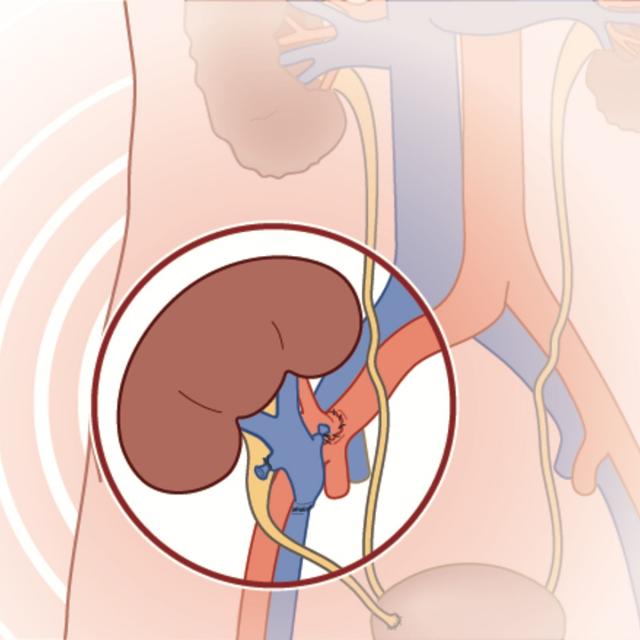
Kidney transplantation is a major advance of modern medicine which provides high-quality of life for patients with end-stage renal disease. What used to be an experimental, risky, and very limited treatment option more than 50 years ago is now routinely performed in many countries worldwide. The number of renal transplants is expected to rise sharply in the next decade since the proportion of patients with end stage renal disease is increasing.

Aug 17th 2026
4 Weeks
eHealth: More than just an electronic record (Coursera) Coursera
The University of Sydney

eHealth: More than just an electronic record (Coursera)

The MOOC, "eHealth: More than just an electronic record!", is multidisciplinary in nature, and aims to equip the global audience of health clinicians, students, managers, administrators, and researchers to reflect on the overall impact of eHealth on the integration of care. It explores the breadth of technology application, current and emerging trends, and showcases both local and international eHealth practice and research.

Aug 17th 2026
5-12 Weeks
Training and Learning Programs for Volunteer Community Health Workers (Coursera) Coursera
Johns Hopkins University

Training and Learning Programs for Volunteer Community Health Workers (Coursera)

Volunteer community health workers (CHWs) are a major strategy for increasing access to and coverage of basic health interventions. Our village health worker training course reviews the process of training and continuing education of CHWs as an important component of involving communities in their own health service delivery. Participants will be guided through the steps of planning training and continuing education activities for village volunteers. The course draws on real-life examples from community-directed onchocerciasis control, village health worker programs, community case management efforts, peer educators programs and patent medicine vendor training programs, to name a few.

Aug 17th 2026
5-12 Weeks
Disease Screening in Public Health (Coursera) Coursera
University of Geneva

Disease Screening in Public Health (Coursera)

Current and future public health is characterized by the increase of chronic and degenerative diseases, corresponding to the worldwide ageing of the population. The increasing prevalence of these conditions together with the long incubation period of the chronic diseases and the restless technological innovations, offer new opportunities to develop strategies for early diagnosis.

Aug 17th 2026
5-12 Weeks
Curanderismo: Global & Cultural Influences of Traditional Healing (Coursera) Coursera
University of New Mexico

Curanderismo: Global & Cultural Influences of Traditional Healing (Coursera)

As the last of four courses on Curanderismo, the art of Hispanic/Latino traditional medicine, this course focuses specifically on traditional healing using different techniques of many countries around the world. As an educational and cultural platform, this course will share a number of traditional global perspectives.

Aug 17th 2026
5-12 Weeks
Schizophrenia (Coursera) Coursera
Wesleyan University

Schizophrenia (Coursera)

The main goal of this class are to gain an introductory exposure to the nature of the psychiatric disorder known as schizophrenia as revealed by the scientific method. We will discuss a broad range of findings from the scientific investigation of biological and psychological factors related to schizophrenia and its treatment.

Aug 17th 2026
5-12 Weeks