Collect Data with Google Forms (Coursera)

Collect Data with Google Forms (Coursera)

By the end of this project, you will learn how to create a Google Survey to collect and organize data for research or informational purposes. In our fast paced world, it’s important to be able to simplify processes and make tasks easy to execute resulting in information that is easy to access, share, and utilize across platforms.

Class Deals by MOOC List - Click here and see Coursera's Active Discounts, Deals, and Promo Codes.

In this Free Guided Project, you will:

  • Compose questions for data collection.
  • Construct a survey for data collection.
  • Manipulate data for analysis using Google Sheets tools.
  • Showcase this hands-on experience in an interview

Learn step-by-step:

  • Compose questions for data collection
  • Modify a Google Form
  • Construct a survey
  • Prepare for the survey
  • Manipulate data for analysis
  • Organize data
Go to Class
MOOC List is learner-supported. When you buy through links on our site, we may earn an affiliate commission.

Related Courses

Pesquisa de Mercado com Métodos Qualitativos (Coursera) Coursera
FIA Business School

Pesquisa de Mercado com Métodos Qualitativos (Coursera)

Nossas boas-vindas ao Curso Pesquisa de Mercado com Métodos Qualitativos. Neste curso, você aprenderá sobre a pesquisa qualitativa em marketing. As metodologias de pesquisa que fazem parte desta categoria serão discutidas, tendo como pano de fundo seu uso no contexto da tomada de decisão gerencial de marketing.

Aug 31st 2026
4 Weeks
Research Methodologies (Coursera) Coursera
Queen Mary University of London

Research Methodologies (Coursera)

This course focuses on research methodologies. In this vein, the focus will be placed on qualitative and quantitative research methodologies, sampling approaches, and primary and secondary data collection. The course begins with a discussion on qualitative research approaches, looking at focus groups, personal interviews, ethnography, case studies and action research.

Aug 31st 2026
4 Weeks
Digital Business Models (Coursera) Coursera
Lund University

Digital Business Models (Coursera)

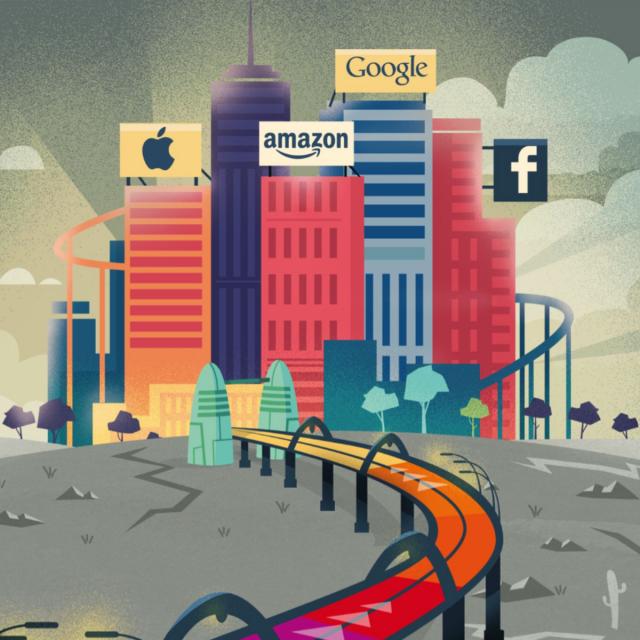
Digital business models are disrupting 50-year old companies in telecommunications, transportation, advertising, e-commerce, automotive, insurance and many other industries. This course will explore the business models of software disruptors of the west such as Apple, Google, Facebook and Amazon, and the east such as Xiaomi and weChat. The class uses a structured framework for analysing business models with numerous examples so that students can apply it to their own business or case study.

Aug 24th 2026
5-12 Weeks
Internet Giants: The Law and Economics of Media Platforms (Coursera) Coursera
University of Chicago

Internet Giants: The Law and Economics of Media Platforms (Coursera)

Law

This seven-week course will explore the relationship between law and technology with a strong focus on the law of the United States with some comparisons to laws around the world, especially in Europe. Tech progress is an important source of economic growth and raises broader questions about the human condition, including how culture evolves and who controls that evolution. Technology also matters in countless other ways as it often establishes the framework in which governments interact with their citizens, both in allowing speech and blocking it and in establishing exactly what the boundaries are between private life and the government. And technology itself is powerfully shaped by the laws that apply in areas as diverse as copyright, antitrust, patents, privacy, speech law and the regulation of networks.

Aug 31st 2026
5-12 Weeks
Data Analysis and Visualization (Coursera) Coursera
University at Buffalo,The State University of New York

Data Analysis and Visualization (Coursera)

By the end of this course, learners are provided a high-level overview of data analysis and visualization tools, and are prepared to discuss best practices and develop an ensuing action plan that addresses key discoveries. It begins with common hurdles that obstruct adoption of a data-driven culture before introducing data analysis tools (R software, Minitab, MATLAB, and Python). Deeper examination is spent on statistical process control (SPC), which is a method for studying variation over time. The course also addresses do’s and don’ts of presenting data visually, visualization software (Tableau, Excel, Power BI), and creating a data story.

Aug 31st 2026
4 Weeks
Introduction to SIEM (Splunk) (Coursera) Coursera
EDUCBA

Introduction to SIEM (Splunk) (Coursera)

This course provides a comprehensive understanding of Security Information and Event Management (SIEM) concepts and practical skills using Splunk as an SIEM solution. You will discover SIEM fundamentals, Splunk architecture, data collection and management, data analysis, and advanced topics such as correlation and incident response. By the end of the course, you will effectively apply Splunk for log analysis, threat detection, and security monitoring.

Aug 31st 2026
3 Weeks
Conflict Transformation (Coursera) Coursera
Emory University

Conflict Transformation (Coursera)

This course introduces you to the concept of conflict transformation and how it differs from conflict resolution, management, and prevention. We’ll see how conflict offers opportunities for constructive change, and we'll explore different tools and methods for engaging conflict constructively.

Aug 31st 2026
5-12 Weeks