The DMAIC Framework - Define and Measure Phase (Coursera)

Offered by SkillUp EdTech,
The DMAIC Framework - Define and Measure Phase (Coursera)

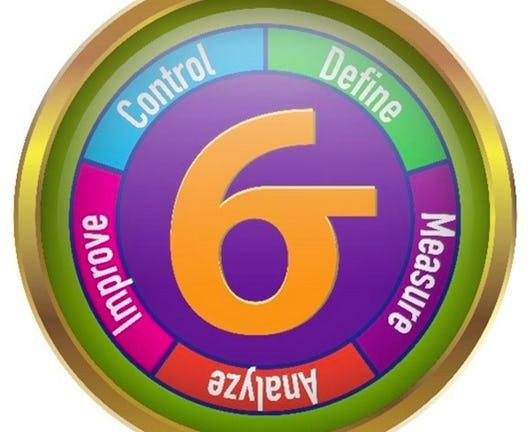
The course is designed for Lean Six Sigma professionals to excel in the American Society for Quality (ASQ) Certified Six Sigma Green Belt (CSSGB) exam. The course focuses specifically on the first two phases of the define, measure, analyze, improve, and control (DMAIC) framework.

Class Deals by MOOC List - Click here and see Coursera's Active Discounts, Deals, and Promo Codes.

In the define phase, you will learn to define a problem statement and project scope, whereas in the measure phase, you will learn about effective data collection strategies and measurement system analysis (MSA).
By the end of this course, you will be able to:

  • Define specific, measurable, achievable, relevant, and time-bound (SMART) project goals and objectives.
  • Analyze the voice of the customer (VOC) data to translate it to critical to quality (CTQ) parameters.
  • Explain process mapping and define key performance metrics.
  • Plan data collection activities to quantify the performance of the process.

The course is best suited for individuals who analyze and solve quality problems and work on quality improvement projects. It is recommended that you complete the first course in the ASQ-Certified Six Sigma Green Belt Exam Prep Specialization, Overview: Six Sigma and the Organization, before starting this course.
This course is part of the ASQ-Certified Six Sigma Green Belt (CSSGB) Exam Prep Specialization.

What you'll learn

  • Define specific, measurable, achievable, relevant, and time-bound (SMART) project goals and objectives.
  • Analyze the voice of the customer (VOC) data to translate it to critical to quality (CTQ) parameters.
  • Explain process mapping and define key performance metrics.
  • Plan data collection activities to quantify the performance of the process.

Syllabus

Define: Project Identification, Voice of the Customer (VoC), and Project Management Basics
In this module, you will learn the essential foundations for project initiation. The focus is on project identification, understanding the voice of the customer (VoC), and grasping fundamental project management principles. You’ll discover how to select projects effectively, comprehend customer needs through the VoC, and the basics of project management. You’ll also learn about project selection processes, process components, benchmarking concepts, and stakeholder analysis. The module also delves into VoC data collection, how to translate it into critical to quality (CTQ) factors, applying the KANO model, crafting project charters, defining project scopes, and tracking key project metrics. Finally, this module is your gateway to understanding project commencement and customer-centric project initiation.

Define: Project Management and Planning Tools
In this module, you will learn about the fundamental tools crucial for effective project planning. You will gain insight into the work breakdown structure (WBS), Gantt charts, critical path method (CPM), and program evaluation and review technique (PERT. Additionally, the module discusses project documentation essentials, elements of project risk analysis, management and planning tools, and strengths, weaknesses, opportunities, and threats (SWOT) analysis. You will also learn about the benefits of decision matrices, quality metrics such as DPU, DPO, DPMO, Sigma level, and cost of poor quality. Finally, the module explores stages of team evolution, role management, and decision-making aids and offers a comprehensive insight into essential techniques vital for successful project management and planning.

Measure: Probability and Statistics and Collecting and Summarizing Data 
In this module, you will focus on important statistical concepts and data-gathering techniques. You will learn about process analysis, probability basics, and various statistical distributions like normal, binomial, and Poisson. You will also gain insight into different data types, planning data collection, sampling methods, and operational definition worksheets. Next, the module delves into measures of central tendency and dispersion, and graphical representation. You will be introduced to statistical ideas such as probability, diverse data types, and effective data collection strategies, empowering you to summarize, analyze, and interpret data confidently in project scenarios.

Measure: Measurement System Analysis (MSA) 
In this module, you will gain insight into measurement system analysis (MSA), which is an in-depth evaluation of a measurement process to assess the quality and reliability of measurement systems used in data collection. You will also learn to evaluate and improve the existing measurement systems in a process or organization, identify sources of measurement error, assess measurement system performance, and implement strategies to enhance measurement accuracy and precision. Finally, this module also focuses on evaluating and assessing the performance and capability of a process to meet customer requirements and specifications.  

Peer-Reviewed Assignment
This is a peer-review assignment based on the concepts taught in The DMAIC Framework: Define and Measure Phase course. In this assignment, you will be able to explain how to apply the define and measure phases of the DMAIC framework in a real-life scenario.


Go to Class
MOOC List is learner-supported. When you buy through links on our site, we may earn an affiliate commission.

Related Courses

The Control Phase for the 6 σ Black Belt (Coursera) Coursera
University System of Georgia

The Control Phase for the 6 σ Black Belt (Coursera)

This course is designed for professionals interested in learning the principles of Lean Sigma, the DMAIC process and DFSS. This course is number 7 of 8 in this specialization dealing with topics in the Control Phase of Six Sigma. Professionals with some completed coursework in statistics and a desire to drive continuous improvement within their organizations would find this course and the others in this specialization appealing. Method of assessment consists of several formative and summative quizzes and a multi-part peer reviewed project completion regiment.

Sep 7th 2026
5-12 Weeks
Data Management for Clinical Research (Coursera) Coursera
Vanderbilt University

Data Management for Clinical Research (Coursera)

This course presents critical concepts and practical methods to support planning, collection, storage, and dissemination of data in clinical research. Understanding and implementing solid data management principles is critical for any scientific domain. Regardless of your current (or anticipated) role in the research enterprise, a strong working knowledge and skill set in data management principles and practice will increase your productivity and improve your science. Our goal is to use these modules to help you learn and practice this skill set.

Sep 14th 2026
5-12 Weeks
Sampling People, Networks and Records (Coursera) Coursera
University of Michigan

Sampling People, Networks and Records (Coursera)

Good data collection is built on good samples. But the samples can be chosen in many ways. Samples can be haphazard or convenient selections of persons, or records, or networks, or other units, but one questions the quality of such samples, especially what these selection methods mean for drawing good conclusions about a population after data collection and analysis is done. Samples can be more carefully selected based on a researcher’s judgment, but one then questions whether that judgment can be biased by personal factors.

Sep 7th 2026
5-12 Weeks
Clinical Trials Data Management and Quality Assurance (Coursera) Coursera
Johns Hopkins University

Clinical Trials Data Management and Quality Assurance (Coursera)

In this course, you’ll learn to collect and care for the data gathered during your trial and how to prevent mistakes and errors through quality assurance practices. Clinical trials generate an enormous amount of data, so you and your team must plan carefully by choosing the right collection instruments, systems, and measures to protect the integrity of your trial data. You’ll learn how to assemble, clean, and de-identify your datasets.

Sep 7th 2026
4 Weeks
How to Describe Data (Coursera) Coursera
University of Michigan

How to Describe Data (Coursera)

How to Describe Data examines the use of data in our everyday lives, giving you the ability to assess the usefulness and relevance of the information you encounter. In this course, learn about uncertainty’s role in measurements and how you can develop a critical eye toward evaluating statistical information in places like headlines, advertisements, and research. You’ll learn the fundamentals of discussing, evaluating, and presenting a wide range of data sets, as well as how data helps us make sense of the world. This is a broad overview of statistics and is designed for those with no previous experience in data analysis.

Sep 7th 2026
4 Weeks
Python for Data Science, AI & Development (Coursera) Coursera
IBM

Python for Data Science, AI & Development (Coursera)

Kickstart your learning of Python for data science, as well as programming in general, with this beginner-friendly introduction to Python. Python is one of the world’s most popular programming languages, and there has never been greater demand for professionals with the ability to apply Python fundamentals to drive business solutions across industries.

Sep 1st 2026
5-12 Weeks
Surveillance Systems: The Building Blocks (Coursera) Coursera
Johns Hopkins University

Surveillance Systems: The Building Blocks (Coursera)

Epidemiology is often described as the cornerstone science and public health and public health surveillance is a cornerstone of epidemiology. This course will help you build your technical awareness and skills for working with a variety of surveillance systems. Along the way, we'll focus on system objectives, data reporting, the core surveillance attributes, and performance assessment.

Aug 31st 2026
4 Weeks
The Analyze Phase for the 6 σ Black Belt (Coursera) Coursera
University System of Georgia

The Analyze Phase for the 6 σ Black Belt (Coursera)

This course is designed for professionals interested in learning the principles of Lean Sigma, the DMAIC process and DFSS. This course is number 5 of 8 in this specialization dealing with topics in the Analyze Phase of Six Sigma. Professionals with some completed coursework in statistics and a desire to drive continuous improvement within their organizations would find this course and the others in this specialization appealing. Method of assessment consists of several formative and summative quizzes and a multi-part peer reviewed project completion regiment.

Sep 7th 2026
5-12 Weeks
Surveillance Systems: Analysis, Dissemination, and Special Systems (Coursera) Coursera
Johns Hopkins University

Surveillance Systems: Analysis, Dissemination, and Special Systems (Coursera)

In this course, we'll build on the previous lessons in this specialization to focus on some very specific skills related to public health surveillance. We'll learn how to get the most out of surveillance data analysis, focusing specifically on interpreting time trend data to detect temporal aberrations as well as person, place, and time in the context of surveillance data.

Aug 31st 2026
4 Weeks
Six Sigma Advanced Define and Measure Phases (Coursera) Coursera
University System of Georgia

Six Sigma Advanced Define and Measure Phases (Coursera)

This course is for you if you are looking to dive deeper into Six Sigma or strengthen and expand your knowledge of the basic components of green belt level of Six Sigma and Lean. Six Sigma skills are widely sought by employers both nationally and internationally. These skills have been proven to help improve business processes and performance. This course will take you deeper into the principles and tools associated with the "Design" and "Measure" phases of the DMAIC structure of Six Sigma.

Aug 31st 2026
5-12 Weeks
Algorithms, Data Collection, and Starting to Code (Coursera) Coursera
University of Colorado System

Algorithms, Data Collection, and Starting to Code (Coursera)

This course starts you on your journey learning about computational thinking and beginning C programming. If you’d like to explore how we can interact with the world in a rigorous, computational way, and would also like to start learning to program, this is the course for you!

Sep 7th 2026
4 Weeks