Advanced Statistical Analysis and Tools (Coursera)

Offered by SkillUp EdTech,
Advanced Statistical Analysis and Tools (Coursera)

This course is designed to guide you on how to prepare for the American Society for Quality Certified Six Sigma Black Belt (ASQ CSSBB) certification, a mark of quality excellence across industries. The course offers insights into the statistical tools for drawing valid conclusions, depicting relationships, analyzing measurement systems, testing hypotheses, designing experiments, applying statistical process control, and leading advanced Six Sigma projects across the enterprise.

Class Deals by MOOC List - Click here and see Coursera's Active Discounts, Deals, and Promo Codes.

By the end of this course, you will be able to:

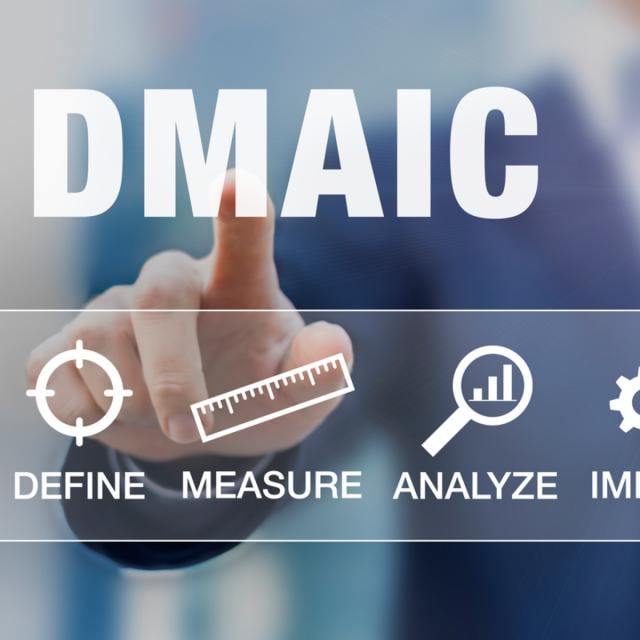
  • Identify the statistical analysis tools required for quality and process improvement in each phase of the DMAIC methodology.
  • Describe the statistical processes of each phase of the DMAIC methodology used for operational efficiency.
  • Apply statistical analysis tools for representing relationships, analyzing systems, and testing hypotheses.
  • Implement design experiments and apply statistical process control to streamline business processes.

This course is best suited for employees working in process improvement teams, including individuals with significant experience leading and executing Six Sigma, lean, or other quality improvement projects.
This course is part of the ASQ-Certified Six Sigma Black Belt (CSSBB) Exam Prep Specialization.

What you'll learn

  • Identify the statistical analysis tools required for quality and process improvement in each phase of the DMAIC methodology.
  • Describe the statistical processes of each phase of the DMAIC methodology used for operational efficiency.
  • Apply statistical analysis tools for representing relationships, analyzing systems, and testing hypotheses.
  • Implement design experiments and apply statistical process control to streamline business processes.

Syllabus

Statistical analysis and tools in the measure phase
In this module, you will learn about the various statistical tools you can use for process analysis and data collection. The module delves into the statistical technique of measurement system analysis (MSA). You will also learn how to use graphical tools to construct and interpret diagrams and charts. You will be equipped with how the results of statistical studies are used to draw valid conclusions, the distribution methods relevant to probability, and the techniques used for process capability. Finally, you will learn to interpret the difference between short-term and long-term capabilities.

Statistical analysis and tools in the analyze phase
In this module, you will learn how to measure and model relationships between variables. You will explore the correlation coefficient, linear regression, and multivariate tools. The module also delves into applying the key concepts of hypothesis testing, such as the significance of testing, calculating sample size, and analyzing waste. You will become acquainted with techniques such as point and interval estimates and tests for means, variances, and proportions. Additionally, you will learn the analysis of variance (ANOVA) and goodness-of-fit (chi-square) tests and the techniques for analyzing and managing risk.

Statistical analysis and tools in the improve and control phase
In this module, you will explore the key concepts of the design of experiments (DOE). You will also learn how to apply the principles of DOE, such as power, sample size, balance, repetition, replication, order, efficiency, randomization, blocking, interaction, confounding, and resolution. The module will take you through planning and evaluating different types of experiments in DOE and various types of Lean methods you can use for process improvement, like waste elimination, cycle-time reduction, Kaizen, and others. Additionally, the module focuses on statistical process control (SPC) and other controls that help to streamline business processes. Finally, you will learn how to sustain process improvements using methods like documentation, training, and evaluation.

Peer review assignment
This is a peer-review assignment based on the concepts taught in the Advanced Statistical Analysis and Tools course. In this assignment, you have been provided with a real-life scenario. You must explain how you can use process capabilities and their related metrics in process improvement.


Go to Class
MOOC List is learner-supported. When you buy through links on our site, we may earn an affiliate commission.

Related Courses

Organization Planning and Development for the 6 σ Black Belt (Coursera) Coursera
University System of Georgia

Organization Planning and Development for the 6 σ Black Belt (Coursera)

This course is designed for professionals interested in learning the principles of Lean Sigma, the DMAIC process and DFSS. This course is number 1 of 8 in this specialization dealing with topics in Organization Planning and Development. Professionals with some completed coursework in statistics and a desire to drive continuous improvement within their organizations would find this course and the others in this specialization appealing. Method of assessment consists of several formative and summative quizzes and a multi-part peer reviewed project completion regiment.

Jun 1st 2026
5-12 Weeks
Six Sigma Tools for Analyze (Coursera) Coursera
University System of Georgia

Six Sigma Tools for Analyze (Coursera)

This course will cover the Measure phase and portions of the Analyze phase of the Six Sigma DMAIC (Define, Measure, Analyze, Improve, and Control) process. You will learn about lean tools for process analysis, failure mode and effects analysis (FMEA), measurement system analysis (MSA) and gauge repeatability and reproducibility (GR&R), and you will be introduced to basic statistics. This course will outline useful measure and analysis phase tools and will give you an overview of statistics as they are related to the Six Sigma process.

May 25th 2026
4 Weeks
The Measure Phase for the 6 σ Black Belt (Coursera) Coursera
University System of Georgia

The Measure Phase for the 6 σ Black Belt (Coursera)

This course is designed for professionals interested in learning the principles of Lean Sigma, the DMAIC process and DFSS. This course is number 4 of 8 in this specialization dealing with topics in the Measure Phase of Six Sigma. Professionals with some completed coursework in statistics and a desire to drive continuous improvement within their organizations would find this course and the others in this specialization appealing. Method of assessment consists of several formative and summative quizzes and a multi-part peer reviewed project completion regiment.

Jun 1st 2026
5-12 Weeks
Operations Management: Strategy and Quality Management for the Digital Age (Coursera) Coursera
University of Illinois at Urbana-Champaign

Operations Management: Strategy and Quality Management for the Digital Age (Coursera)

In this course you will focus on process improvement. You will learn how to set organizational priorities for continuous process improvement, how to execute process improvement projects, and how to sustain the initiative for continuous improvements. Upon successful completion of this course, you will be able to: understand the roles of process improvement; relate underlying principles to frameworks and techniques used for process improvement; synthesize information to make decisions for organizational initiatives and process improvement; apply analytical techniques for tactical decisions in a process improvement project

Jun 3rd 2026
4 Weeks
Six Sigma Tools for Define and Measure (Coursera) Coursera
University System of Georgia

Six Sigma Tools for Define and Measure (Coursera)

This course is for you if you are looking to learn more about Six Sigma or refresh your knowledge of the basic components of Six Sigma and Lean. Six Sigma skills are widely sought by employers both nationally and internationally. These skills have been proven to help improve business processes and performance. This course will cover the Define phase and introduce you to the Measure phase of the DMAIC (Define, Measure, Analyze, Improve, and Control) process. You will learn about Six Sigma project development and implementation, you will become familiar with project management tools, you will be introduced to statistics and understand its significance to Six Sigma, and finally you will learn about data collection and its importance to an organization.

May 25th 2026
4 Weeks
Six Sigma Tools for Improve and Control (Coursera) Coursera
University System of Georgia

Six Sigma Tools for Improve and Control (Coursera)

This course will provide you will the tools necessary to complete the final components of the analyze phase as well as the improve and control phases of the Six Sigma DMAIC (Define, Measure, Analyze, Improve, and Control) process. This course is the final course in the Six Sigma Yellow Belt Specialization. You will learn about relationships from data using correlation and regression as well as the different hypothesis terms in hypothesis testing. This course will provide you with tools and techniques for improvement. You will also understand the importance of a control plan, as well as its key characteristics, for maintaining process improvements.

May 25th 2026
5-12 Weeks
Experimental Design Basics (Coursera) Coursera
Arizona State University

Experimental Design Basics (Coursera)

This is a basic course in designing experiments and analyzing the resulting data. The course objective is to learn how to plan, design and conduct experiments efficiently and effectively, and analyze the resulting data to obtain objective conclusions. Both design and statistical analysis issues are discussed. Opportunities to use the principles taught in the course arise in all aspects of today’s industrial and business environment. Applications from various fields will be illustrated throughout the course. Computer software packages (JMP, Design-Expert, Minitab) will be used to implement the methods presented and will be illustrated extensively.

Jun 1st 2026
5-12 Weeks
Social Media Data Analytics (Coursera) Coursera
University of Washington

Social Media Data Analytics (Coursera)

Learner Outcomes: After taking this course, you will be able to: utilize various Application Programming Interface (API) services to collect data from different social media sources such as YouTube, Twitter, and Flickr; process the collected data - primarily structured - using methods involving correlation, regression, and classification to derive insights about the sources and people who generated that data; analyze unstructured data - primarily textual comments - for sentiments expressed in them; use different tools for collecting, analyzing, and exploring social media data for research and development purposes.

Jun 1st 2026
4 Weeks
Improvement Techniques and Control Tools (Coursera) Coursera
SkillUp EdTech

Improvement Techniques and Control Tools (Coursera)

This course introduces you to the processes and tools to implement the improvement strategies and then sustain them by controlling your process as per the implemented solutions. Based on the analysis from the previous phases of the define, measure, analyze, improve, and control (DMAIC) framework, you will learn to evaluate the potential solutions and select the most effective ones to bring improvement to your process.

Jun 1st 2026
5-12 Weeks
DFSS for the 6 σ Black Belt (Coursera) Coursera
University System of Georgia

DFSS for the 6 σ Black Belt (Coursera)

This course is designed for professionals interested in learning the principles of Lean Sigma, the DMAIC process and DFSS. This course is number 8 of 8 in this specialization dealing with topics in Design for Six Sigma. Professionals with some completed coursework in statistics and a desire to drive continuous improvement within their organizations would find this course and the others in this specialization appealing.

Jun 1st 2026
5-12 Weeks
Clinical Trials Data Management and Quality Assurance (Coursera) Coursera
Johns Hopkins University

Clinical Trials Data Management and Quality Assurance (Coursera)

In this course, you’ll learn to collect and care for the data gathered during your trial and how to prevent mistakes and errors through quality assurance practices. Clinical trials generate an enormous amount of data, so you and your team must plan carefully by choosing the right collection instruments, systems, and measures to protect the integrity of your trial data. You’ll learn how to assemble, clean, and de-identify your datasets.

Jun 1st 2026
4 Weeks
The Analyze Phase for the 6 σ Black Belt (Coursera) Coursera
University System of Georgia

The Analyze Phase for the 6 σ Black Belt (Coursera)

This course is designed for professionals interested in learning the principles of Lean Sigma, the DMAIC process and DFSS. This course is number 5 of 8 in this specialization dealing with topics in the Analyze Phase of Six Sigma. Professionals with some completed coursework in statistics and a desire to drive continuous improvement within their organizations would find this course and the others in this specialization appealing. Method of assessment consists of several formative and summative quizzes and a multi-part peer reviewed project completion regiment.

Jun 1st 2026
5-12 Weeks