Intro to Lean Six Sigma and Project Identification Methods (Coursera)

Offered by SkillUp EdTech,
Intro to Lean Six Sigma and Project Identification Methods (Coursera)

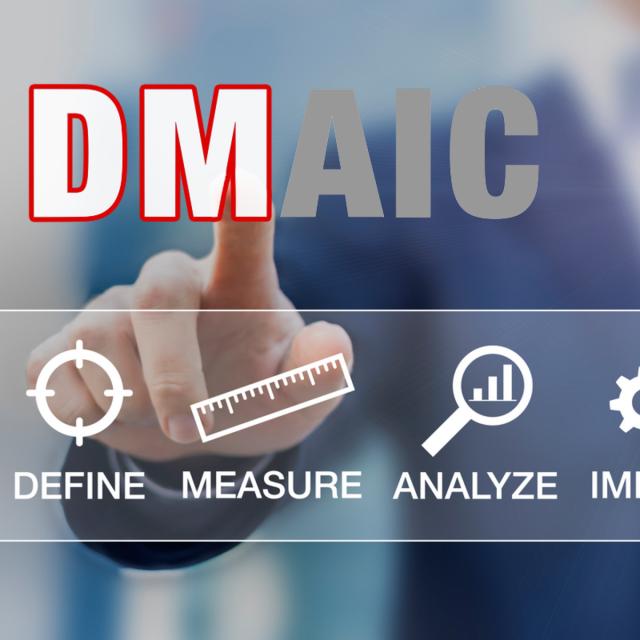
The course will equip you with the competencies and essential skills required to excel in the American Society for Quality (ASQ) Certified Six Sigma Yellow Belt (CSSYB) exam and contribute effectively to process improvement initiatives. The course provides an overview of Lean Six Sigma as a powerful methodology for process improvement, the define, measure, analyze, improve, and control (DMAIC) framework, measurement systems analysis (MSA), and various data collection methods.

Class Deals by MOOC List - Click here and see Coursera's Active Discounts, Deals, and Promo Codes.

By the end of this course, you will be able to:
-Identify the problem or opportunity to be addressed and then define specific and measurable goals for the project.
-Develop a project charter, including its objectives, scope, and required resources.
-Identify the needs and expectations of the customers directly affected by the problem or process under consideration.
-Create a high-level process map to visualize the process flow and identify areas for improvement.
The course is best suited for entry-level employees who are new to the world of Six Sigma and aim to advance their careers. No prior education or specific knowledge is required to enroll in this course.
This course is part of the ASQ-Certified Six Sigma Yellow Belt Exam Prep Specialization Specialization.

What you'll learn

  • Identify the problem or opportunity to be addressed and then define specific and measurable goals for the project.
  • Develop a project charter, including its objectives, scope, and required resources.
  • Identify the needs and expectations of the customers directly affected by the problem or process under consideration.
  • Create a high-level process map to visualize the process flow and identify areas for improvement.

Syllabus

Lean Six Sigma Fundamentals
In this module, you will gain an overview of the goal, origin, and evolution of the problem-solving approaches of Lean and Six Sigma. This module will equip you with the essential knowledge and skills required to contribute to process improvement initiatives in your organization effectively. You will also be introduced to each of the phases of the define, measure, analyze, improve, and control (DMAIC) approach and its role in driving continuous improvement and waste reduction.

Lean Six Sigma Metrics and Strategic Improvement Initiatives Framework
In this module, you will learn how to effectively measure and analyze performance in Lean Six Sigma projects. This first step comprises a detailed review to identify areas where improvements can make a difference. This module will also dive into consumer feedback to determine their requirements and expectations. After gathering consumer insights, you will learn how to determine critical-to-quality (CTQ) measures and KPIs for monitoring current conditions and future improvement activities. This aligns the company’s focus on customer satisfaction and strategic goals with a comprehensive, data-driven approach to continuous improvement.

Process Mapping and Project Charter
In this module, you will deep-dive into your organizational processes and the tools to be used for executing process improvements. You will be introduced to a visual representation technique called process mapping, which is used to document and understand the flow of a process from start to finish. The module also discusses how process maps help identify inefficiencies, bottlenecks, and opportunities for improvement. Additionally, you will learn about another tool called SIPOC, which stands for suppliers, inputs, process, outputs, and customers, representing the key elements involved in a process. SIPOC diagrams provide a high-level view of the process and its stakeholders and help to define and understand its boundaries. It also helps identify the critical requirements and potential sources of variation. Here, you will also learn how to develop a comprehensive project charter for your Lean Six Sigma initiatives. Further, you will be introduced to the essential elements of a project charter, its purpose, and its significance in project management. Finally, you will learn about the risk and how to control them and reduce their impact.

Peer Review Assignment
This is a peer-review assignment based on the concepts taught in the Introduction to Lean Six Sigma and Project Identification Methods course. In this assignment, you will be provided with real-life scenarios. You will be asked to explain how the DMAIC process can be applied to improve processes.


Go to Class
MOOC List is learner-supported. When you buy through links on our site, we may earn an affiliate commission.

Related Courses

Apply Lean Six Sigma - Fundamentals Skills & Knowledge (OpenLearning) OpenLearning
InteGlobal GSBP

Apply Lean Six Sigma - Fundamentals Skills & Knowledge (OpenLearning)

One of the coolest characters in the world of investigations is Sir Arthur Conan Doyle’s Sherlock Holmes… You can learn to be a super sleuth in business productivity improvement, by learning to be a ‘process-scene investigator.’ In this first free course, you will be taken beyond a basic understanding of the world’s most sought after business skill set (Lean Six Sigma). Open your eyes to the everyday processes that surround you and explore how time, quality and pragmatic thinking each impact process efficiency.

Self Paced
Self-Paced
Data Collection and Root Cause Analysis (Coursera) Coursera
SkillUp EdTech

Data Collection and Root Cause Analysis (Coursera)

The course will equip you with the competencies and essential skills required to excel in the American Society for Quality (ASQ) Certified Six Sigma Yellow Belt (CSSYB) exam and contribute to process improvement programs. This course focuses on various data collection tools and techniques to analyze data, identify the root causes of a problem, and explore the concepts of measurement system analysis (MSA), and hypothesis testing.

Sep 21st 2026
4 Weeks
Introduction to Business Improvement: Lean Six Sigma, Kaizen, and Problem Solving (FutureLearn) FutureLearn
Lean 6 Services

Introduction to Business Improvement: Lean Six Sigma, Kaizen, and Problem Solving (FutureLearn)

Explore key business improvement techniques, and start working towards Lean Six Sigma Yellow Belt. Discover business improvement methods that can help identify and eliminate waste. Being able to minimise waste and maximise efficiency is crucial for any business, be it manufacturing or office-based. On this course, you’ll explore some of the most commonly used tools and techniques in business today, including Lean Six Sigma, Kaizen, Continuous Improvement, and Problem Solving. You’ll learn how you can practically improve your work processes, and successfully eliminate waste in your business.

Jun 28th 2021
3 Weeks
Lean Six Sigma Program and Project Management (edX) EdX
ISCEA

Lean Six Sigma Program and Project Management (edX)

Master and apply Lean Six Sigma Methodologies to the basics of Change Management and Sustainability to build Supply Chain. Learners will understand the steps in Project Management related to the Lean Six Sigma Supply Chain process, to reduce the risk of failure in six sigma projects. Gain an understanding of what “Lean” means in Six Sigma and how to drive sustainable process improvement.

Self Paced
Self-Paced
Forecasting Techniques for Slow and Rapidly Changing Demand (edX) EdX
ISCEA

Forecasting Techniques for Slow and Rapidly Changing Demand (edX)

Master quantitative, judgmental and causal models used to forecast seasonal, intermittent, and new product future demand. Choose the right forecasting method for all kinds of demand patterns and sales data. Learn how to deal with randomness and low forecastability; missing data, outliers, and overfitting. Separate forecasting myths from reality and mitigate the risk of inaccurate forecasts.

Self Paced
Self-Paced
Gain from the Power of Lean Six Sigma (WizIQ) Other Providers
Canopus Business Management Group,Six Sigma Certification Course

Gain from the Power of Lean Six Sigma (WizIQ)

A good understanding of Lean Six Sigma concept is an indispensable knowledge for today’s aspiring professional or B-school student. If you are looking to get yourself up-to-speed in Lean Six Sigma, then this course is the best way to do so. By the end of the course you will be able to decide the relevance of Lean Six Sigma in your career and what kind of certification is apt for you.

No sessions available
5-12 Weeks
Six Sigma Principles (Coursera) Coursera
University System of Georgia

Six Sigma Principles (Coursera)

This course is for you if you are looking to learn more about Six Sigma or refresh your knowledge of the basic components of Six Sigma and Lean. Six Sigma skills are widely sought by employers both nationally and internationally. These skills have been proven to help improve business processes and performance. This course will introduce you to the purpose of Six Sigma and its value to an organization. You will learn about the basic principles of Six Sigma and Lean. Your instructors will introduce you to, and have you apply, some of the tools and metrics that are critical components of Six Sigma. This course will provide you with the basic knowledge of the principles, roles, and responsibilities of Six Sigma and Lean.

Sep 21st 2026
4 Weeks
Six Sigma Advanced Define and Measure Phases (Coursera) Coursera
University System of Georgia

Six Sigma Advanced Define and Measure Phases (Coursera)

This course is for you if you are looking to dive deeper into Six Sigma or strengthen and expand your knowledge of the basic components of green belt level of Six Sigma and Lean. Six Sigma skills are widely sought by employers both nationally and internationally. These skills have been proven to help improve business processes and performance. This course will take you deeper into the principles and tools associated with the "Design" and "Measure" phases of the DMAIC structure of Six Sigma.

Sep 28th 2026
5-12 Weeks
DFSS for the 6 σ Black Belt (Coursera) Coursera
University System of Georgia

DFSS for the 6 σ Black Belt (Coursera)

This course is designed for professionals interested in learning the principles of Lean Sigma, the DMAIC process and DFSS. This course is number 8 of 8 in this specialization dealing with topics in Design for Six Sigma. Professionals with some completed coursework in statistics and a desire to drive continuous improvement within their organizations would find this course and the others in this specialization appealing.

Sep 21st 2026
5-12 Weeks
Organization Planning and Development for the 6 σ Black Belt (Coursera) Coursera
University System of Georgia

Organization Planning and Development for the 6 σ Black Belt (Coursera)

This course is designed for professionals interested in learning the principles of Lean Sigma, the DMAIC process and DFSS. This course is number 1 of 8 in this specialization dealing with topics in Organization Planning and Development. Professionals with some completed coursework in statistics and a desire to drive continuous improvement within their organizations would find this course and the others in this specialization appealing. Method of assessment consists of several formative and summative quizzes and a multi-part peer reviewed project completion regiment.

Sep 21st 2026
5-12 Weeks
The Control Phase for the 6 σ Black Belt (Coursera) Coursera
University System of Georgia

The Control Phase for the 6 σ Black Belt (Coursera)

This course is designed for professionals interested in learning the principles of Lean Sigma, the DMAIC process and DFSS. This course is number 7 of 8 in this specialization dealing with topics in the Control Phase of Six Sigma. Professionals with some completed coursework in statistics and a desire to drive continuous improvement within their organizations would find this course and the others in this specialization appealing. Method of assessment consists of several formative and summative quizzes and a multi-part peer reviewed project completion regiment.

Sep 21st 2026
5-12 Weeks