Architecture 101 - Part II (iversity)

Architecture 101 - Part II (iversity)

From place to space: To turn a place into a space. To see spaces like architects do.

To learn more about architecture 101, we kindly invite you to read about it in the first part of the course description, here. Being this part 2 (from place to space), in order to understand the whole picture, it is better to start from part 1.

Architecture 101 (part 2: from place to space)
In part 1 of our course, we explore the state of nothingness and start moving towards the idea of “place”. In part 2, we deal with the concept of “place” and our conceptual journey goes on towards “space”.

In short:
part 1: from nothingness to place
part 2: from place to space
part 3: from space to architecture
Places to stay, to move, to eat, to cook, to love. Place to live. Place to die.
Places for our bodies, places on our bodies.
Places to clean and remember. We went all over the place... Different places for doing so many different things. Different places and different positions, all weaven to different states of mind.
Of course, in this 6-month journey called “Architecture 101”, we expect the final output to be about making architecture. And it will be (part 3).
But as we said before: we cannot make architecture without understanding what space is, and we cannot sense any kind of space before knowing about “place”, and we cannot imagine any kind of place without getting into a mental and physical state of pure nothingness.

So now, how do we go from to place to space?
As John Cage told us in the first week of part 1, "There is no such thing as an empty space or an empty time. There is always something to see, something to hear. In fact, try as we may to make a silence, we cannot."
“In a small room one does not say what one would in a large room.” (Louis Kahn)


Go to Class
MOOC List is learner-supported. When you buy through links on our site, we may earn an affiliate commission.

Related Courses

Kinematics: Describing the Motions of Spacecraft (Coursera) Coursera
University of Colorado Boulder

Kinematics: Describing the Motions of Spacecraft (Coursera)

The movement of bodies in space (like spacecraft, satellites, and space stations) must be predicted and controlled with precision in order to ensure safety and efficacy. Kinematics is a field that develops descriptions and predictions of the motion of these bodies in 3D space. This course in Kinematics covers four major topic areas: an introduction to particle kinematics, a deep dive into rigid body kinematics in two parts (starting with classic descriptions of motion using the directional cosine matrix and Euler angles, and concluding with a review of modern descriptors like quaternions and Classical and Modified Rodrigues parameters).

Aug 10th 2026
4 Weeks
Marketing Mix Fundamentals (Coursera) Coursera
IE Business School

Marketing Mix Fundamentals (Coursera)

Marketing Mix Fundamentals prepares you for arguably the most important stage of bring your product to market - how and where are you going to market it? It sets out a detailed introduction to the four P’s of Marketing (Product, Pricing, Place and Promotion), this course forces you to strategically analyze your product and/or service. The Product session is designed to provide you with the knowledge to understand and manage the strategic role of brands and products in generating business results, whilst the focus on Pricing will cover the main concepts and techniques to formulate prices.

Jul 27th 2026
4 Weeks
Cultural Heritage in Transformation (edX) EdX
RWTH Aachen,RWTHx

Cultural Heritage in Transformation (edX)

Learn how to define, explore, conserve, utilize and manage cultural heritage. In recent decades the sustainable conservation of cultural heritage has become a crucial global challenge. In this context, the trend towards largescale urbanization raises questions as to how new development can take place which respects and maintains the intrinsic values and unique qualities which have been handed down from previous generations, particularly within urban areas.

Self Paced
Self-Paced
Explorer l’espace des humains: une introduction à la géographicité (edX) EdX
École Polytechnique Fédérale de Lausanne,EPFLx

Explorer l’espace des humains: une introduction à la géographicité (edX)

Explorer comment la géographie, la cartographie, l’urbanisation et la justice spatiale jouent un rôle dans la compréhension de l’espace des humains et des sociétés. Comment définir et comprendre la notion d’espace? Comment l’urbanisation, la mobilité, Internet et la mondialisation ont-ils influencé notre perception du temps et de l’espace? Ce cours a pour objectif de définir la notion d’espace en apportant des clés de lecture pour comprendre les sociétés qui nous entourent.

Self Paced
Self-Paced
Railway History: The Rise of the Railway Station (FutureLearn) FutureLearn
University of Strathclyde

Railway History: The Rise of the Railway Station (FutureLearn)

Gain a unique insight into British history as you explore the heritage and uses of railway stations from the 19th century to now. Go behind the scenes of York Railway Museum with the University of Strathclyde. Railway stations are an integral part of British history, helping to shape the economy and Britain’s built environment. On this four-week course, you’ll discover the heritage of railway stations and their significance in British history and culture.

Self Paced
4 Weeks
Software Architecture (Coursera) Coursera
University of Alberta

Software Architecture (Coursera)

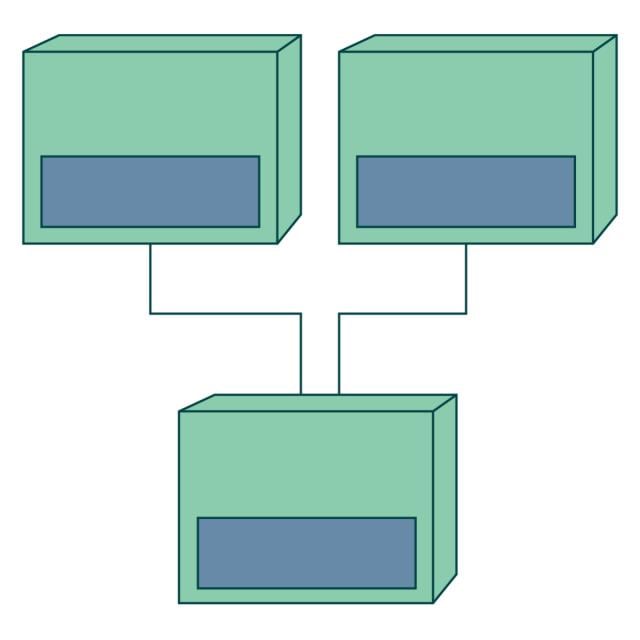
The way that software components — subroutines, classes, functions, etc. — are arranged, and the interactions between them, is called architecture. In this course you will study the ways these architectures are represented, both in UML and other visual tools. We will introduce the most common architectures, their qualities, and tradeoffs. We will talk about how architectures are evaluated, what makes a good architecture, and an architecture can be improved. We'll also talk about how the architecture touches on the process of software development.

Jul 27th 2026
4 Weeks
The Business, Politics, Policy, & Players of Space Programs (Coursera) Coursera
University of Colorado Boulder

The Business, Politics, Policy, & Players of Space Programs (Coursera)

Welcome Course 3 - The Business, Politics, Policy, & Players of Space Programs. If you are here, you have successfully completed both Course 1 and 2 of this specialization. Course 3 has nine lessons spread out over 4 weeks with 31 Learning Objectives. In this course, we will discover who and what funds the exploration that we have enjoyed learning about in Course 1 and 2. We will also focus on a few specific applications of some of the concepts we have learned about so far with two companies, the Global Positioning System, and the an academic program that could be implemented at your institution of higher learning.

Aug 3rd 2026
4 Weeks
Reimagining Blackness and Architecture (Coursera) Coursera
The Museum of Modern Art

Reimagining Blackness and Architecture (Coursera)

Architecture structures our daily lives. It shapes our homes, streets, neighborhoods, cities and more. But who gets to create and occupy these spaces? In the United States, a long history of anti-Black racism has created spatial inequalities that are built into the physical environment and erased the stories of Black architects and communities. Reimagining Blackness and Architecture explores the relationship between architecture and Blackness as an identity and a lived experience.

Aug 10th 2026
5-12 Weeks
Space Safety (Coursera) Coursera
Technische Universität München - TUM

Space Safety (Coursera)

How can we prevent satellites from colliding? How can satellites be protected from meteorite impacts? How important are satellites in today’s age? How safe are astronauts on the ISS and why does their research help mankind in general? What happens with space debris distributed in orbit?

Jul 27th 2026
5-12 Weeks