Observing Earth From Space (FutureLearn)

Observing Earth From Space (FutureLearn)

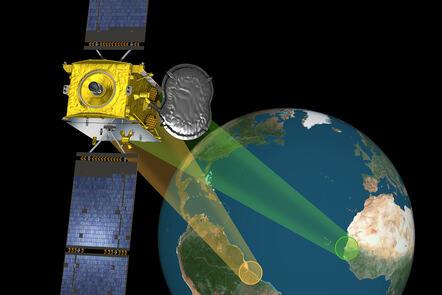
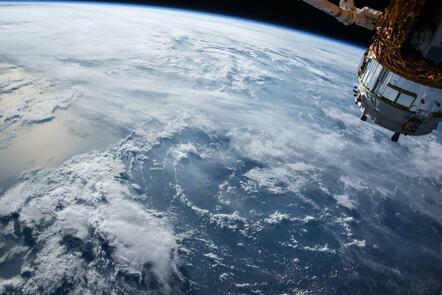
Find out how the Earth is observed by hundreds of satellites, how they do it, and what this means for the future. Gain insight into how satellite data is used to monitor the Earth. There are now over 600 satellites observing the Earth, with hundreds more to be launched over the next decade.

Class Deals by MOOC List - Click here and see FutureLearn's Active Discounts, Deals, and Promo Codes.

Over this 4-week course, you will learn how satellite data informs our understanding of the natural environment and the impact of human development, finding out about different sensors that are carried by satellites and how they orbit the earth to detect changes to the planet.
Discover easy to use tools to view and analyse images
Using a powerful new web tool, Earth Blox, you will be able to explore satellite data from anywhere on Earth. You will use this to learn how satellite data is used to monitor Earth, from uncovering information about climate change to how global deforestation is measured and the effects of pollution.
Discover the satellite applications in weather, climate, and environmental change
With the advancement of satellite imagery and orbit coverage, we can now measure a wide range of physical attributes of the Earth system from space.
This course will guide you through how the weather is monitored from space, as well as how the oceans, atmosphere, and pollution are measured. You’ll also dive into the cryosphere and biosphere of Earth and discover how these are viewed, monitored, and measured using satellite data.
Learn from Earth Observation experts at Edinburgh University
Edinburgh University is one of the preeminent Higher Education Institutes for Earth Observation (EO) in the UK. Not only are they are a member of the National Centre for EO, but their staff are involved in international space missions, world-class EO research, and creating new companies.

What topics will you cover?

  • Learn about the different sensors that are carried by satellites, how they orbit the Earth, and how they utilise subtle differences in light from the surface and the atmosphere to detect the changes on the Earth.
  • Discuss the ethical implications of collecting finely detailed images from space — how does that impact on privacy? How does it disadvantage countries without their own satellites?
  • Find out about the importance of oceans and atmosphere in the Earth system, and how satellites can measure them.
  • See how space radar can detect and measure the size of ice breaking off from Antarctica, or the loss of forests in the tropics. See how satellite images change as crops grow on the ground.
  • Learn how satellites can be used to measure the impact of humans on the planet, including pollution and climate change.
  • See how earthquakes can be measured from space.

Learning on this course
You can take this self-guided course and learn at your own pace. On every step of the course you can meet other learners, share your ideas and join in with active discussions in the comments.

What will you achieve?
By the end of the course, you‘ll be able to...

  • Understand the main methods by which satellite data collected.
  • Identify the key limitations on satellite data for observing Earth.
  • Explore the wider context of the ethical and policy implications of being able to observe the Earth from space.
  • Evaluate the wide range of physical attributes of the Earth system that are measurable from space.
  • Explore new and archived Earth observation data from satellites, using Earth Blox.

Who is the course for?

  • This course is designed for anyone interested in earth observation and the applications of satellite imagery.
  • It will be especially useful for anyone working in businesses related to the space sector, or for students wanting to explore the topic before choosing further study and a career pathway.
  • The development of this course was funded by the UK Space Agency and ESA.

What software or tools do you need?
This course relies on learners using EarthBlox™ software in order to successfully complete the course. You will get the best experience using a laptop or desktop computer, rather than a mobile device with a smaller screen.

Go to Class
MOOC List is learner-supported. When you buy through links on our site, we may earn an affiliate commission.

Related Courses

Climate Change and Resilience in Food Systems (FutureLearn) FutureLearn
University of Leeds,Africap

Climate Change and Resilience in Food Systems (FutureLearn)

Learn new research-led strategies designed to mitigate the effects of climate change on agriculture and food systems. Learn about the effects of climate change and how to build resilience in agriculture and food systems. Even small climate changes can have large-scale consequences in agriculture and food systems with devastating effects for the people and their economies. On this course, you will learn strategies designed to mitigate the impact of climate change, develop resilient food systems and create sustainable development in local communities.

Self Paced
2 Weeks
The Great Sustainability Transition: Global Challenges, Local Actions (FutureLearn) FutureLearn
Leiden University

The Great Sustainability Transition: Global Challenges, Local Actions (FutureLearn)

Discover how global environmental crises are connected, their impacts, and how to take action in your local community. Learn from experts in environmental science at Leiden University. We are living in an era of unprecedented environmental change. As a result, we are experiencing biodiversity loss, climate change, and overuse of freshwater resources, to name just a few. All of these affect fundamental ecosystem processes, causing change on a local and global scale. On this four-week course from Leiden University, you’ll learn how these huge environmental crises are interconnected and how they impact our planet.

Jan 16th 2023
4 Weeks
Extinctions: Past and Present (FutureLearn) FutureLearn
University of Cape Town

Extinctions: Past and Present (FutureLearn)

Discover the diversity of life on earth, the impacts of five past mass extinctions and the prospect of a sixth extinction today. This free online course explores how life on earth has been shaped by five mass extinction events in the distant past. At present, biodiversity is facing a crisis, with the prospect of a sixth extinction event today.

Jul 25th 2022
5-12 Weeks
Nature Connectedness with the University of Derby (FutureLearn) FutureLearn
University of Derby

Nature Connectedness with the University of Derby (FutureLearn)

Learn to establish a new relationship with nature to help improve your wellbeing and tackle larger issues such as climate change. Explore the relationship between nature connection and the climate crisis. Too often we see nature as something to use, control, or as a threat to us. The climate crisis and wildlife emergency show that the existing relationship between people and the rest of nature is breaking down. It has become too disconnected and narrow.

Jul 26th 2021
4 Weeks
Learn About Weather (FutureLearn) FutureLearn
University of Exeter,Royal Meteorological Society - RMetS,Met Office

Learn About Weather (FutureLearn)

Explore all things weather - from storms to climate - with this course that looks at the basic processes behind the weather. Ever wondered what the difference between a hurricane, cyclone and typhoon is? Or what a ‘front’ is? Or asked how weather warnings are issued? Maybe you’ve even spoken about the weather today. The weather is one of the most popular topics of conversation, yet not many of us actually know how it works.

Sep 27th 2021
4 Weeks
Understanding Climate Change using Satellite Data (FutureLearn) FutureLearn
University of Twente

Understanding Climate Change using Satellite Data (FutureLearn)

Explore cutting-edge technology and learn how to analyse satellite climate data to help measure and mitigate climate change. Explore the tools that can help with climate change solutions. To accurately study climate change, assess its risks, and mitigate the impact, we need systematic observations of the climate.

Nov 29th 2021
3 Weeks
Exploring Our Oceans (FutureLearn) FutureLearn
University of Southampton

Exploring Our Oceans (FutureLearn)

Explore the half of our world covered by deep ocean, and how our lives affect the hidden face of our planet. Discover how you can play a part in the safe keeping of the future of our ocean. What lies in the half of our world covered by water more than two miles deep? How are our everyday lives connected to the ocean depths, and what challenges and opportunities does this previously hidden realm hold for our future?

Nov 21st 2022
4 Weeks
Global Shocks: How to Manage Change in the Global Business Environment (FutureLearn) FutureLearn
Auckland University of Technology - AUT

Global Shocks: How to Manage Change in the Global Business Environment (FutureLearn)

Learn how to analyse the global business environment and adapt to technological, environmental, and economic changes. Discover how the COVID-19 pandemic has changed global business. The COVID-19 pandemic has highlighted the many ways that global business intersects our lives and, in many ways, seems to have ‘rewritten’ the rules of global business entirely. This course from the Auckland University of Technology (AUT) will help you understand and adapt to changes in the global business environment.

Jun 27th 2022
4 Weeks
Discovering Science: Atmospheric Chemistry (FutureLearn) FutureLearn
University of Leeds

Discovering Science: Atmospheric Chemistry (FutureLearn)

What can we learn about Earth, and other planets in and beyond our solar system, by studying their atmospheres? Learn about the role that radiation and greenhouse gases play in our understanding of atmospheric chemistry. As levels of CO2 in the atmosphere increase, you will discover the solutions scientists are exploring to reduce levels. And discover how missions to other planets and moons in our solar system are revealing extraordinarily diverse atmospheres.

Self Paced
2 Weeks
Learning for a Sustainable Future (FutureLearn) FutureLearn
University of Edinburgh,British Council,Learning for a Sustainable Scotland

Learning for a Sustainable Future (FutureLearn)

Join a personal and professional global learning journey towards a sustainable future. What on Earth could be more important? Grow your knowledge of sustainability. Climate change, gender equality, health, social equity, and inclusion are issues that affect us all, impacting human well-being and economic stability. How to live a sustainable life affects – and connects - us all.

Mar 13th 2023
5-12 Weeks
Ocean Science in Action: Addressing Marine Ecosystems and Food Security in the Western Indian Ocean (FutureLearn) FutureLearn
National Oceanography Centre

Ocean Science in Action: Addressing Marine Ecosystems and Food Security in the Western Indian Ocean (FutureLearn)

Explore how innovative marine technologies can tackle the challenges of the sustainable management of marine ecosystems. Discover the new technologies that can aid marine resource management. Journey to the Western Indian Ocean alongside experts at the UK’s National Oceanography Centre to learn how we can measure and monitor the oceans in order to better protect them.

Nov 1st 2021
4 Weeks