Algoritmos de negociación basados en machine learning (Coursera)

Algoritmos de negociación basados en machine learning (Coursera)

Este curso brinda una introducción a los mercados de capital, la formación de precios, el retorno, la volatilidad, los principios del análisis técnico de activos financieros, algoritmos de negociación basados en modelos de clasificación de machine learning, y sus aplicaciones a estrategias de inversión activas de corto plazo.

Class Deals by MOOC List - Click here and see Coursera's Active Discounts, Deals, and Promo Codes.

Este curso está dirigido a personas interesadas en soportar la toma de decisiones de inversión de activos financieros en el mercado de capitales basados en herramientas de analítica. Este curso no requiere de la instalación de ningún programa externo en un equipo local. Todas las herramientas digitales son provistas por la plataforma.
Course 3 of 3 in the Analítica de Datos en Finanzas Specialization.

What You Will Learn

  • Entender el funcionamiento del mercado de capitales, la formación de precios de los activos financieros, el retorno y el riesgo financiero.
  • Aplicar las herramientas de análisis técnico en el mercado de capitales y commodities basados en los precios históricos y el volumen de transacciones
  • Utilizar el análisis técnico para diseñar algoritmos de negociación de activos financieros y commodities en el mercado de capitales.
  • Diseñar algoritmos de negociación basados en modelos de machine learning como: Arboles de Decisión, Random Forest, redes neuronales, entre otros.

Syllabus

WEEK 1
Mercados Financieros
Bienvenido al primer módulo del curso algoritmos de negociación basados en machine learning. En este módulo comprenderemos el funcionamiento de los mercados financieros, identificaremos cuáles son las principales decisiones de inversión, entenderemos cómo se forman los precios en los mercados financieros, y estimaremos la rentabilidad y la volatilidad de un activo financiero.

WEEK 2
Análisis técnico
Bienvenidos al segundo módulo del curso de algoritmos de negociación basados en machine learning. En este módulo entenderemos que es el análisis técnico, para que se utiliza y su relevancia en el mercado financiero; conoceremos que son las Velas Japonesas y como se utilizan; y analizaremos las medias móviles simples, medias móviles exponenciales, bandas bollinger y principales osciladores.

WEEK 3
Negociación en el mercado financiero
Bienvenido al tercer módulo del curso algoritmos de negociación basados en machine learning. En este módulo se identifican las reglas básicas de negociación de activos financieros basados en análisis técnico, y aplicar dichas reglas de negociación de activos financieros en casos reales del mercado financiero.

WEEK 4
Estrategias de negociación basada en modelos de machine learning
Bienvenido al cuarto módulo del curso algoritmos de negociación basados en machine learning. En este módulo se identifican los principales modelos de machine learning, se aplican modelos de machine learning de clasificación como eje de los algoritmos de negociación de activos financieros y, por último, se estiman las principales medidas de desempeño de los algoritmos de trading.

Go to Class
MOOC List is learner-supported. When you buy through links on our site, we may earn an affiliate commission.

Related Courses

Economics of Money and Banking (Coursera) Coursera
Columbia University

Economics of Money and Banking (Coursera)

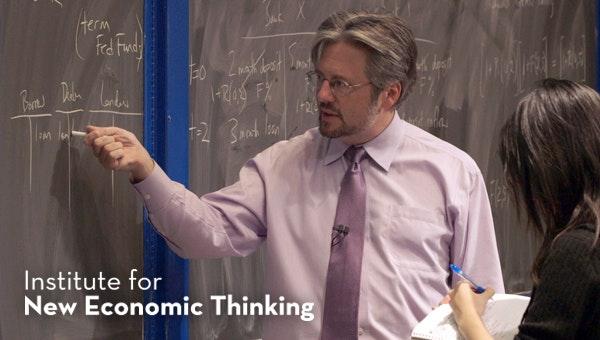
The last three or four decades have seen a remarkable evolution in the institutions that comprise the modern monetary system. The financial crisis of 2007-2009 is a wakeup call that we need a similar evolution in the analytical apparatus and theories that we use to understand that system. Produced and sponsored by the Institute for New Economic Thinking, this course is an attempt to begin the process of new economic thinking by reviving and updating some forgotten traditions in monetary thought that have become newly relevant.

Sep 28th 2026
13-24 Weeks
NLP Modelos y Algoritmos (Coursera) Coursera
Universidad Austral

NLP Modelos y Algoritmos (Coursera)

Este curso te brindará los conocimientos necesarios para la implementación de algoritmos de NLP. Mediante el uso de los últimos algoritmos más populares en NLP se procederá a dar solución a un conjunto de problemas propios del área. Para realizar este curso es necesario contar con conocimientos de programación de nivel básico a medio, deseablemente conocimiento básico del lenguaje Python y es recomendable conocer los Jupyter Notebooks en el entorno Anaconda.

Sep 28th 2026
4 Weeks
Information Extraction from Free Text Data in Health (Coursera) Coursera
University of Michigan

Information Extraction from Free Text Data in Health (Coursera)

In this MOOC, you will be introduced to advanced machine learning and natural language processing techniques to parse and extract information from unstructured text documents in healthcare, such as clinical notes, radiology reports, and discharge summaries. Whether you are an aspiring data scientist or an early or mid-career professional in data science or information technology in healthcare, it is critical that you keep up-to-date your skills in information extraction and analysis.

Sep 28th 2026
4 Weeks
Financial Statement Applications (Coursera) Coursera
Illinois Tech

Financial Statement Applications (Coursera)

This course is designed for students to develop an advanced financial analysis skill set. Throughout this course, students will be exposed to various quantitative tools and qualitative methods to determine the financial health and risk of selected U.S. public companies. The skills developed in this course will have direct application to credit analysis, financial analysis, and investment analysis.

Sep 28th 2026
5-12 Weeks
Decision Making and Reinforcement Learning (Coursera) Coursera
Columbia University

Decision Making and Reinforcement Learning (Coursera)

This course is an introduction to sequential decision making and reinforcement learning. We start with a discussion of utility theory to learn how preferences can be represented and modeled for decision making. We first model simple decision problems as multi-armed bandit problems in and discuss several approaches to evaluate feedback. We will then model decision problems as finite Markov decision processes (MDPs), and discuss their solutions via dynamic programming algorithms. We touch on the notion of partial observability in real problems, modeled by POMDPs and then solved by online planning methods.

Sep 28th 2026
5-12 Weeks
Introducción al Mercado (Coursera) Coursera
Universidad Nacional Autónoma de México

Introducción al Mercado (Coursera)

El estudio de mercado nos ayuda a identificar y definir oportunidades y problemas de mercado, para generar y evaluar estrategias de promoción y venta de los productos y/o servicios de tu empresa o idea de negocio, y a su vez mejorar la relación que existe entre la empresa y sus clientes, consumidores, proveedores, etc.

Sep 28th 2026
5-12 Weeks
Getting Started with Machine Learning at the Edge on Arm (Coursera) Coursera
Arm

Getting Started with Machine Learning at the Edge on Arm (Coursera)

The age of machine learning has arrived! Arm technology is powering a new generation of connected devices with sophisticated sensors that can collect a vast range of environmental, spatial and audio/visual data. Typically this data is processed in the cloud using advanced machine learning tools that are enabling new applications reshaping the way we work, travel, live and play.

Sep 28th 2026
5-12 Weeks
AI Materials (Coursera) Coursera
Korea Advanced Institute of Science and Technology - KAIST

AI Materials (Coursera)

Learn about the materials that have advanced the performance of artificial intelligence, and the machine learning models that could help accelerate the design and development of novel materials. This course defines artificial intelligence (AI) as a machine to which some or all of the functions of the human brain have been delegated. It highlights the need, and explains in an easy-to-understand way how machine learning from artificial intelligence can dramatically accelerate the development of new materials.

Oct 5th 2026
5-12 Weeks
Computer Vision with Embedded Machine Learning (Coursera) Coursera
Edge Impulse

Computer Vision with Embedded Machine Learning (Coursera)

Computer vision (CV) is a fascinating field of study that attempts to automate the process of assigning meaning to digital images or videos. In other words, we are helping computers see and understand the world around us! A number of machine learning (ML) algorithms and techniques can be used to accomplish CV tasks, and as ML becomes faster and more efficient, we can deploy these techniques to embedded systems.

Sep 28th 2026
3 Weeks
Ethical Issues in Data Science (Coursera) Coursera
University of Colorado Boulder

Ethical Issues in Data Science (Coursera)

Computing applications involving large amounts of data – the domain of data science – impact the lives of most people in the U.S. and the world. These impacts include recommendations made to us by internet-based systems, information that is available about us online, techniques that are used for security and surveillance, data that is used in health care, and many more. In many cases, they are affected by techniques in artificial intelligence and machine learning.

Sep 28th 2026
5-12 Weeks
Cloud: Platform as a Service - Master's (Coursera) Coursera
Illinois Tech

Cloud: Platform as a Service - Master's (Coursera)

This course is aimed at preparing individuals to gain knowledge, skills, and abilities to demonstrate the knowledge for managing Platform as a Service (PaaS) in the Cloud. Students will learn to deploy, operate, and maintain cloud platforms for storing, processing, and transferring information with architecture design principles and a structured approach. Students will also learn the shared responsibility model and cloud security best practices to secure PaaS platforms for the application-hosting environments.

Sep 28th 2026
5-12 Weeks
Code Free Data Science (Coursera) Coursera
University of California, San Diego

Code Free Data Science (Coursera)

The Code Free Data Science class is designed for learners seeking to gain or expand their knowledge in the area of Data Science. Participants will receive the basic training in effective predictive analytic approaches accompanying the growing discipline of Data Science without any programming requirements. Machine Learning methods will be presented by utilizing the KNIME Analytics Platform to discover patterns and relationships in data.

Sep 28th 2026
4 Weeks