Text Retrieval and Search Engines (Coursera)

Text Retrieval and Search Engines (Coursera)

Recent years have seen a dramatic growth of natural language text data, including web pages, news articles, scientific literature, emails, enterprise documents, and social media such as blog articles, forum posts, product reviews, and tweets. Text data are unique in that they are usually generated directly by humans rather than a computer system or sensors, and are thus especially valuable for discovering knowledge about people’s opinions and preferences, in addition to many other kinds of knowledge that we encode in text.

Class Deals by MOOC List - Click here and see Coursera's Active Discounts, Deals, and Promo Codes.

This course will cover search engine technologies, which play an important role in any data mining applications involving text data for two reasons. First, while the raw data may be large for any particular problem, it is often a relatively small subset of the data that are relevant, and a search engine is an essential tool for quickly discovering a small subset of relevant text data in a large text collection. Second, search engines are needed to help analysts interpret any patterns discovered in the data by allowing them to examine the relevant original text data to make sense of any discovered pattern. You will learn the basic concepts, principles, and the major techniques in text retrieval, which is the underlying science of search engines.

Course 2 of 6 in the Data Mining Specialization

Syllabus

WEEK 1
Orientation
You will become familiar with the course, your classmates, and our learning environment. The orientation will also help you obtain the technical skills required for the course.
During this week's lessons, you will learn of natural language processing techniques, which are the foundation for all kinds of text-processing applications, the concept of a retrieval model, and the basic idea of the vector space model.

WEEK 2
In this week's lessons, you will learn how the vector space model works in detail, the major heuristics used in designing a retrieval function for ranking documents with respect to a query, and how to implement an information retrieval system (i.e., a search engine), including how to build an inverted index and how to score documents quickly for a query.

WEEK 3
In this week's lessons, you will learn how to evaluate an information retrieval system (a search engine), including the basic measures for evaluating a set of retrieved results and the major measures for evaluating a ranked list, including the average precision (AP) and the normalized discounted cumulative gain (nDCG), and practical issues in evaluation, including statistical significance testing and pooling.

WEEK 4
In this week's lessons, you will learn probabilistic retrieval models and statistical language models, particularly the detail of the query likelihood retrieval function with two specific smoothing methods, and how the query likelihood retrieval function is connected with the retrieval heuristics used in the vector space model.

WEEK 5
In this week's lessons, you will learn feedback techniques in information retrieval, including the Rocchio feedback method for the vector space model, and a mixture model for feedback with language models. You will also learn how web search engines work, including web crawling, web indexing, and how links between web pages can be leveraged to score web pages.

WEEK 6
In this week's lessons, you will learn how machine learning can be used to combine multiple scoring factors to optimize ranking of documents in web search (i.e., learning to rank), and learn techniques used in recommender systems (also called filtering systems), including content-based recommendation/filtering and collaborative filtering. You will also have a chance to review the entire course.

Go to Class
MOOC List is learner-supported. When you buy through links on our site, we may earn an affiliate commission.

Related Courses

NLP Modelos y Algoritmos (Coursera) Coursera
Universidad Austral

NLP Modelos y Algoritmos (Coursera)

Este curso te brindará los conocimientos necesarios para la implementación de algoritmos de NLP. Mediante el uso de los últimos algoritmos más populares en NLP se procederá a dar solución a un conjunto de problemas propios del área. Para realizar este curso es necesario contar con conocimientos de programación de nivel básico a medio, deseablemente conocimiento básico del lenguaje Python y es recomendable conocer los Jupyter Notebooks en el entorno Anaconda.

Aug 3rd 2026
4 Weeks
Machine Learning in Healthcare: Fundamentals & Applications (Coursera) Coursera
Northeastern University

Machine Learning in Healthcare: Fundamentals & Applications (Coursera)

Examines data mining perspectives and methods in a healthcare context. Introduces the theoretical foundations for major data mining methods and studies how to select and use the appropriate data mining method and the major advantages for each. Students are exposed to contemporary data mining software applications and basic programming skills. Focuses on solving real-world problems, which require data cleaning, data transformation, and data modeling.

Aug 3rd 2026
4 Weeks
Machine Translation (Coursera) Coursera
Karlsruhe Institute of Technology - KIT

Machine Translation (Coursera)

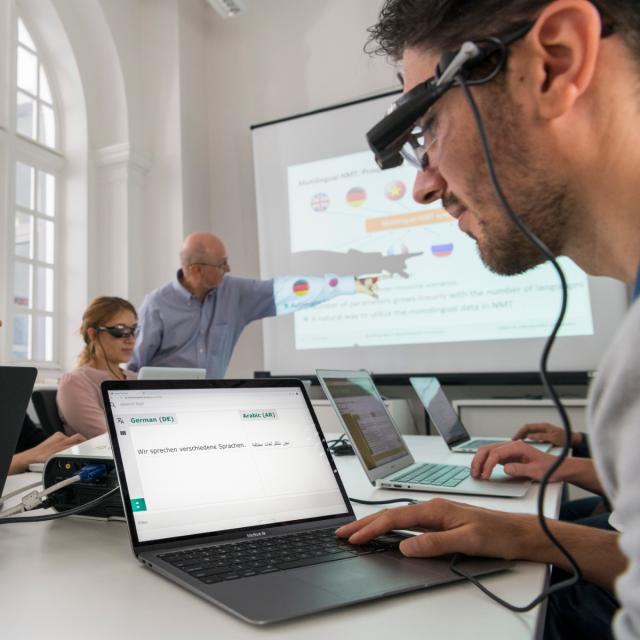
Welcome to the CLICS-Machine Translation MOOC. This MOOC explains the basic principles of machine translation. Machine translation is the task of translating from one natural language to another natural language. Therefore, these algorithms can help people communicate in different languages. Such algorithms are used in common applications, from Google Translate to apps on your mobile device.

Aug 3rd 2026
5-12 Weeks
Getting Started with Machine Learning at the Edge on Arm (Coursera) Coursera
Arm

Getting Started with Machine Learning at the Edge on Arm (Coursera)

The age of machine learning has arrived! Arm technology is powering a new generation of connected devices with sophisticated sensors that can collect a vast range of environmental, spatial and audio/visual data. Typically this data is processed in the cloud using advanced machine learning tools that are enabling new applications reshaping the way we work, travel, live and play.

Aug 3rd 2026
5-12 Weeks
Machine Learning in Retail (Coursera) Coursera
Coursera Project Network

Machine Learning in Retail (Coursera)

Who are your customers? What are they like? How do they interact with your business? This Short Course was created to help analysts better understand their customer behaviour through the power of machine learning. In this course, you will apply two different machine learning techniques to segment customers according to their purchasing behaviour and provide actionable insights for each group. Along the way, you'll also examine some other retail case studies, including web visitor analysis for marketing and store clustering for logistics.

Aug 3rd 2026
1 Week
HI-FIVE: Health Informatics For Innovation, Value & Enrichment (Administrative/IT Perspective) (Coursera) Coursera
Columbia University

HI-FIVE: Health Informatics For Innovation, Value & Enrichment (Administrative/IT Perspective) (Coursera)

HI-FIVE (Health Informatics For Innovation, Value & Enrichment) Training is an approximately 10-hour online course designed by Columbia University in 2016, with sponsorship from the Office of the National Coordinator for Health Information Technology (ONC). The training is role-based and uses case scenarios. No additional hardware or software are required for this course. Our nation’s healthcare system is changing at a rapid pace.

Aug 3rd 2026
4 Weeks
Code Free Data Science (Coursera) Coursera
University of California, San Diego

Code Free Data Science (Coursera)

The Code Free Data Science class is designed for learners seeking to gain or expand their knowledge in the area of Data Science. Participants will receive the basic training in effective predictive analytic approaches accompanying the growing discipline of Data Science without any programming requirements. Machine Learning methods will be presented by utilizing the KNIME Analytics Platform to discover patterns and relationships in data.

Aug 3rd 2026
4 Weeks
Analyzing and Visualizing Data in Looker (Coursera) Coursera
Google Cloud

Analyzing and Visualizing Data in Looker (Coursera)

In this course, you learn how to do the kind of data exploration and analysis in Looker that would formerly be done primarily by SQL developers or analysts. Upon completion of this course, you will be able to leverage Looker's modern analytics platform to find and explore relevant content in your organization’s Looker instance, ask questions of your data, create new metrics as needed, and build and share visualizations and dashboards to facilitate data-driven decision making.

Aug 3rd 2026
2 Weeks
Construção de Relacionamentos em Vendas Orientada a Dados (Coursera) Coursera
FIA Business School

Construção de Relacionamentos em Vendas Orientada a Dados (Coursera)

Nossas boas-vindas ao Curso Construção de Relacionamento em Vendas Orientada a Dados. Neste curso, você aprenderá métodos sobre data analytics para o ambiente dos profissionais de vendas. Ao final deste curso, você será capaz de avaliar relacionamentos entre o desempenho de vendas e os gastos relacionados; agrupar por semelhança itens, produtos ou serviços e, por fim, realizar recomendações de produtos para clientes sob características preestabelecidas.

Aug 3rd 2026
4 Weeks
Probabilistic Graphical Models 3: Learning (Coursera) Coursera
Stanford University

Probabilistic Graphical Models 3: Learning (Coursera)

Probabilistic graphical models (PGMs) are a rich framework for encoding probability distributions over complex domains: joint (multivariate) distributions over large numbers of random variables that interact with each other. These representations sit at the intersection of statistics and computer science, relying on concepts from probability theory, graph algorithms, machine learning, and more. They are the basis for the state-of-the-art methods in a wide variety of applications, such as medical diagnosis, image understanding, speech recognition, natural language processing, and many, many more. They are also a foundational tool in formulating many machine learning problems.

Aug 3rd 2026
5-12 Weeks
The Unix Workbench (Coursera) Coursera
Johns Hopkins University

The Unix Workbench (Coursera)

Unix forms a foundation that is often very helpful for accomplishing other goals you might have for you and your computer, whether that goal is running a business, writing a book, curing disease, or creating the next great app. The means to these goals are sometimes carried out by writing software. Software can’t be mined out of the ground, nor can software seeds be planted in spring to harvest by autumn. Software isn’t produced in factories on an assembly line. Software is a hand-made, often bespoke good. If a software developer is an artisan, then Unix is their workbench.

Aug 3rd 2026
4 Weeks
Fundamentos de estadística aplicada (Coursera) Coursera
Universidad de los Andes

Fundamentos de estadística aplicada (Coursera)

El curso está orientado a profesionales de diferentes campos, que estén interesados en adquirir conceptos fundamentales de estadística aplicada. El contenido del curso será particularmente útil para profesionales que estén interesados en adelantar estudios de postgrado en ingeniería, administración o economía, entre otras profesiones, y que requieran de una adecuada fundamentación en estadística.

Aug 3rd 2026
4 Weeks