Agile Meets Design Thinking (Coursera)

Agile Meets Design Thinking (Coursera)

Despite everyone's good intentions, hard work and solid ideas, too many projects end up creating unneeded, unusable, and unsellable products. But it doesn't have to be this way. Agile and design thinking offer a different--and effective--approach to product development, one that results in valuable solutions to meaningful problems. In this course, you’ll learn how to determine what's valuable to a user early in the process--to frontload value--by focusing your team on testable narratives about the user and creating a strong shared perspective.

Class Deals by MOOC List - Click here and see Coursera's Active Discounts, Deals, and Promo Codes.

Completing this course will count towards your learning in any of the following programs:

What You Will Learn

  • How to evaluate and explain the relevance of concepts and practices from the agile development methodologies
  • How to create a strong shared perspective and drive to value using design methods like personas and problem scenarios
  • How to diagnose what software will be valuable to the user and how to test your ideas using agile user stories and prototypes
  • How to facilitate narrative collaboration with user stories and prototypes

Syllabus

WEEK 1
Problems Agile Solves
The agile practices that deliver excellent product are well understood, but they take focus, energy, and confidence to apply. This week, we’ll identify what’s hard about creating excellent products and how agile can help. We'll begin with a discussion of the Agile Manifesto- what motivated it and how it defines agile. Then we’ll get into the practical part- the problems agile solves, how to focus your time and energy, and how you’ll know if your practice of agile is working.

WEEK 2
Focusing Your Agile with Personas, Problem Scenarios, and Alternatives
The best way to avoid building something nobody wants is to start with somebody in mind. In the design world, we talk about that "somebody" through a ‘persona’. Personas and problem scenarios (aka 'jobs-to-be-done') focus development on driving toward a valuable outcome for your user vs. just generating output. In this module, you’ll learn to focus your work by developing personas, problem scenarios, and alternatives using best practices from design thinking.

WEEK 3
Getting to Great Agile User Stories
Now we’re going to transition from drafting personas and hypothesizing user needs to testing those assumptions and translating what you’ve learned into agile user stories. We’ll step through how you create an interview guide to ask your users the right questions and then we’ll dive into agile user stories. User stories are a standard feature of agile and serve as a day-to-day focal point for driving to value.

WEEK 4
Focusing on Customer Value with User Stories
The agile user story is your day-to-day focal point for making sure you’re building something valuable for your user. It’s how you discuss that within your team and how you anchor your subsequent testing. In this module, you’ll learn how to facilitate the creation and use of stories within your team.

Go to Class
MOOC List is learner-supported. When you buy through links on our site, we may earn an affiliate commission.

Related Courses

Code Yourself! An Introduction to Programming (Coursera) Coursera
University of Edinburgh,Universidad ORT Uruguay

Code Yourself! An Introduction to Programming (Coursera)

Have you ever wished you knew how to program, but had no idea where to start from? This course will teach you how to program in Scratch, an easy to use visual programming language. More importantly, it will introduce you to the fundamental principles of computing and it will help you think like a software engineer.

Sep 28th 2026
5-12 Weeks
Software Architecture for the Internet of Things (Coursera) Coursera
EIT Digital

Software Architecture for the Internet of Things (Coursera)

This course will teach you how to design futureproof systems that meet the requirements of IoT systems: systems that are secure, interoperable, modifiable and scalable. Moreover, you'll learn to apply best-in-class software architecture methods to help you design complex IoT and other applications. Lastly, you'll come to understand the business impact of the technical decisions that you make as an IoT system architect.

Sep 28th 2026
5-12 Weeks
Emprendimiento y métodos ágiles de desarrollo en videojuegos (Coursera) Coursera
Universidad de los Andes

Emprendimiento y métodos ágiles de desarrollo en videojuegos (Coursera)

¡Bienvenido al curso de emprendimiento y métodos ágiles de desarrollo en videojuegos! Este curso es parte del Programa Especializado Coursera en Diseño y Desarrollo de Videojuegos, en la cual aprenderás a diseñar y programar cierto tipo de videojuegos, aumentarás tu comprensión acerca del mercado actual de videojuegos y de lo que se requiere para crear un juego exitoso comercialmente.

Sep 28th 2026
5-12 Weeks
Introduction to .NET Core (Coursera) Coursera
Board Infinity

Introduction to .NET Core (Coursera)

This course is an introductory-level course for software developers who want to learn the basics of developing applications with .NET Core. .NET Core is a cross-platform, open-source development platform that allows developers to create applications for Windows, Linux, and macOS. Throughout this course, students will learn the fundamental concepts of .NET Core, including its architecture, programming model, and tools. They will also learn how to create, build, and deploy applications using .NET Core.

Oct 5th 2026
3 Weeks
Principles of Computing (Part 2) (Coursera) Coursera
Rice University

Principles of Computing (Part 2) (Coursera)

This two-part course introduces the basic mathematical and programming principles that underlie much of Computer Science. Understanding these principles is crucial to the process of creating efficient and well-structured solutions for computational problems. To get hands-on experience working with these concepts, we will use the Python programming language. The main focus of the class will be weekly mini-projects that build upon the mathematical and programming principles that are taught in the class.

Oct 5th 2026
4 Weeks
Executing Full Text Queries with Elasticsearch (Coursera) Coursera
Board Infinity

Executing Full Text Queries with Elasticsearch (Coursera)

This course is designed to teach you how to execute full-text queries with Elasticsearch, a powerful search and analytics engine widely used for data exploration, log analysis, and real-time search applications. In this course, you will learn the basics of Elasticsearch, including how to install and configure the software, index data, and create mappings. You will then explore the various query types supported by Elasticsearch, such as term queries, match queries, and phrase queries. You will also learn how to use Elasticsearch's aggregation framework to analyze and summarize your data.

Oct 5th 2026
3 Weeks
Effective Service Innovation by Design in Hotel Management (Coursera) Coursera
Starweaver

Effective Service Innovation by Design in Hotel Management (Coursera)

This practical course provides learners with insights into the art and science of designing innovative services in the Hotel industry to meet customers' evolving needs and drive organizational success. Throughout the course, learners will journey to understand the core principles and methodologies of service design.

Oct 5th 2026
4 Weeks
Quantitative Model Checking (Coursera) Coursera
EIT Digital

Quantitative Model Checking (Coursera)

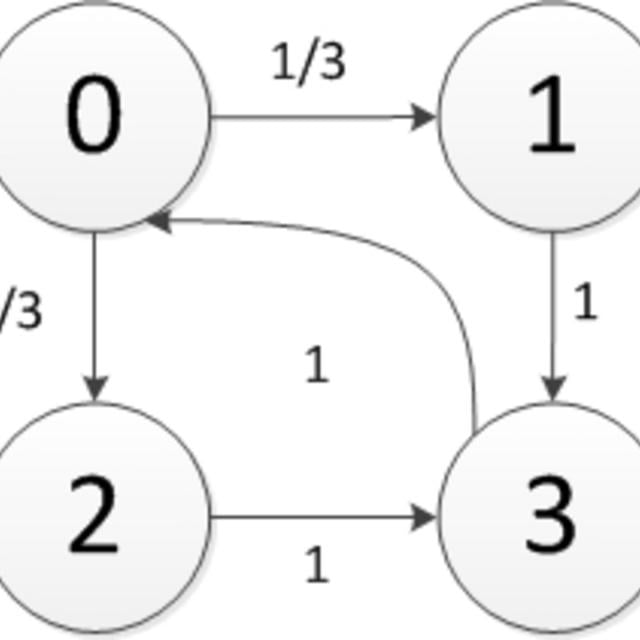
The integration of ICT (information and communications technology) in different applications is rapidly increasing in e.g. Embedded and Cyber physical systems, Communication protocols and Transportation systems. Hence, their reliability and dependability increasingly depends on software. Defects can be fatal and extremely costly (with regards to mass-production of products and safety-critical systems).

Oct 5th 2026
5-12 Weeks
Approximation Algorithms Part II (Coursera) Coursera
École normale supérieure

Approximation Algorithms Part II (Coursera)

This is the continuation of Approximation algorithms, Part 1. Here you will learn linear programming duality applied to the design of some approximation algorithms, and semidefinite programming applied to Maxcut. By taking the two parts of this course, you will be exposed to a range of problems at the foundations of theoretical computer science, and to powerful design and analysis techniques.

Sep 28th 2026
4 Weeks
Algorithmic Thinking (Part 1) (Coursera) Coursera
Rice University

Algorithmic Thinking (Part 1) (Coursera)

Experienced Computer Scientists analyze and solve computational problems at a level of abstraction that is beyond that of any particular programming language. This two-part class is designed to train students in the mathematical concepts and process of "Algorithmic Thinking", allowing them to build simpler, more efficient solutions to computational problems.

Oct 5th 2026
4 Weeks