Executing Full Text Queries with Elasticsearch (Coursera)

Offered by Board Infinity,
Executing Full Text Queries with Elasticsearch (Coursera)

This course is designed to teach you how to execute full-text queries with Elasticsearch, a powerful search and analytics engine widely used for data exploration, log analysis, and real-time search applications. In this course, you will learn the basics of Elasticsearch, including how to install and configure the software, index data, and create mappings. You will then explore the various query types supported by Elasticsearch, such as term queries, match queries, and phrase queries. You will also learn how to use Elasticsearch's aggregation framework to analyze and summarize your data.

Class Deals by MOOC List - Click here and see Coursera's Active Discounts, Deals, and Promo Codes.

Additionally, you will gain hands-on experience using Elasticsearch's search API to execute queries and retrieve search results.

Syllabus

WEEK 1
Introduction to Elasticsearch
This module is designed to provide an introduction to Elasticsearch, a powerful search and analytics engine widely used for data exploration, log analysis, and real-time search applications. In this module, you will learn the basics of Elasticsearch, including how to install and configure the software, index data, and create mappings. You will also explore the different types of data that can be indexed in Elasticsearch, such as text, numerical, and geospatial data. Additionally, you will gain a basic understanding of Elasticsearch's architecture, including its distributed nature and its use of sharding and replication to ensure high availability and fault tolerance.

WEEK 2
Search Based Query Optimisation
This module is designed to teach you how to optimize search-based queries in Elasticsearch for improved performance and relevance. You will start by learning how to use Elasticsearch's Explain API to understand how queries are executed and identify potential bottlenecks. You will then explore different techniques for improving query performance, such as using filters instead of queries, limiting the number of fields returned, and caching query results.

WEEK 3
Advanced Querying Mechanism in Elasticsearch
This module is designed to teach you advanced query mechanisms in Elasticsearch, enabling you to build complex queries that deliver highly relevant results. You will start by learning about the different types of query mechanisms available in Elasticsearch, such as Boolean queries, fuzzy queries, and proximity queries. You will then explore advanced query mechanisms such as nested queries, script queries, and join queries. Additionally, you will learn how to use Elasticsearch's search templates to build and reuse complex queries.
Go to Class
MOOC List is learner-supported. When you buy through links on our site, we may earn an affiliate commission.

Related Courses

Code Yourself! An Introduction to Programming (Coursera) Coursera
University of Edinburgh,Universidad ORT Uruguay

Code Yourself! An Introduction to Programming (Coursera)

Have you ever wished you knew how to program, but had no idea where to start from? This course will teach you how to program in Scratch, an easy to use visual programming language. More importantly, it will introduce you to the fundamental principles of computing and it will help you think like a software engineer.

Sep 28th 2026
5-12 Weeks
Agile Software Development (Coursera) Coursera
University of Minnesota

Agile Software Development (Coursera)

Software industry is going crazy on agile methods. It is rapidly becoming the choice for software development where requirements are unpredictable or is expected to change over time. This course will help you gain knowledge on what is agile? Why agile is better suited for these situations? We will also cover some of the most common agile frameworks like scrum and XP in depth.

Sep 28th 2026
4 Weeks
The Arduino Platform and C Programming (Coursera) Coursera
University of California, Irvine

The Arduino Platform and C Programming (Coursera)

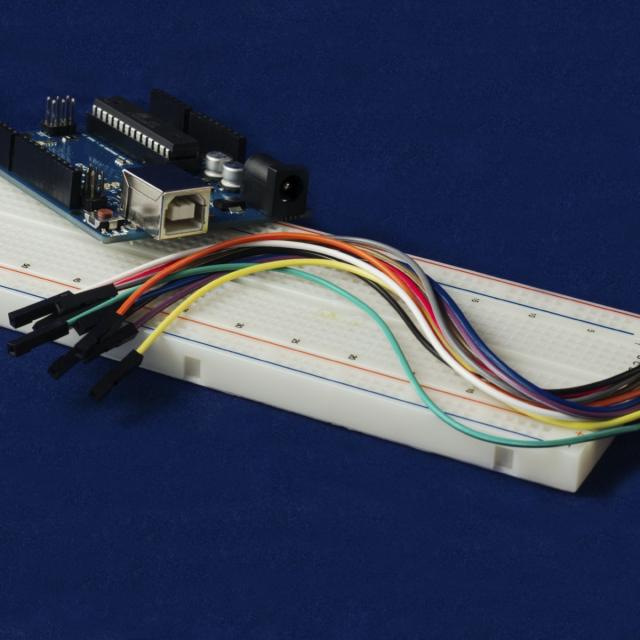
The Arduino is an open-source computer hardware/software platform for building digital devices and interactive objects that can sense and control the physical world around them. In this class you will learn how the Arduino platform works in terms of the physical board and libraries and the IDE (integrated development environment). You will also learn about shields, which are smaller boards that plug into the main Arduino board to perform other functions such as sensing light, heat, GPS tracking, or providing a user interface display. The course will also cover programming the Arduino using C code and accessing the pins on the board via the software to control external devices.

Sep 28th 2026
4 Weeks
The Raspberry Pi Platform and Python Programming for the Raspberry Pi (Coursera) Coursera
University of California, Irvine

The Raspberry Pi Platform and Python Programming for the Raspberry Pi (Coursera)

The Raspberry Pi is a small, affordable single-board computer that you will use to design and develop fun and practical IoT devices while learning programming and computer hardware. In addition, you will learn how to set up up the Raspberry Pi environment, get a Linux operating system running, and write and execute some basic Python code on the Raspberry Pi. You will also learn how to use Python-based IDE (integrated development environments) for the Raspberry Pi and how to trace and debug Python code on the device.

Sep 28th 2026
4 Weeks
Continuous Delivery & DevOps (Coursera) Coursera
University of Virginia

Continuous Delivery & DevOps (Coursera)

Amazon famously delivers new code every 11.6 seconds. Just a few years ago, this was unthinkable: many ‘cutting edge’ firms would release software quarterly. When it comes to digital innovation, velocity is critical and many would say it’s the most reliable determinant of success. Bringing an organization to the state of the art (or even functional capability) in this area requires strong work in a combination of disciplines and a combination of both technical and managerial skills. There is no single cookie-cutter approach for achieving this capability.

Oct 5th 2026
4 Weeks
Build a Modern Computer from First Principles: Nand to Tetris Part II (project-centered course) (Coursera) Coursera
Hebrew University of Jerusalem

Build a Modern Computer from First Principles: Nand to Tetris Part II (project-centered course) (Coursera)

In this project-centered course you will build a modern software hierarchy, designed to enable the translation and execution of object-based, high-level languages on a bare-bone computer hardware platform. In particular, you will implement a virtual machine and a compiler for a simple, Java-like programming language, and you will develop a basic operating system that closes gaps between the high-level language and the underlying hardware platform.

Oct 12th 2026
5-12 Weeks
Engineering Practices for Building Quality Software (Coursera) Coursera
University of Minnesota

Engineering Practices for Building Quality Software (Coursera)

Agile embraces change which means that team should be able to effectively make changes to the system as team learns about users and market. To be good at effectively making changes to the system, teams need to have engineering rigor and excellence else embracing change becomes very painful and expensive. In this course, you will learn about engineering practices and processes that agile and traditional teams use to make sure the team is prepared for change. In additional, you will also learn about practices, techniques and processes that can help team build high quality software. You will also learn how to calculate a variety of quantitative metrics related to software quality.

Sep 28th 2026
4 Weeks
Software Design as an Element of the Software Development Lifecycle (Coursera) Coursera
University of Colorado System

Software Design as an Element of the Software Development Lifecycle (Coursera)

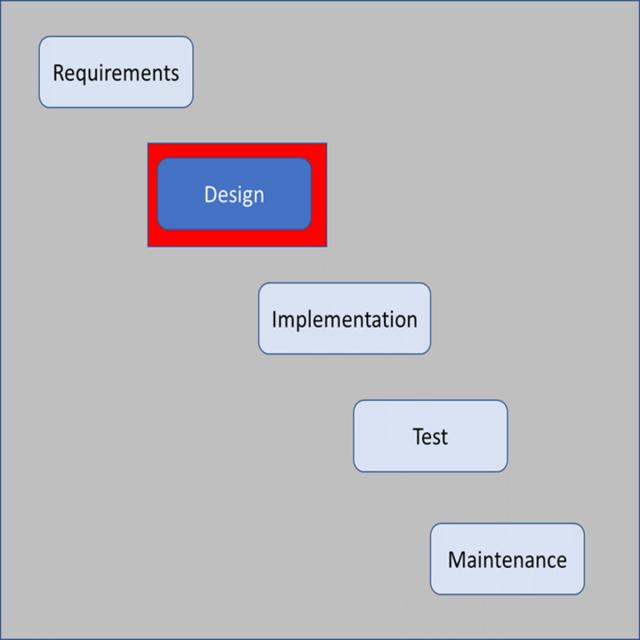
This course talks about software development lifecycles a description/prescription for how we write software. Design is a step in this life cycle, and the course explores the implications of this. Design has a role in the life cycle; it is always there, regardless of the kind of life cycle we’re talking about. Why is that? Why was design considered as a step in this life cycle?

Sep 28th 2026
5-12 Weeks
Data Structures and Design Patterns for Game Developers (Coursera) Coursera
University of Colorado System

Data Structures and Design Patterns for Game Developers (Coursera)

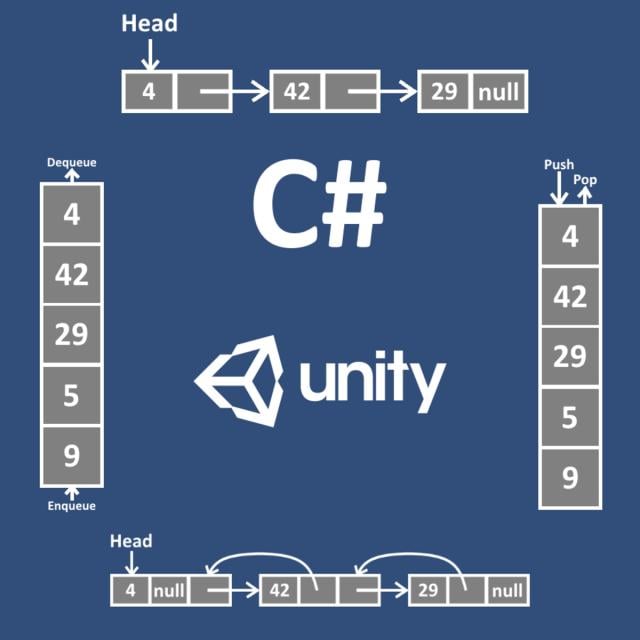
This course is the fourth course in the specialization about learning how to develop video games using the C# programming language and the Unity game engine on Windows or Mac. Why use C# and Unity instead of some other language and game engine? Well, C# is a really good language for learning how to program and then programming professionally. Also, the Unity game engine is very popular with indie game developers; Unity games were downloaded 16,000,000,000 times in 2016! Finally, C# is one of the programming languages you can use in the Unity environment.

Sep 28th 2026
4 Weeks
Solving Algorithms for Discrete Optimization (Coursera) Coursera
University of Melbourne,The Chinese University of Hong Kong

Solving Algorithms for Discrete Optimization (Coursera)

Discrete Optimization aims to make good decisions when we have many possibilities to choose from. Its applications are ubiquitous throughout our society. Its applications range from solving Sudoku puzzles to arranging seating in a wedding banquet. The same technology can schedule planes and their crews, coordinate the production of steel, and organize the transportation of iron ore from the mines to the ports.

Oct 5th 2026
4 Weeks
Capstone: Autonomous Runway Detection for IoT (Coursera) Coursera
EIT Digital

Capstone: Autonomous Runway Detection for IoT (Coursera)

The students will develop a larger system using the learning outcomes from these courses, and the students will evaluate the developed system in a real-world programming environment. This course is a true engineering task in which the student must, not only implement the algorithm code, but also handle the interfaces between many different actors and hardware platforms.

Oct 5th 2026
3 Weeks