Quantitative Model Checking (Coursera)

Offered by EIT Digital,
Quantitative Model Checking (Coursera)

The integration of ICT (information and communications technology) in different applications is rapidly increasing in e.g. Embedded and Cyber physical systems, Communication protocols and Transportation systems. Hence, their reliability and dependability increasingly depends on software. Defects can be fatal and extremely costly (with regards to mass-production of products and safety-critical systems).

Class Deals by MOOC List - Click here and see Coursera's Active Discounts, Deals, and Promo Codes.

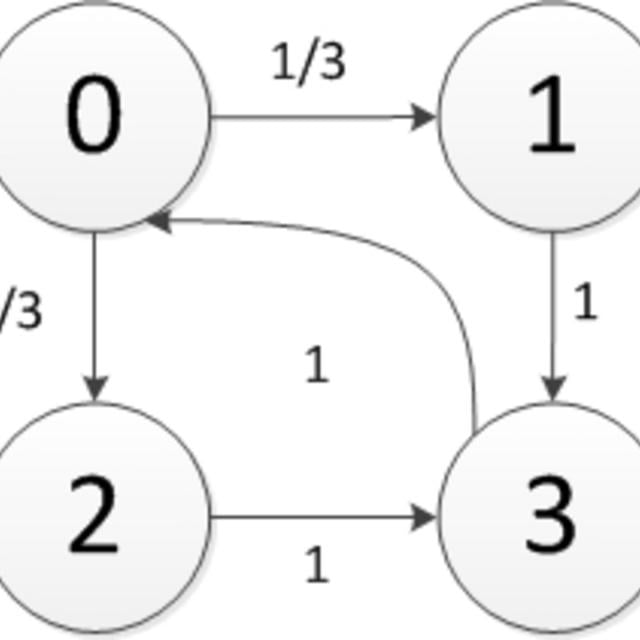
First, a model of the real system has to be built. In the simplest case, the model reflects all possible states that the system can reach and all possible transitions between states in a (labelled) State Transition System. When adding probabilities and discrete time to the model, we are dealing with so-called Discrete-time Markov chains which in turn can be extended with continuous timing to Continuous-time Markov chains. Both formalisms have been used widely for modeling and performance and dependability evaluation of computer and communication systems in a wide variety of domains. These formalisms are well understood, mathematically attractive while at the same time flexible enough to model complex systems.
Model checking focuses on the qualitative evaluation of the model. As formal verification method, model checking analyzes the functionality of the system model. A property that needs to be analyzed has to be specified in a logic with consistent syntax and semantics. For every state of the model, it is then checked whether the property is valid or not.
The main focus of this course is on quantitative model checking for Markov chains, for which we will discuss efficient computational algorithms. The learning objectives of this course are as follows:

  • Express dependability properties for different kinds of transition systems .
  • Compute the evolution over time for Markov chains.
  • Check whether single states satisfy a certain formula and compute the satisfaction set for properties.

Syllabus

WEEK 1
Module 1: Computational Tree Logic
We introduce Labeled Transition Systems (LTS), the syntax and semantics of Computational Tree Logic (CTL) and discuss the model checking algorithms that are necessary to compute the satisfaction set for specific CTL formulas.

WEEK 2
Discrete Time Markov Chains
We enhance transition systems by discrete time and add probabilities to transitions to model probabilistic choices. We discuss important properties of DTMCs, such as the memoryless property and time-homogeneity. State classification can be used to determine the existence of the limiting and / or stationary distribution.

WEEK 3
Probabilistic Computational Tree Logic
We discuss the syntax and semantics of Probabilistic Computational Tree logic and check out the model checking algorithms that are necessary to decide the validity of different kinds of PCTL formulas. We shortly discuss the complexity of PCTL model checking.

WEEK 4
Continuous Time Markov Chains
We enhance Discrete-Time Markov Chains with real time and discuss how the resulting modelling formalism evolves over time. We compute the steady-state for different kinds of CMTCs and discuss how the transient probabilities can be efficiently computed using a method called uniformisation.

WEEK 5
Continuous Stochastic Logic
We introduce the syntax and semantics of Continuous Stochastic Logic and describe how the different kinds of CSL formulas can be model checked. Especially, model checking the time bounded until operator requires applying the concept of uniformisation, which we have discussed in the previous module.

Go to Class
MOOC List is learner-supported. When you buy through links on our site, we may earn an affiliate commission.

Related Courses

Games, Sensors and Media (Coursera) Coursera
University of California, Irvine

Games, Sensors and Media (Coursera)

You will learn to make fluid digital interactive experiences that are suitable for gaming and use the advanced sensor hardware built into the iPhone and iPad. This includes drawing 2D graphics, playing sounds and music, integrating with Game Center, the iOS physics engine and detecting device orientation and location.

Sep 28th 2026
4 Weeks
Continuous Delivery & DevOps (Coursera) Coursera
University of Virginia

Continuous Delivery & DevOps (Coursera)

Amazon famously delivers new code every 11.6 seconds. Just a few years ago, this was unthinkable: many ‘cutting edge’ firms would release software quarterly. When it comes to digital innovation, velocity is critical and many would say it’s the most reliable determinant of success. Bringing an organization to the state of the art (or even functional capability) in this area requires strong work in a combination of disciplines and a combination of both technical and managerial skills. There is no single cookie-cutter approach for achieving this capability.

Oct 5th 2026
4 Weeks
AI for Efficient Programming: Harnessing the Power of LLMs (Coursera) Coursera
Fred Hutchinson Cancer Center

AI for Efficient Programming: Harnessing the Power of LLMs (Coursera)

This course on Artificial Intelligence (AI) for software development explores the use of AI large language models such as ChatGPT, Bard, and others and their potential benefits and challenges. Through examples and hands-on activities, you will develop an understanding of the ways in which AI can speed up software development tasks and free up time for more creative and strategic work.

Oct 5th 2026
4 Weeks
Code Yourself! An Introduction to Programming (Coursera) Coursera
University of Edinburgh,Universidad ORT Uruguay

Code Yourself! An Introduction to Programming (Coursera)

Have you ever wished you knew how to program, but had no idea where to start from? This course will teach you how to program in Scratch, an easy to use visual programming language. More importantly, it will introduce you to the fundamental principles of computing and it will help you think like a software engineer.

Sep 28th 2026
5-12 Weeks
Executing Full Text Queries with Elasticsearch (Coursera) Coursera
Board Infinity

Executing Full Text Queries with Elasticsearch (Coursera)

This course is designed to teach you how to execute full-text queries with Elasticsearch, a powerful search and analytics engine widely used for data exploration, log analysis, and real-time search applications. In this course, you will learn the basics of Elasticsearch, including how to install and configure the software, index data, and create mappings. You will then explore the various query types supported by Elasticsearch, such as term queries, match queries, and phrase queries. You will also learn how to use Elasticsearch's aggregation framework to analyze and summarize your data.

Oct 5th 2026
3 Weeks
Object Oriented Programming in Java (Coursera) Coursera
University of California, San Diego

Object Oriented Programming in Java (Coursera)

Welcome to our course on Object Oriented Programming in Java using data visualization. People come to this course with many different goals -- and we are really excited to work with all of you! Some of you want to be professional software developers, others want to improve your programming skills to implement that cool personal project that you’ve been thinking about, while others of you might not yet know why you’re here and are trying to figure out what this course is all about.

Sep 21st 2026
5-12 Weeks
Introduction to Computers and Office Productivity Software (Coursera) Coursera
The Hong Kong University of Science and Technology - HKUST

Introduction to Computers and Office Productivity Software (Coursera)

In this course, you will learn the following essential computer skills for the digital age: major hardware components of a computer system; different types of software on a computer system; photo Editing using GIMP; and word processing applications, including MS Word, MS Excel, and MS PowerPoint.

Sep 28th 2026
5-12 Weeks
Learn CSS Variables (Coursera) Coursera
Scrimba

Learn CSS Variables (Coursera)

CSS Custom Properties represent a significant advancement for front-end developers, introducing the concept of variables to CSS. This innovation substantially reduces redundancy, enhances code legibility, and augments overall flexibility. Notably, CSS Variables distinguish themselves from their CSS preprocessor counterparts by seamlessly integrating into the Document Object Model (DOM), offering a plethora of advantages.

Sep 28th 2026
1 Week
Client Needs and Software Requirements (Coursera) Coursera
University of Alberta

Client Needs and Software Requirements (Coursera)

This course covers practical techniques to elicit and express software requirements from client interactions. Upon successful completion of this course, you will be able to: Create clear requirements to drive effective software development; visualize client needs using low-fidelity prototypes; maximize the effectiveness of client interactions - adapt to changing product requirements.

Sep 28th 2026
4 Weeks