Architecting Smart IoT Devices (Coursera)

Offered by EIT Digital,
Architecting Smart IoT Devices (Coursera)

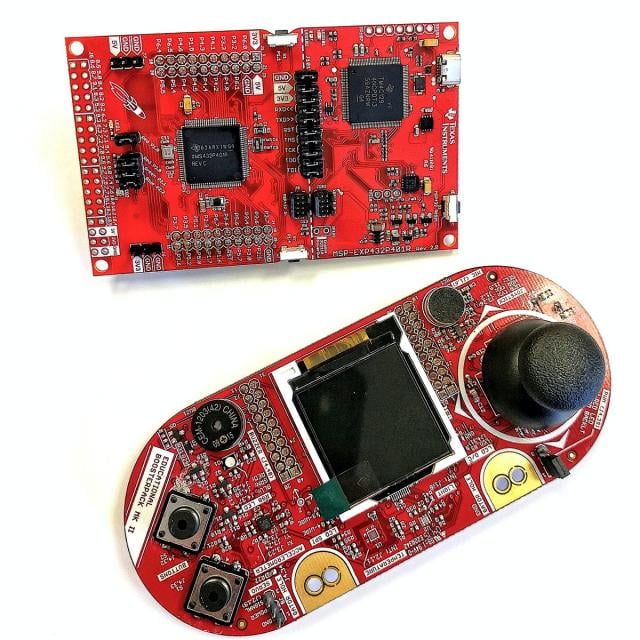
This course will teach you how to develop an embedded systems device. In order to reduce the time to market, many pre-made hardware and software components are available today. You'll discover all the available hardware and software components, such as processor families, operating systems, boards and networks. You'll also learn how to actually use and integrate these components.

Class Deals by MOOC List - Click here and see Coursera's Active Discounts, Deals, and Promo Codes.

At the end of the course you will be ready to start architecting and implementing your own embedded device! You'll learn how to debug and finetune your device and how to make it run on a low power supply.

Syllabus

Week 1: Welcome to Architecting Smart IoT Devices
Week 2: Hardware & Software for EmS
Week 3: RTOS
Week 4: System Finalisation
Week 5: Low Power

Go to Class
MOOC List is learner-supported. When you buy through links on our site, we may earn an affiliate commission.

Related Courses

操作系统原理 (Operating Systems) (Coursera) Coursera
Peking University

操作系统原理 (Operating Systems) (Coursera)

操作系统原理》是针对计算机科学技术专业三年级本科生开设的一门专业基础课程。本课程着重学生系统观的培养,通过重点讲述操作系统的内部结构、工作原理及典型技术的实现,使学生建立起对操作系统的整体及各个功能模块的认识,从而系统掌握计算机的专业知识,进一步提升学生的软件开发能力乃至系统软件开发能力。

Sep 28th 2026
13-24 Weeks
Problem Solving, Python Programming, and Video Games (Coursera) Coursera
University of Alberta

Problem Solving, Python Programming, and Video Games (Coursera)

This course is an introduction to computer science and programming in Python. Important computer science concepts such as problem solving (computational thinking), problem decomposition, algorithms, abstraction, and software quality are emphasized throughout. The Python programming language and video games are used to demonstrate computer science concepts in a concrete and fun manner. However, a learner can take the knowledge and skills from this course and apply them to non-game problems, other programming languages, and other computer science courses.

Sep 21st 2026
5-12 Weeks
Blockchain Scalability and its Foundations in Distributed Systems (Coursera) Coursera
The University of Sydney

Blockchain Scalability and its Foundations in Distributed Systems (Coursera)

Blockchain promises to disrupt industries once it will be efficient at large scale. In this course, you will learn how to make blockchain scale. You will learn about the foundational problem of distributed computing, consensus, that is key to create blocks securely. By illustrating limitations of mainstream blockchains, this course will indicate how to improve the technology in terms of security and efficiency. In particular, this course will help you: understand security vulnerabilities of mainstream blockchains; design consensus algorithms that tolerate attacks, and; design scalable blockchain systems.

Sep 28th 2026
5-12 Weeks
Agile Planning for Software Products (Coursera) Coursera
University of Alberta

Agile Planning for Software Products (Coursera)

This course covers the techniques required to break down and map requirements into plans that will ultimately drive software production. Upon successful completion of this course, you will be able to: create effective plans for software development; map user requirements to developer tasks; assess and plan for project risks; apply velocity-driven planning techniques; generate work estimates for software products.

Sep 28th 2026
4 Weeks
Client Needs and Software Requirements (Coursera) Coursera
University of Alberta

Client Needs and Software Requirements (Coursera)

This course covers practical techniques to elicit and express software requirements from client interactions. Upon successful completion of this course, you will be able to: Create clear requirements to drive effective software development; visualize client needs using low-fidelity prototypes; maximize the effectiveness of client interactions - adapt to changing product requirements.

Sep 28th 2026
4 Weeks
Internet of Things: Sensing and Actuation From Devices (Coursera) Coursera
University of California, San Diego

Internet of Things: Sensing and Actuation From Devices (Coursera)

Have you wondered how information from physical devices in the real world gets communicated to Smartphone processors? Do you want to make informed design decisions about sampling frequencies and bit-width requirements for various kinds of sensors? Do you want to gain expertise to affect the real world with actuators such as stepper motors, LEDs and generate notifications? In this course, you will learn to interface common sensors and actuators to the DragonBoard™ 410c hardware. You will then develop software to acquire sensory data, process the data and actuate stepper motors, LEDs, etc. for use in mobile-enabled products.

Sep 21st 2026
5-12 Weeks
Internet of Things: Setting Up Your DragonBoard™ Development Platform (Coursera) Coursera
University of California, San Diego

Internet of Things: Setting Up Your DragonBoard™ Development Platform (Coursera)

Do you want to develop skills to prototype mobile-enabled products using state-of-the-art technologies? In this course you will build a hardware and software development environment to guide your journey through the Internet of Things specialization courses. We will use the DragonBoard™ 410c single board computer (SBC).

Sep 21st 2026
5-12 Weeks
An Introduction to Logic for Computer Science (Coursera) Coursera
University of Leeds

An Introduction to Logic for Computer Science (Coursera)

Logic plays a fundamental role in computer science. This course is designed to equip you with a solid understanding of the fundamental principles of logic and their relevance in the field of computer science. In this course, you'll explore proposition logic and discover its practical applications in problem-solving, algorithm design, and the development of intelligent systems. By engaging in hands-on exercises, exploring real-world examples, and participating in discussions, you'll develop strong logical reasoning and critical thinking skills.

Sep 21st 2026
2 Weeks
Bitcoin and Cryptocurrency Technologies (Coursera) Coursera
Princeton University

Bitcoin and Cryptocurrency Technologies (Coursera)

To really understand what is special about Bitcoin, we need to understand how it works at a technical level. We’ll address the important questions about Bitcoin, such as: How does Bitcoin work? What makes Bitcoin different? How secure are your Bitcoins? How anonymous are Bitcoin users? What determines the price of Bitcoins? Can cryptocurrencies be regulated? What might the future hold?

Sep 21st 2026
5-12 Weeks
Software Architecture for the Internet of Things (Coursera) Coursera
EIT Digital

Software Architecture for the Internet of Things (Coursera)

This course will teach you how to design futureproof systems that meet the requirements of IoT systems: systems that are secure, interoperable, modifiable and scalable. Moreover, you'll learn to apply best-in-class software architecture methods to help you design complex IoT and other applications. Lastly, you'll come to understand the business impact of the technical decisions that you make as an IoT system architect.

Sep 28th 2026
5-12 Weeks
Introduction to Software Product Management (Coursera) Coursera
University of Alberta

Introduction to Software Product Management (Coursera)

This course highlights the importance and role of software product management. It also provides an overview of the specialization, as well as its goals, structure, and expectations. The course explains the value of process, requirements, planning, and monitoring in producing better software. Upon successful completion of this course, you will be able to: relate software product management to better software products; recognize the role of a software product manager; reflect on how Agile principles will improve your own projects.

Sep 28th 2026
2 Weeks
Programming with Scratch (Coursera) Coursera
The Hong Kong University of Science and Technology - HKUST

Programming with Scratch (Coursera)

Learning coding is not only about understanding the programming language being used, but also developing important computational thinking skills, which are useful for problem solving across many disciplinary areas. In this course, students will learn basic programming skills by creating interactive storybooks, animations, and games with Scratch, which is a block-based visual programming language for anyone new to coding.

Sep 28th 2026
5-12 Weeks