Introduction to Embedded Systems Software and Development Environments (Coursera)

Introduction to Embedded Systems Software and Development Environments (Coursera)

Welcome to the Introduction to Embedded Systems Software and Development Environments. This course is focused on giving you real world coding experience and hands on project work with ARM based Microcontrollers. You will learn how to implement software configuration management and develop embedded software applications. Course assignments include creating a build system using the GNU Toolchain GCC, using Git version control, and developing software in Linux on a Virtual Machine.

Class Deals by MOOC List - Click here and see Coursera's Active Discounts, Deals, and Promo Codes.

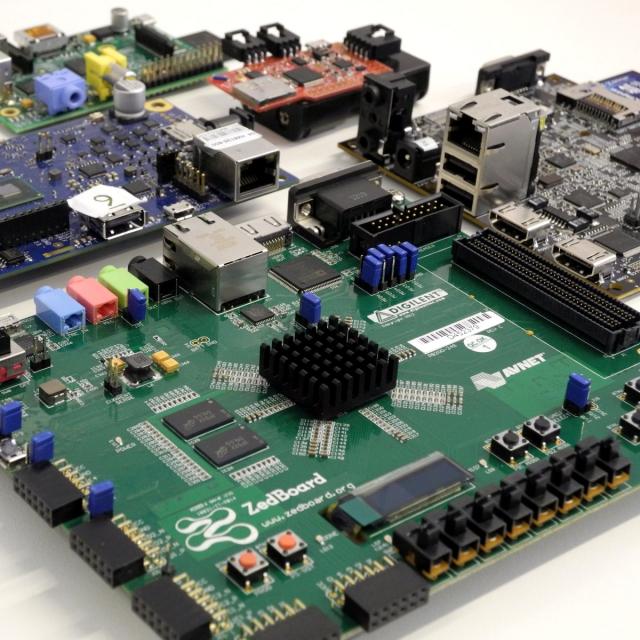
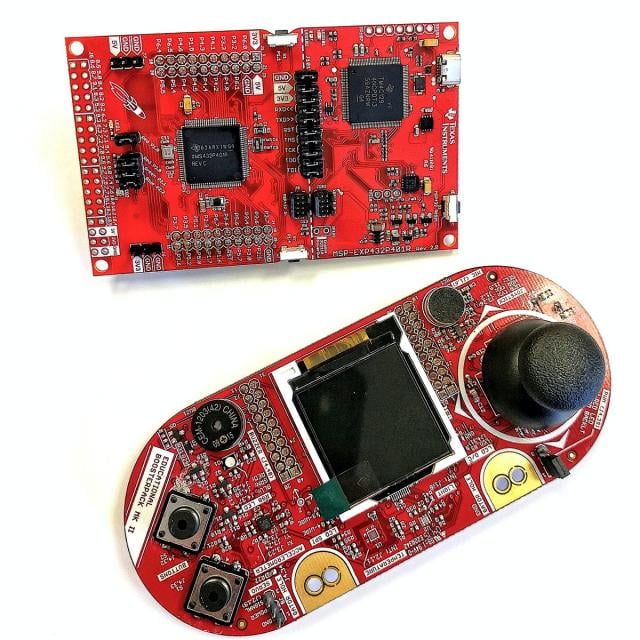
The course concludes with a project where you will create your own build system and firmware that can manipulate memory. The second course in this 2 course series , Embedded Software and Hardware Architecture, will use hardware tools to program and debug microcontrollers with bare-metal firmware. Using a Texas Instruments MSP432 Development Kit, you will configure a variety of peripherals, write numerous programs, and see your work execute on your own embedded platform!

Syllabus

WEEK 1
Embedded System Development Components
Module 1 will introduce the learner to the components of your embedded system software development process. This module will be a quick overview for many topics with detailed analysis to follow in later modules and courses. We start with defining the hardware and software building blocks of Embedded Systems which will include a C-programming refresher. Next you will learn about the important tools a developer will need to use to help design, build and manage their designs. This includes development environments, version control and the hardware kits to install on. Learners will install and use a Virtual machine to complete Week 1 Application Assignment.

WEEK 2
Compilation with GCC and GNU Make
Module 2 will introduce the learner to the software development build system. Most software engineers are very knowledgeable about their build system as we need them to translate our high-level software languages to our architecture specific implementations. There are some important platform and architecture concepts that are introduced in the build system to help enforce good software design techniques. Learners will create their own build systems and utilize build tools to analyze their embedded software implementations.

WEEK 3
Memory Types, Segments and Management
Module 3 will begin to introduce important embedded concepts like the memory systems in their design. Learners will understand how the software to hardware mapping occurs for their designs including differentiating between your program code and your program data. Memory systems have many platform and architecture dependencies, and you will begin to learn about some of the fundamental concepts a software engineer needs to know to utilize all parts of an embedded system’s memory.

WEEK 4
Course 1 Final Assessment
During this week you are to going to combine what you have learned in modules 1-3 to write some memory manipulation software, incorporate into your build system and then run some test functions. At the end of the assignment you will perform a detailed code review of other learners’ software. Reviewing other learners code is very important for both your growth of software design but also for the coder to gain valuable feedback. Professional software engineering regularly go through software reviews when developing code.

Go to Class
MOOC List is learner-supported. When you buy through links on our site, we may earn an affiliate commission.

Related Courses

Interagir com sistemas operativos (Coursera) Coursera
Google

Interagir com sistemas operativos (Coursera)

Neste curso, através de uma combinação de palestras em vídeo, demonstrações e experiências práticas, vai adquirir conhecimentos acerca dos componentes principais de um sistema operativo e como realizar tarefas críticas, como gerir software e utilizadores e configurar hardware. Vamos terminar com um exemplo de como este conteúdo pode surgir no contexto de uma entrevista.

Aug 3rd 2026
5-12 Weeks
操作系统原理 (Operating Systems) (Coursera) Coursera
Peking University

操作系统原理 (Operating Systems) (Coursera)

操作系统原理》是针对计算机科学技术专业三年级本科生开设的一门专业基础课程。本课程着重学生系统观的培养,通过重点讲述操作系统的内部结构、工作原理及典型技术的实现,使学生建立起对操作系统的整体及各个功能模块的认识,从而系统掌握计算机的专业知识,进一步提升学生的软件开发能力乃至系统软件开发能力。

Aug 3rd 2026
13-24 Weeks
Linux on LinuxONE (Coursera) Coursera
IBM

Linux on LinuxONE (Coursera)

This course is for Linux Systems Administrators, Architects and Developers who are already familiar with Linux components and everyday tasks, but need a primer on how to best take advantage of the LinuxONE platform. This includes working with the hardware, software, facilities, and processes unique to LinuxONE. It is comprised of videos, links to online resources, and a final test for a badge.

Aug 17th 2026
5-12 Weeks
Engineering Maintainable Android Apps (Coursera) Coursera
Vanderbilt University

Engineering Maintainable Android Apps (Coursera)

Engineering Maintainable Android Apps, which is a 4 week MOOC that shows by example various methods for engineering maintainable Android apps, including test-driven development methods and how to develop/run unit tests using JUnit and Robotium (or equivalent automated testing frameworks for Android), as well as how to successfully apply common Java/Android software patterns to improve the extensibility and clarity of Android apps.

Aug 3rd 2026
4 Weeks
Python Scripting: Dates, Classes and Collections (Coursera) Coursera
LearnQuest

Python Scripting: Dates, Classes and Collections (Coursera)

This course is the second course in a series that aims to prepare you for a role working as a programmer. In this course, you will be introduced to the four main concepts in programming: Advanced String Operations and Dates, Modeling Classes, Development of Classes and Collections. Labs will allow the students to apply the material in the lectures in simple computer programs designed to re-enforce the material in the lesson.

Aug 3rd 2026
4 Weeks
Network Principles in Practice: Linux Networking (Coursera) Coursera
University of Colorado Boulder

Network Principles in Practice: Linux Networking (Coursera)

Welcome! In this course, titled "Network Principles in Practice: Linux Networking," we delve into the dynamic domain of Linux Networking, featuring a robust set of features essential for contemporary networked systems. Departing from traditional approaches, our emphasis is on practical application over foundational knowledge. Throughout the course, you'll explore the integration of concepts into Linux, gaining hands-on experience in architecting and implementing complex networks and systems.

Aug 17th 2026
5-12 Weeks
Build a Modern Computer from First Principles: Nand to Tetris Part II (project-centered course) (Coursera) Coursera
Hebrew University of Jerusalem

Build a Modern Computer from First Principles: Nand to Tetris Part II (project-centered course) (Coursera)

In this project-centered course you will build a modern software hierarchy, designed to enable the translation and execution of object-based, high-level languages on a bare-bone computer hardware platform. In particular, you will implement a virtual machine and a compiler for a simple, Java-like programming language, and you will develop a basic operating system that closes gaps between the high-level language and the underlying hardware platform.

Aug 17th 2026
5-12 Weeks
Introduction to C# Programming and Unity (Coursera) Coursera
University of Colorado System

Introduction to C# Programming and Unity (Coursera)

This course is all about starting to learn how to develop video games using the C# programming language and the Unity game engine on Windows or Mac. Why use C# and Unity instead of some other language and game engine? Well, C# is a really good language for learning how to program and then programming professionally. Also, the Unity game engine is very popular with indie game developers; Unity games were downloaded 16,000,000,000 times in 2016! Finally, C# is one of the programming languages you can use in the Unity environment.

Aug 3rd 2026
4 Weeks
Intermediate Object-Oriented Programming for Unity Games (Coursera) Coursera
University of Colorado System

Intermediate Object-Oriented Programming for Unity Games (Coursera)

This course is the third course in the specialization about learning how to develop video games using the C# programming language and the Unity game engine on Windows or Mac. Why use C# and Unity instead of some other language and game engine? Well, C# is a really good language for learning how to program and then programming professionally. Also, the Unity game engine is very popular with indie game developers; Unity games were downloaded 16,000,000,000 times in 2016! Finally, C# is one of the programming languages you can use in the Unity environment.

Aug 3rd 2026
4 Weeks
Capstone: Autonomous Runway Detection for IoT (Coursera) Coursera
EIT Digital

Capstone: Autonomous Runway Detection for IoT (Coursera)

The students will develop a larger system using the learning outcomes from these courses, and the students will evaluate the developed system in a real-world programming environment. This course is a true engineering task in which the student must, not only implement the algorithm code, but also handle the interfaces between many different actors and hardware platforms.

Aug 10th 2026
3 Weeks
Protecting Cloud Architecture with Alibaba Cloud (Coursera) Coursera
Alibaba Cloud Academy

Protecting Cloud Architecture with Alibaba Cloud (Coursera)

The Security Exam Preparation Course is a series of online courses covering topics including Linux and Windows OS basics and operations, network fundamentals, host security, application security, network security, and data security. It is designed to help you understand how these products work, how they should be used, and help you gain the required knowledge to prepare for the ACA/ACP level cloud security specialist.

Aug 3rd 2026
5-12 Weeks