Tools of the Trade: Linux and SQL (Coursera)

Offered by Google,
Tools of the Trade: Linux and SQL (Coursera)

This is the fourth course in the Google Cybersecurity Certificate. These courses will equip you with the skills you need to apply for an entry-level cybersecurity job. You’ll build on your understanding of the topics that were introduced in the third Google Cybersecurity Certificate course. In this course, you will explore computing skills that you’ll use on-the-job as a cybersecurity analyst.

Class Deals by MOOC List - Click here and see Coursera's Active Discounts, Deals, and Promo Codes.

First, you'll practice using Linux, an operating system commonly used by cybersecurity professionals. For example, you'll use the Linux command line through the Bash shell to navigate and manage the file system and authenticate users. Then, you'll use SQL to communicate with a database.
Google employees who currently work in cybersecurity will guide you through videos, provide hands-on activities and examples that simulate common cybersecurity tasks, and help you build your skills to prepare for jobs.
Learners who complete this certificate will be equipped to apply for entry-level cybersecurity roles. No previous experience is necessary.
By the end of this course, you will:

  • Explain the relationship between operating systems, applications, and hardware.
  • Compare a graphical user interface to a command line interface.
  • Identify the unique features of common Linux distributions.
  • Navigate and manage the file system using Linux commands via the Bash shell.
  • Use Linux commands via the Bash shell to authenticate and authorize users.
  • Describe how a relational database is organized.
  • Use SQL to retrieve information from a database.
  • Apply filters to SQL queries and use joins to combine multiple tables.

Syllabus

WEEK 1
Introduction to operating systems
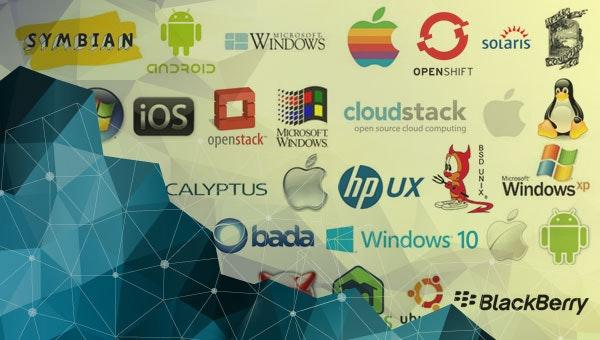
You will learn about the relationship between operating systems, hardware, and software, and become familiar with the primary functions of an operating system. You'll recognize common operating systems in use today and understand how the graphical user interface (GUI) and command-line interface (CLI) both allow users to interact with the operating system.

WEEK 2
The Linux operating system
You will be introduced to the Linux operating system and learn how it is commonly used in cybersecurity. You’ll also learn about Linux architecture and common Linux distributions. In addition, you'll be introduced to the Linux shell and learn how it allows you to communicate with the operating system.

WEEK 3
Linux commands in the Bash shell
You will be introduced to Linux commands as entered through the Bash shell. You'll use the Bash shell to navigate and manage the file system and to authorize and authenticate users. You'll also learn where to go for help when working with new Linux commands.

WEEK 4
Databases and SQL
You will practice using SQL to communicate with databases. You'll learn how to query a database and filter the results. You’ll also learn how SQL can join multiple tables together in a query.
Go to Class
MOOC List is learner-supported. When you buy through links on our site, we may earn an affiliate commission.

Related Courses

Using Databases with Python (Coursera) Coursera
University of Michigan

Using Databases with Python (Coursera)

This course will introduce students to the basics of the Structured Query Language (SQL) as well as basic database design for storing data as part of a multi-step data gathering, analysis, and processing effort. The course will use SQLite3 as its database. We will also build web crawlers and multi-step data gathering and visualization processes. We will use the D3.js library to do basic data visualization.

Jul 6th 2026
5-12 Weeks
Big Data Analytical Platform on Alibaba Cloud (Coursera) Coursera
Alibaba Cloud Academy

Big Data Analytical Platform on Alibaba Cloud (Coursera)

Building an Analytical Platform on Alibaba Cloud can empower how you take in, analyze, and demonstrate clear metrics from a set of Big Data. This course is designed to teach engineers how to use Alibaba Cloud Big Data products. It covers basic distributed system theory and Alibaba Cloud's core products like MaxCompute, DataWorks, E-MapReduce as well as a bundle of ecosystem tools.

Jul 6th 2026
5-12 Weeks
The Unix Workbench (Coursera) Coursera
Johns Hopkins University

The Unix Workbench (Coursera)

Unix forms a foundation that is often very helpful for accomplishing other goals you might have for you and your computer, whether that goal is running a business, writing a book, curing disease, or creating the next great app. The means to these goals are sometimes carried out by writing software. Software can’t be mined out of the ground, nor can software seeds be planted in spring to harvest by autumn. Software isn’t produced in factories on an assembly line. Software is a hand-made, often bespoke good. If a software developer is an artisan, then Unix is their workbench.

Jul 6th 2026
4 Weeks
Cybersecurity Awareness and Innovation (Coursera) Coursera
EIT Digital

Cybersecurity Awareness and Innovation (Coursera)

It’s not you, it’s me! What’s going on? This course empowers students, professionals and wider community to deal with cybersecurity attacks and risks focused on identity management and it is an introduction to the upcoming full course focused on cybersecurity awareness. It is provided a practical overview of challenging issues like identity credentials management and security, e-mail threats and web impersonation, or web hacking.

Jul 6th 2026
5-12 Weeks
Enterprise and Infrastructure Security (Coursera) Coursera
New York University

Enterprise and Infrastructure Security (Coursera)

This course introduces a series of advanced and current topics in cyber security, many of which are especially relevant in modern enterprise and infrastructure settings. The basics of enterprise compliance frameworks are provided with introduction to NIST and PCI. Hybrid cloud architectures are shown to provide an opportunity to fix many of the security weaknesses in modern perimeter local area networks.

Jul 6th 2026
4 Weeks
Relational Database Support for Data Warehouses (Coursera) Coursera
University of Colorado System

Relational Database Support for Data Warehouses (Coursera)

Relational Database Support for Data Warehouses is the third course in the Data Warehousing for Business Intelligence specialization. In this course, you'll use analytical elements of SQL for answering business intelligence questions. You'll learn features of relational database management systems for managing summary data commonly used in business intelligence reporting. Because of the importance and difficulty of managing implementations of data warehouses, we'll also delve into storage architectures, scalable parallel processing, data governance, and big data impacts. In the assignments in this course, you can use either Oracle or PostgreSQL.

Jul 6th 2026
5-12 Weeks
La recherche documentaire (Coursera) Coursera
École Polytechnique

La recherche documentaire (Coursera)

Ce cours vise principalement à permettre aux étudiants d’identifier les sources pertinentes dans un domaine donné, leur apprendre à construire un état de l’art et à évaluer les sources, en particulier celles en accès libre sur Internet. Il cherche également à optimiser la recherche documentaire en incitant les étudiants à tirer le meilleur parti des outils et requêtes d’interrogation des bases de données. A l'issue de ce cours, ils devront être capables de construire et alimenter une bibliographie ordonnée, ainsi que de citer convenablement leurs sources pour éviter le plagiat.

Jul 6th 2026
3 Weeks
Aspectos básicos de la asistencia técnica (Coursera) Coursera
Google

Aspectos básicos de la asistencia técnica (Coursera)

Este curso es el primero de una serie que tiene como objetivo prepararte para un rol como especialista de soporte de TI de nivel inicial. En este curso, serás introducido en el mundo de la tecnología de la información, o TI. Aprenderás sobre las diferentes facetas de la tecnología de la información como hardware y software informático, Internet, solución de problemas y servicio al cliente.

Jul 7th 2026
5-12 Weeks
Introduction to Cyber Attacks (Coursera) Coursera
New York University

Introduction to Cyber Attacks (Coursera)

This course provides learners with a baseline understanding of common cyber security threats, vulnerabilities, and risks. An overview of how basic cyber attacks are constructed and applied to real systems is also included. Examples include simple Unix kernel hacks, Internet worms, and Trojan horses in software utilities. Network attacks such as distributed denial of service (DDOS) and botnet- attacks are also described and illustrated using real examples from the past couple of decades.

Jul 6th 2026
4 Weeks
Introduction to Cybersecurity for Business (Coursera) Coursera
University of Colorado System

Introduction to Cybersecurity for Business (Coursera)

The world runs computers. From small to large businesses, from the CEO down to level 1 support staff, everyone uses computers. This course is designed to give you a practical perspective on computer security. This course approaches computer security in a way that anyone can understand. Ever wonder how your bank website is secure when you connect to it? Wonder how other business owners secure their network? Wonder how large data breaches happen? This is practical computer security. It will help you answer the question – what should I focus on?

Jul 6th 2026
5-12 Weeks
Programming Mobile Applications for Android Handheld Systems: Part 2 (Coursera) Coursera
University of Maryland, College Park

Programming Mobile Applications for Android Handheld Systems: Part 2 (Coursera)

This course introduces you to the design and implementation of Android applications for mobile devices. You will build upon concepts from the prior course, including handling notifications, using multimedia and graphics and incorporating touch and gestures into your apps.

Jul 6th 2026
5-12 Weeks
Classical Cryptosystems and Core Concepts (Coursera) Coursera
University of Colorado System

Classical Cryptosystems and Core Concepts (Coursera)

Welcome to Introduction to Applied Cryptography. Cryptography is an essential component of cybersecurity. The need to protect sensitive information and ensure the integrity of industrial control processes has placed a premium on cybersecurity skills in today’s information technology market. Demand for cybersecurity jobs is expected to rise 6 million globally by 2019, with a projected shortfall of 1.5 million, according to Symantec, the world’s largest security software vendor. According to Forbes, the cybersecurity market is expected to grow from $75 billion in 2015 to $170 billion by 2020.

Jul 6th 2026
3 Weeks