Water Supply and Sanitation Policy in Developing Countries Part 2: Developing Effective Interventions (Coursera)

Water Supply and Sanitation Policy in Developing Countries Part 2: Developing Effective Interventions (Coursera)

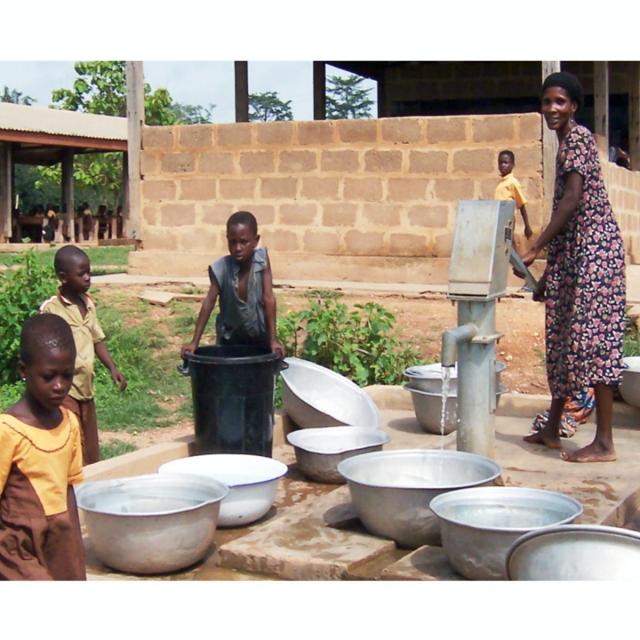
Water Supply and Sanitation Policy in Developing Countries Part 2 is our second MOOC in a two-part sequence, and looks at ‘Developing Effective Interventions’. Here we invite you to develop analytical skills and deep understanding about a complex, controversial policy problem – one with no simple, easy answers. About half a billion people on our planet still lack access to improved water supplies and about two billion do not have improved sanitation services, leading to an unknown but very large number of avoidable deaths each year from water-related diseases. Millions of dollars are spent on avoidable health care expenditures, and people – mostly women – spend many billions of hours carrying water from sources outside the home.

Class Deals by MOOC List - Click here and see Coursera's Active Discounts, Deals, and Promo Codes.

Reducing these costs is a major global challenge for us all in the 21st century. Join us to explore the challenging and complex political, economic, social, and technical dimensions of the policy interventions that donors, national governments and water utilities use to address this challenge.

Your instructors for this course have worked in and studied this sector for many years. Professor Dale Whittington has worked on water and sanitation policy and planning issues for over 40 years in more than two dozen low and middle-income countries. Dr Duncan Thomas has worked in the UK and European water sectors for 15 years, focusing on overcoming barriers to technological, organizational, regulatory and policy innovations.

Syllabus

WEEK 1: Introduction and how our ‘ancient instincts’ affect water policy intervention
WEEK 2: Planning better policy interventions: Roles, features and examples of planning protocols
WEEK 3: Roles, features and problems of water pricing, tariff design and subsidies
WEEK 4: Providing information to households and communities to improve water and sanitation conditions
WEEK 5: Changing the institutions that deliver water and sanitation services: Privatization in lesser developing countries
WEEK 6: Changing institutions: Lessons from the UK water privatization story
WEEK 7: Changing institutions: Improving regulation of the water and sanitation sector
Go to Class
MOOC List is learner-supported. When you buy through links on our site, we may earn an affiliate commission.

Related Courses

Business Economics and Game Theory for Decision Making (Coursera) Coursera
Illinois Tech

Business Economics and Game Theory for Decision Making (Coursera)

Good decision making and strategy do not exist in isolation: the success and profitability of a business depend not only on the organization’s own strategic moves but also on those that other firms make, especially competitors. Understanding the strategic linkages among firms can therefore be immensely valuable. Economics and Game theory offer tools that can specifically enhance one's understanding and ability to exploit such strategic linkages. This course will cover one of the most crucial decisions that a firm offering a differentiated product needs to make – how to price its product.

Sep 14th 2026
5-12 Weeks
HI-FIVE: Health Informatics For Innovation, Value & Enrichment (Administrative/IT Perspective) (Coursera) Coursera
Columbia University

HI-FIVE: Health Informatics For Innovation, Value & Enrichment (Administrative/IT Perspective) (Coursera)

HI-FIVE (Health Informatics For Innovation, Value & Enrichment) Training is an approximately 10-hour online course designed by Columbia University in 2016, with sponsorship from the Office of the National Coordinator for Health Information Technology (ONC). The training is role-based and uses case scenarios. No additional hardware or software are required for this course. Our nation’s healthcare system is changing at a rapid pace.

Sep 28th 2026
4 Weeks
Moving to the Cloud (Coursera) Coursera
University of Melbourne

Moving to the Cloud (Coursera)

The cloud is taking business by storm. In fact, due to the extraordinary growth of the cloud, it has been described as a tornado, not a fluffy white floating object! Commercial research analysts consider cloud as one of the most significant trends with a potential to change the whole global IT industry. Governments, including those in the US, Britain, and Australia, have cloud-first policies now in place which mandate cloud over non-cloud services in ICT procurement.

Sep 28th 2026
5-12 Weeks
The Fundamentals of Revenue Management: The Cornerstone of Revenue Strategy (Coursera) Coursera
ESSEC Business School

The Fundamentals of Revenue Management: The Cornerstone of Revenue Strategy (Coursera)

With a fixed capacity, a highly disposable product and high fixed costs, hotels are a natural candidate for the application of revenue management. Originally developed by the airlines in the 1970s, these analytics-based techniques help predict consumer behavior at the hotel’s market level so that the hotel can sell each room each night at the optimum price. With modern-day rising acquisition costs and distribution complexities, revenue management techniques have increasingly been adopted by both small and large hotel companies, making a comprehensive understanding of segmentation, forecasting and pricing an essential requirement for today’s hospitality professionals. The purpose of this course is to provide a core understanding of the fundamentals of revenue management, which ties into the larger picture of revenue strategy.

Sep 7th 2026
4 Weeks
Public Health in Humanitarian Crises 1 (Coursera) Coursera
Johns Hopkins University

Public Health in Humanitarian Crises 1 (Coursera)

This course, Public Health in Humanitarian Crises 1, introduces discussions about the public health approach to problems experienced by people affected by disasters, both natural and related to conflict. The course discusses the many changes which occur in people’s lives when they are uprooted by a disaster, ranging from changes in disease patterns, access to health care, livelihoods, shelter, sanitary conditions, nutritional status, etceteras. We will explore what humanitarian interventions could look like if we want to mitigate the effects of disasters. The course content is a mix of theoretical knowledge and many practical examples from recent disasters. We think this course is unique because it contains so many practical ‘real-life’ examples and is taught by instructors and guest lecturers who together have over 200 years of experience in this field.

Sep 28th 2026
5-12 Weeks
Introduction to Healthcare Finance (Coursera) Coursera
University of Michigan

Introduction to Healthcare Finance (Coursera)

Introduction to Healthcare Finance equips healthcare leaders with fundamental finance tools and concepts necessary for effective collaboration with experts and managing organizations. In this course, you’ll explore healthcare pricing, investment valuation, and pharmaceutical research and development costing. You will consider the motivation, consequences, and valuation techniques essential to helping you make strategic decisions and engage in effective bargaining in healthcare mergers and acquisitions.

Sep 14th 2026
4 Weeks
HI-FIVE: Health Informatics For Innovation, Value & Enrichment (Clinical Perspective) (Coursera) Coursera
Columbia University

HI-FIVE: Health Informatics For Innovation, Value & Enrichment (Clinical Perspective) (Coursera)

HI-FIVE (Health Informatics For Innovation, Value & Enrichment) Training is a 12-hour online course designed by Columbia University in 2016, with sponsorship from the Office of the National Coordinator for Health Information Technology (ONC). The training is role-based and uses case scenarios. Also, it has additional, optional modules on other topics of interest or relevance. Although we suggest to complete the course within a month's timeframe, the course is self-paced and so you can start and finish the course at anytime during a month's time period. No additional hardware or software are required for this course.

Sep 28th 2026
4 Weeks
New paradigms in wastewater management (Coursera) Coursera
Politecnico di Milano

New paradigms in wastewater management (Coursera)

This MOOC is aimed at providing key elements in relation to the management of the urban water cycle, including both conventional goals and the challenges of the smart cities of the future. This MOOC presents a full picture, although very concise, of present and emerging technologies for wastewater treatment, presented by professors teaching at Politecnico di Milano.

Sep 21st 2026
4 Weeks
Wilderness First Aid - Environmental Emergencies (Coursera) Coursera
University of Colorado Boulder

Wilderness First Aid - Environmental Emergencies (Coursera)

In this course, students will learn about environmental injuries, how to treat them, and what conditions require evacuation. This will include animal bites/stings, and temperature-related emergencies, such as those that are heat or cold-related, lightning, altitude, and drowning. Students will also learn about important aspects of camp hygiene, and what to do in the event that evacuation is needed.

Sep 21st 2026
4 Weeks
Pricing Strategy (Coursera) Coursera
IE Business School

Pricing Strategy (Coursera)

Pricing is one of the most important but least understood marketing decisions. Learn and practice concepts, techniques, and get to grips with the latest thinking on assessing and formulating pricing strategies. Analyze how firms attempt to capture value, as well as profits, in the revenues they earn. After this course, you will be able to contribute to the process of formulating pricing strategies for your own products and services, or those of your firm.

Sep 14th 2026
4 Weeks
Water: an essential resource (Coursera) Coursera
Politecnico di Milano

Water: an essential resource (Coursera)

This MOOC wants to communicate the challenge of protecting water and then human health from chemical and microbiological hazards, as well as the multidisciplinarity required by this challenge by providing some key elements about water quality, protection and remediation, sustainable drinking water production, online monitoring, and finally advanced computing for process control.

Sep 21st 2026
3 Weeks