Value-Based Care: Managing Processes to Improve Outcomes (Coursera)

Offered by University of Houston,
Value-Based Care: Managing Processes to Improve Outcomes (Coursera)

This course is designed to introduce you to critical office-based processes that a value-based practice must manage in the drive towards improved patient outcomes. In Module 2, we’ll focus on office-based and clinical patient-based supporting functions. At every level in healthcare, guidelines, processes, and functions exist to improve outcomes, and following a consistent process will return the best effect. Refine your understanding of value and learn strategies to provide real assistance to patients to manage chronic diseases and navigate the complex healthcare system. Gain an overview of panel management, a systematic, proactive approach to identify and address unmet chronic and preventive care needs of patients that leads to better health outcomes. Learn how clinical patient-based questions related to immunizations, cancer screenings, or diabetes care can generate data to support a strategy of identifying non-utilization patterns.

Class Deals by MOOC List - Click here and see Coursera's Active Discounts, Deals, and Promo Codes.

In the summative assignment, you will demonstrate your knowledge by explaining and synthesizing the importance of office-based processes and patient-based supporting functions to improve patient outcomes and experience as well as clinical quality. As you reflect on what you have learned in this course, you will also have an opportunity to consider the relationship between managing these processes and functions and the fundamental premise of value-based care.
What You Will Learn

  • Describe the importance of managing office-based processes for improving patient outcomes and experience, as well as clinical quality.
  • Describe the importance of managing supporting functions for improving patient outcomes and experience, as well as clinical quality.
  • Formulate a basic understanding of the relationship between managing processes and supporting functions to improve patient outcomes and experience.

Syllabus

WEEK 1
Introduction to Managing Office Processes in a Value-Based Care Practice
This module is an introduction to and exploration of critical office-based processes a value-based practice must manage in the drive towards improved patient outcomes, a primary VBC tenet. In managing patients in a healthcare system, the targeted processes include: Patient-Centered Medical Home, preventive and screening services, annual wellness visits, managing acute needs via an open access model, quality of care metrics, coding to support enhanced coordination, and staffing. Managing office processes plays a key role in this strategic pursuit. From information retrieved from annual screenings to how the office is set up, every patient visit is an opportunity to identify and address a healthcare issue. This is what physician offices want to do and should be thinking about; besides, patients always prefer to handle problems in the office rather than in the hospital. However, managing processes is not the responsibility of one person. It is a team effort, requiring input from all team members. To improve outcomes, all team members have critical roles in designing, implementing, and refining processes. At the end of this module, you will explore a fourth dimension related to staffing that, when added to the Triple Aim, creates the Quadruple Aim.

WEEK 2
Supporting Functions to Improve Outcomes
This module is designed to introduce you to the office-based and clinical patient-based supporting functions that, when managed collectively, lead to improved patient outcomes. These include: 1) Medical Management: Utilization, Case, Data and Pharmacy, 2) Registries, Analytics, and Technology, 3) Guidelines, Types of Evidence, and Recommendations, and 4) Coordination around SDOH/Community Resources. The world of primary care medicine is evolving rapidly. Patient expectations are changing, along with those of third-party payers and the providers themselves. Many patients are looking for “on demand” access, but others are looking for a long-term medical home. Telemedicine and telehealth are growing along with new approaches to hospital- and home-based functions. These changes all point to the idea that patients and payers are looking for value. And that “value” is not just an appointment and a paper prescription to fill at the end, but real assistance to manage chronic diseases and help patients navigate the complex world of the healthcare system. Discussion of those additional office-based supporting functions will comprise the majority of information in this module. In addition to those patients who come in for appointments, maintain regular healthcare visits, or become hospitalized, a big part in the role of supporting functions is to capture the health status of patients who have not visited in six months to a year. Utilizing panel management—a systematic, proactive approach to identify and address unmet chronic and preventive care needs of the patients a practice is responsible for—leads to better health outcomes for that patient population. Whether an office has insurer-based reporting or uses office-based record-keeping, using panel management to ask clinical patient-based questions related to immunizations, cancer screenings, or diabetes care is using the function of data/predictive analytics to support a strategy of identifying non-utilization patterns. Remember, as you read or hear terms or concepts that are new to you, have your digital (Word doc) or analog (paper) notepad handy to write them down. At any time, you can use your favorite search engine to learn more. Be a self-directed learner!

WEEK 3
Course Project: Making This My Own
In this course, you have explored critical office-based and clinical patient-based processes and supporting functions that a value-based practice must manage collectively in the drive towards improved patient outcomes. An expectation of this course or certificate program is not for you to emerge as an expert in all of these processes—remember, it does take a team to manage them. However, it is important that you develop an understanding, beyond basic definitions, of their importance for improving patient outcomes and experience. In addition, it is important to collectively think about these processes in the context of a value-based care model. In this summative assignment, you will have the chance to reflect on what you have learned about these processes and supporting functions and their relationship to the fundamental premise of value-based care.
Go to Class
MOOC List is learner-supported. When you buy through links on our site, we may earn an affiliate commission.

Related Courses

Drugs, drug use, drug policy and health (Coursera) Coursera
University of Geneva

Drugs, drug use, drug policy and health (Coursera)

This MOOC is the first of its kind, since it addresses critical issues related to drugs from a multidisciplinary, health and human rights-based approach. Throughout the course you will cover a range of questions including what are drugs and why they controlled? What are the benefits and harms of taking drugs? How public health policies can address drug use?

Oct 12th 2026
5-12 Weeks
Hearing Loss in Children (Coursera) Coursera
University of Michigan

Hearing Loss in Children (Coursera)

Approximately 2 to 3 out of 1000 children in the United States are born with a significant hearing loss. Early identification and intervention of hearing loss is crucial to children’s lifelong learning outcomes. It is well documented that later identification of hearing loss can lead to significant delays in children’s speech, language, literacy, social and emotional development.

Oct 12th 2026
5-12 Weeks
Chemicals and Health (Coursera) Coursera
Johns Hopkins University

Chemicals and Health (Coursera)

This course covers chemicals in our environment and in our bodies and how they impact our health. It addresses policies and practices related to chemicals, particularly related to how they get into our bodies (exposures), what they do when they get there (toxicology), how we measure them (biomonitoring) and their impact on our health. Most examples are drawn from the US.

Oct 12th 2026
5-12 Weeks
Understanding Psychosis (Coursera) Coursera
University of Michigan

Understanding Psychosis (Coursera)

What is it like to live with and recover from psychosis? Why are people with psychosis spectrum disorders such as Schizophrenia more likely to have serious medical problems? What can healthcare providers do to improve this population’s experience of and access to care? Why is Trauma-Informed Care particularly relevant to people living with psychosis? In this course, learners will explore these and other questions as they gain a deeper understanding of psychosis-spectrum disorders.

Oct 12th 2026
4 Weeks
Training and Learning Programs for Volunteer Community Health Workers (Coursera) Coursera
Johns Hopkins University

Training and Learning Programs for Volunteer Community Health Workers (Coursera)

Volunteer community health workers (CHWs) are a major strategy for increasing access to and coverage of basic health interventions. Our village health worker training course reviews the process of training and continuing education of CHWs as an important component of involving communities in their own health service delivery. Participants will be guided through the steps of planning training and continuing education activities for village volunteers. The course draws on real-life examples from community-directed onchocerciasis control, village health worker programs, community case management efforts, peer educators programs and patent medicine vendor training programs, to name a few.

Oct 12th 2026
5-12 Weeks
Strategies for Assisted Living Communities during COVID-19 (Coursera) Coursera
Johns Hopkins University

Strategies for Assisted Living Communities during COVID-19 (Coursera)

SARS-CoV-2, the virus that causes COVID-19, poses a high risk for assisted living communities due to residents’ age, health status, and communal living environment. The COVID-19 response has largely focused on nursing homes, leaving assisted living communities in the United States with fragmented guidance on how to respond to COVID-19 challenges. This course provides comprehensive instruction and resources for administrators and direct-care staff of assisted living communities.

Oct 12th 2026
1 Week
Value-Based Care: Reimbursement Models (Coursera) Coursera
University of Houston

Value-Based Care: Reimbursement Models (Coursera)

This course is designed to help you build high-level knowledge of the current medical coding and payment mechanisms of most U.S. healthcare services, referred to as fee-for-service. You will explore why the fee-for-service model has contributed to higher costs in the U.S. healthcare system without clearly improving health outcomes. You will examine the importance of coding to reflect chronic conditions and other diagnoses accurately and how value-based care and payments utilize these measures and data. As you learn about a model to replace fee-for-service, you’ll encounter a range of payment options considered to be value-based that utilize a framework from the Health Care Payment Learning and Action Network (HCP-LAN). To build on those options, you will learn how risk-adjustment, quality scores, and patient satisfaction measures are critical parts of value-based care and payment contracts. In the summative assignment, you will demonstrate your knowledge by comparing fee-for-service and value-based contracts, using specific examples to explain and justify the importance of documentation and coding, and identifying ways that risk-adjustment and patient satisfaction are incorporated into value-based care contracts.

Oct 12th 2026
3 Weeks
Psicología de la salud (Coursera) Coursera
Tecnológico de Monterrey

Psicología de la salud (Coursera)

En este curso aprenderás los fundamentos conceptuales de la Psicología de la Salud. Comenzaremos con los antecedentes históricos acerca del estudio de los componentes subjetivos y de comportamiento en el proceso salud-enfermedad y de la atención de la salud. Además, se conocerán los factores psicosociales relacionados en la calidad de vida y la promoción de la salud, la prevención de las enfermedades, la atención de los enfermos y personas con secuelas.

Oct 12th 2026
4 Weeks
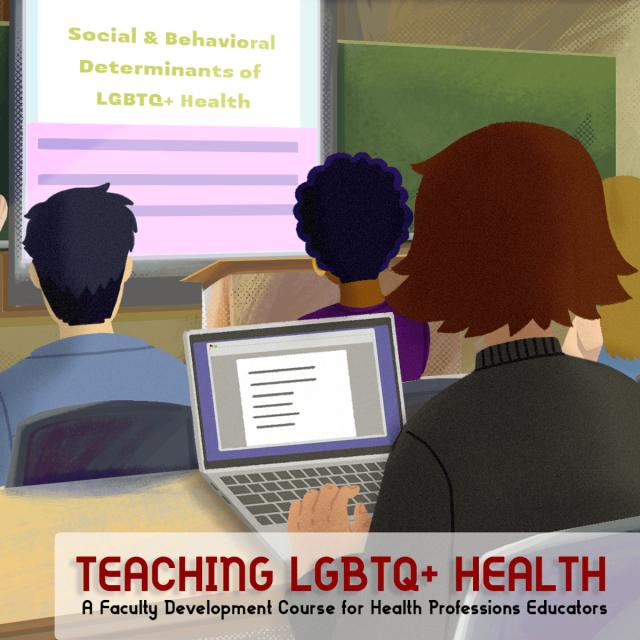
Teaching LGBTQ+ Health (Coursera) Coursera
Stanford University

Teaching LGBTQ+ Health (Coursera)

This curriculum is designed for faculty members and health professions educators. The course goals are to improve your knowledge, teaching skills, and attitudes pertaining to the provision of health care to LGBTQ+ patients.e.g. This is primarily aimed at first- and second-year undergraduates interested in engineering or science, along with high school students and professionals with an interest in programming.

Oct 12th 2026
2 Weeks
Population Health: Syndemics (Coursera) Coursera
Leiden University

Population Health: Syndemics (Coursera)

Do you wish to contribute to breaking cycles of ill-health in disadvantaged populations? And explore co-occurrence of diseases, such as substance abuse, infectious and chronic disease, and the relation with social factors (disparities)? Are you disappointed in the poor effectiveness of interventions for combined social and medical problems? Then this syndemics course might provide you with some answers.

Oct 12th 2026
4 Weeks