Técnicas Microscópicas de Caracterización (Coursera)

Técnicas Microscópicas de Caracterización (Coursera)

El recorrido por el apasionante mundo de la microscopía nos permite ver a una escala muy alejada de mundo macroscópico al que estamos acostumbrados. Las diferentes técnicas microscópicas nos ayudan a entender el reino atómico y la estructura de los organismos vivos, así como también de los diversos materiales. Es una herramienta imprescindible para desarrollar nuevas funcionalidades en el campo de la nanociencia y la nanotecnología con aplicaciones biomédicas, en computación y telecomunicaciones, y en energías renovables, entre otras muchas.

Class Deals by MOOC List - Click here and see Coursera's Active Discounts, Deals, and Promo Codes.

Al completar el curso los estudiantes tendrán una visión detallada de los elementos básicos del que están formados los microscopios que utilizamos en las diferentes técnicas, su funcionamiento y operatividad, la preparación de muestras así como los objetivos y resultados de estudio. El curso está pensado para profesores de secundaria que quieran tener una aproximación a las técnicas de microscopía así como para estudiantes tanto de secundaria como de primeros cursos universitários. Pero es apto para cualquier persona interesada en el mundo nanométrico y sus aplicaciones.

Syllabus

WEEK 1
Introducción al microscopio electrónico
Te damos la bienvenida al curso de microscopia para la caracterización, en este curso el estudiante aprenderá las partes esenciales y el funcionamiento de los diversos microscopios y técnicas de medida relacionadas, así como las diversas aplicaciones. El curso está diseñado para desarrollarse a lo largo de 5 semanas, con una dedicación de 3 horas semana. Al finalizar cada módulo el alumno encontrará un cuestionario el cual deberá aprobar con un 80% de puntuación para la obtención de un certificado de aprovechamiento.
Microscopía Electrónica de Barrido (SEM)
En este módulo se pretende mostrar la estructura y los principios básicos de funcionamiento del Microscopio Electrónico de Barrido (MEB o SEM en su acrónimo en inglés). Veremos qué tipo de fenómenos se producen dentro del microscopio al interaccionar el haz de electrones con la muestra y de qué manera se aprovechan las diferentes señales generadas para proporcionar, con gran resolución, información morfológica, topográfica y de composición, siendo muy útil para una gran variedad de aplicaciones científicas y industriales.

WEEK 2
Microscopía Electrónica de Transmisión (TEM)
En este módulo se presenta la configuración de un microscopio electrónico de transmisión (TEM). Mientras en un microscopio SEM, las imágenes se forman con electrones secundarios arrancados de la muestra, o con electrones del haz primario que han sido retrodispersados al interaccionar fuertemente con los átomos del material, en un TEM las imágenes se forman con los electrones que han atravesado la muestra. Veremos los modos más fundamentales de operación para obtener una imagen ampliada de la muestra, incluso con resolución atómica, o para obtener diagramas de difracción de electrones que contienen información sobre la estructura cristalina de los materiales observados.

WEEK 3
Microscopía Electrónica de Transmisión de Barrido (STEM)
En este módulo presentamos el microscopio electrónico de transmisión y los modos de operación básicos con haz paralelo para obtener imágenes y patrones de difracción de electrones. En este tercer módulo, se presenta la posibilidad de trabajar con un haz convergente y de pequeño tamaño, que además barre la superficie de la muestra por la acción de bobinas electromagnéticas deflectoras, dando lugar al llamado modo de barrido – transmisión (STEM). La señal de interés en este caso, proviene de la interacción quasi-elástica de los electrones con los núcleos de los átomos de la muestra para obtener imágenes cuyo contraste depende del número atómico de los mismos, o bien de la interacción inelástica con la nube electrónica de los átomos de la muestra, para medir la pérdida de energía que ha sufrido el haz de electrones primario y extraer información sobre la composición del material y el estado de oxidación de los elementos que lo componen.

WEEK 4
Microscopía de Fuerzas Atómicas (AFM)
En este módulo analizamos el Microscopio de Fuerzas Atómicas que significó un hito a principios de los 80 para la evolución y consolidación de la nanotecnología ya que permite la medida de todo tipo de nanoestructuras de una forma rápida, sencilla y no destructiva. Durante el curso veremos su esquema y funcionamiento y podremos comprobar su gran potencialidad y alta versatilidad. El objetivo principal del curso es dar las herramientas básicas para la utilización práctica de un AFM de manera autosuficiente.

WEEK 5
Microscopía Óptica Avanzada (MOA)
En este módulo hablamos del gran avance que la Microscopía óptica ha experimentado en los últimos, consolidado con los nuevos equipos de Microscopía Óptica Avanzada que ya son capaces de trabajar en la nanoescala. Uno de estos equipos es el microscopio Confocal, el cual será presentado y explicado durante el curso para saber su esquema, composición, funcionamiento y posibles opciones de uso. La microscopía confocal permite la medición topográfica de superficies con una amplia gama de texturas (desde superficies muy rugosas a superficies muy lisas) mediante el escaneo en pasos de la muestra verticalmente.
Go to Class
MOOC List is learner-supported. When you buy through links on our site, we may earn an affiliate commission.

Related Courses

Cell Biology: The Cytoskeleton and Cell Cycle (edX) EdX
MIT,MITx

Cell Biology: The Cytoskeleton and Cell Cycle (edX)

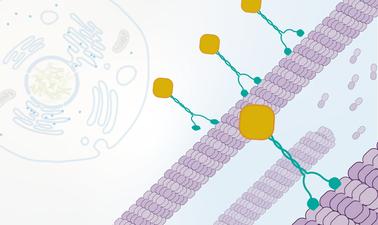
How do we know what we know about cells? Enhance your scientific thinking and data analysis skills with this in-depth adventure through cell biology. Do you think you know how cells grow and divide? Professor Iain Cheeseman will challenge you to see the cytoskeleton in new and beautiful ways. You will explore these structural elements of cells with an expanded toolkit to better understand the dynamic processes that generate incredible amounts of force and regulate function throughout the cell cycle.

Self Paced
Self-Paced
Smart Materials: Microscale and Macroscale Approaches (Coursera) Coursera
Peter the Great St. Petersburg Polytechnic University

Smart Materials: Microscale and Macroscale Approaches (Coursera)

Smart materials represent a cutting-edge global trend both in fundamental science and emerging technologies. Smart materials science is a truly interdisciplinary area at the intersection of physics, chemistry, chemical engineering, mathematical simulations, nanotechnology, biotechnology, and etc. An online course in smart materials will be of obvious interest for everyone who is interested in modern materials science and emerging trends in engineering, biotechnology, and medicine. A broad variety of materials are actually considered as smart ones: from shape memory alloys to polymer nanosystems. We expect that the Coursera audience will benefit from a compact and simple online course that integrates specific modern aspects and trends of fabrication, modification, characterization, and applications of smart materials.

Jul 18th 2022
5-12 Weeks
The New Nordic Diet - from Gastronomy to Health (Coursera) Coursera
University of Copenhagen

The New Nordic Diet - from Gastronomy to Health (Coursera)

The New Nordic Diet is a new food culture developed in 2009-13 with key emphasis on gastronomy, health, and environment. Major research in its effect on acceptability, behaviour and learning skills, and disease prevention have been conducted by the OPUS centre at the University of Copenhagen and the people behind the award-winning restaurant Noma in Copenhagen. This course will give the participants the opportunity to experience a healthy and palatable new food and eating concept diet “The New Nordic Diet” and an understanding of how food and diets can affect mental and physical health and ensure the foundation for a healthier life style for future generations with a regional based diet and food culture.

Jun 8th 2026
5-12 Weeks
ImageInLife - Imaging the Vertebrate embryo: from biological material to modelling (FUN) FUN
Université de Montpellier

ImageInLife - Imaging the Vertebrate embryo: from biological material to modelling (FUN)

Microscopy technologies have progressed to such a point that it is now possible to image a developing vertebrate at the single cell resolution. Two main model species are being used for such studies, the zebrafish and the mouse. The present MOOC introduces the trainees to these two animal models, to the most modern microscopy technologies, to the use of high volume of data (images) and to the modelling of the studied processes. Trainees will also be introduced to the intravital study of viral infections.

Aug 24th 2021
5-12 Weeks
Histology: Using Microscopy to Study Anatomy and Identify Disease (FutureLearn) FutureLearn
The Open University

Histology: Using Microscopy to Study Anatomy and Identify Disease (FutureLearn)

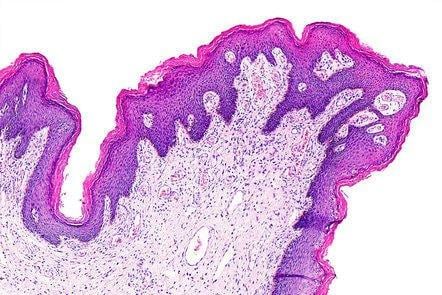
Get an introduction to histology – the study of anatomy at a microscopic level – and find out how it is used to identify disease. Histology is a key part of modern medicine – it helps us study cells and tissues at a microscopic level, and accurately diagnose diseases such as cancer. This online course introduces the field. It starts with the basic principles of light microscopy, before focussing on the structure and function of human tissues, and the relationships between them.

No sessions available
4 Weeks
Understanding Plants - Part II: Fundamentals of Plant Biology (Coursera) Coursera
Tel Aviv University

Understanding Plants - Part II: Fundamentals of Plant Biology (Coursera)

This class is aimed at people interested in understanding the basic science of plant biology. In this four lecture series, we'll first learn about the structure-function of plants and of plant cells. Then we'll try to understand how plants grow and develop, making such complex structures as flowers. Once we know how plants grow and develop, we'll then delve into understanding photosynthesis - how plants take carbon dioxide from the air and water from soil, and turn this into oxygen for us to breathe and sugars for us to eat. In the last lecture we'll learn about the fascinating, important and controversial science behind genetic engineering in agriculture.

Jun 8th 2026
4 Weeks
Comprendre l'écologie, pour une économie innovante (Coursera) Coursera
ESCP Europe

Comprendre l'écologie, pour une économie innovante (Coursera)

Conçu conjointement par le think-tank Ecolo-Ethik et ESCP Europe, ce MOOC se propose de vous aider à dépasser les idées reçues sur l’écologie, dans le souci d’une démarche ouverte et multiple. A ce titre, de grands experts reconnus interviendront pour illustrer, approfondir et enrichir les différentes thématiques.

Jun 8th 2026
5-12 Weeks
Origens da Vida no Contexto Cósmico (Coursera) Coursera
Universidade de São Paulo, Brasil

Origens da Vida no Contexto Cósmico (Coursera)

Origens da vida no contexto cósmico é um curso desenvolvido no Instituto de Astronomia, Geofísica e Ciências Atmosféricas da Universidade de São Paulo, com o objetivo de apresentar os mais recentes avanços científicos na compreensão deste intrigante assunto. É um curso com formato multidisciplinar que o levará a compreender melhor os aspectos envolvidos no surgimento de vida na Terra e no possível surgimento de vida em outros planetas.

Jun 8th 2026
4 Weeks
Service Transformed: Lessons in U.S. Veteran Centered Care (Coursera) Coursera
University of Michigan

Service Transformed: Lessons in U.S. Veteran Centered Care (Coursera)

Improving health care for veterans has become a matter of national attention and has gained increasing attention from the medical community. With the current surge of veterans reintegrating into civilian society it is critical to improve the training of the next cadre of providers who will provide care for our veterans. It is widely known that veterans receive care in all aspects of the health system, thus providers in veteran focused care facilities, military health serves and civilian locals must be aware of the unique needs of veterans. It is perhaps even more important to educate civilian providers who may be unfamiliar with the unique physical, mental and emotional needs related to military service.

Jun 8th 2026
5-12 Weeks
Big Data, Genes, and Medicine (Coursera) Coursera
The State University of New York

Big Data, Genes, and Medicine (Coursera)

This course distills for you expert knowledge and skills mastered by professionals in Health Big Data Science and Bioinformatics. You will learn exciting facts about the human body biology and chemistry, genetics, and medicine that will be intertwined with the science of Big Data and skills to harness the avalanche of data openly available at your fingertips and which we are just starting to make sense of.

Jun 8th 2026
5-12 Weeks
Natural Attenuation of Groundwater Contaminants: New Paradigms, Technologies, and Applications (Coursera) Coursera
Rice University

Natural Attenuation of Groundwater Contaminants: New Paradigms, Technologies, and Applications (Coursera)

Cleaning up the large number of groundwater contamination sites is a significant and complex environmental challenge. The environmental industry is continuously looking for remediation methods that are both effective and cost-efficient. Over the past 10 years there have been amazing, important developments in our understanding of key attenuation processes and technologies for evaluating natural attenuation processes, and a changing institutional perspective on when and where Monitored Natural Attenuation (MNA) may be applied.

Jun 8th 2026
5-12 Weeks