The Horse Course: Introduction to Basic Care and Management (Coursera)

Offered by University of Florida,
The Horse Course: Introduction to Basic Care and Management (Coursera)

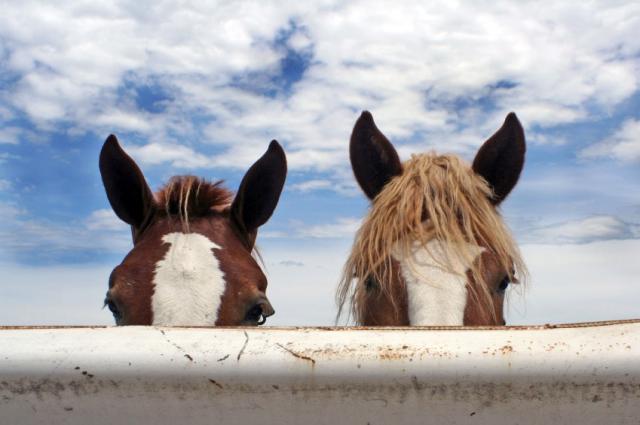
There are over 100 million horses, donkeys and mules in the world today and owners of these animals can be found on almost every continent and in almost every society. The Horse Course will cover many unique aspects of equine ownership and touch upon the science behind many of today’s management practices.

Class Deals by MOOC List - Click here and see Coursera's Active Discounts, Deals, and Promo Codes.

Syllabus

WEEK 1
Introduction to The Horse Course
Welcome to Week 1 of The Horse Course! To start off the course, we will begin discussing what exactly an “equid” is. We will cover the many equine species inhabiting our globe. Next, we’ll jump into the history of horses and donkeys, touching upon how they have made such an impact on our own societal development. The second half of week 1 will cover the many breeds of horses and donkeys. We will finish up with a lecture on the equine hybrids.

WEEK 2
Basic Equine Physiology
This week will start out with covering some basic physiology. We will then advance into hoof anatomy and care. This will lead to spending a lecture discussing laminitis, a serious hoof condition in horses and other equids. The final two lectures will jump into the various coat colors and markings in horses.

WEEK 3
Equine Behavior and Training
The topics this week will focus on equid behavior and movement. Understanding how equids relate to their environment and communicate is critical to training and management. We will start this week by examining the basic equine senses and communication. Then we will discuss normal and abnormal behaviors and the basic psychology used in training. We will finish the week discussing the basic gaits and how these animals move.

WEEK 4
Feeding Management
The topics this week will focus on equid nutrition. Understanding how and what to feed these animals is one of the most important aspects of basic care. We will start with digestive anatomy, how to evaluate your animal’s nutrient requirements, and then jump into feeding management. We will round out the week discussing colic and other nutritional disorders.

WEEK 5
Maintaining Equine Health
The topics this week will focus on equine health. Monitoring and taking care of your animal’s health is critical to owning any equid. We will start off with the normal equine vital signs and then we will discuss administering first aid to your animals. We will then cover the different parasites and diseases that can afflict these animals. Finally, we will end the week discussing some common genetic disorders.

WEEK 6
Breeding Management
The topics this week will focus on equine reproduction. Breeding is an important component of the equine industry. We will start off this week with some basic anatomy, including what makes the equids unique. Then we will cover the estrous cycles of mares and jennies, followed by common breeding systems used throughout the world. After discussing unique aspects of equine pregnancy and parturition, we will finish out the week covering some management tips for taking care of the newborn foal.

Go to Class
MOOC List is learner-supported. When you buy through links on our site, we may earn an affiliate commission.

Related Courses

Big Data, Genes, and Medicine (Coursera) Coursera
The State University of New York

Big Data, Genes, and Medicine (Coursera)

This course distills for you expert knowledge and skills mastered by professionals in Health Big Data Science and Bioinformatics. You will learn exciting facts about the human body biology and chemistry, genetics, and medicine that will be intertwined with the science of Big Data and skills to harness the avalanche of data openly available at your fingertips and which we are just starting to make sense of.

Jun 8th 2026
5-12 Weeks
Design and Implementation of Digital Health Interventions (Coursera) Coursera
Imperial College London

Design and Implementation of Digital Health Interventions (Coursera)

This course covers various themes around design, regulatory approaches, ethics, technology adoption, implementation and strategy as applied to digital health. These session cover areas to include data regulations, examples of data breaches in digital health, the challenges and opportunities of technology adoption and implementation with a focus on the non-adoption, abandonment, scale-up, spread and sustainability framework (NASSS Framework). The strategy part of this course focuses on understanding a simple strategy for digital health through PESTLE and SWOT analysis, and examples of their application in digital health.

Jun 8th 2026
4 Weeks
Introduction to Horses (BHI) Box Hill Institute
Box Hill Institute

Introduction to Horses (BHI)

This course is an introduction to horses, demonstrating basic tasks that you would carry out on a daily basis with a horse. This course can help you to form your decision to enter the wonderful world of horses.

Self Paced
1 Week
Global Biosecurity for One Health (FutureLearn) FutureLearn
Murdoch University

Global Biosecurity for One Health (FutureLearn)

Learn about the drivers, activities and collaborative networks that protect human, animal and environmental health. Discover the environmental, economic and social impacts of pests and diseases. In a world where global trade and human movement is increasing, pests and diseases pose a major threat to agriculture, trade and the environment. Biosecurity is central to the management of these threats.

No sessions available
3 Weeks
Animal Viruses: Their Transmission and the Diseases They Produce (FutureLearn) FutureLearn
Universidad Complutense de Madrid

Animal Viruses: Their Transmission and the Diseases They Produce (FutureLearn)

Learn how important animal viruses are transmitted between animals and humans, and understand the diseases they produce. In this free online course, you will learn about animal viruses that affect pets, birds, sheep, cattle, swine and horses, and produce important diseases.

No sessions available
5-12 Weeks
One Health: A Ten-Thousand-Year-Old View into the Future (edX) EdX
University of Alaska Fairbanks,AlaskaX

One Health: A Ten-Thousand-Year-Old View into the Future (edX)

Explore the connectedness of people, animals, and the environment through this unique approach to One Health that connects traditional ways of knowing with the natural and social sciences. Combine Western and Indigenous knowledge to form a holistic understanding of the future of life in the Circumpolar North.

Self Paced
Self-Paced
The Challenges of Modern Caregiving (Coursera) Coursera
University of Colorado Boulder

The Challenges of Modern Caregiving (Coursera)

Care workers are occasionally lauded as “heroes” of society, but the special challenges they face are not fully understood. This course examines how the organization of care has changed in modern times and the dilemmas those developments pose to helping professionals. Among the questions it engages are: How does the meaning of care change when it is performed outside the family? Do bureaucratic systems discourage individuals from taking responsibility for others’ suffering?

Jun 8th 2026
5-12 Weeks
Understanding Plants - Part II: Fundamentals of Plant Biology (Coursera) Coursera
Tel Aviv University

Understanding Plants - Part II: Fundamentals of Plant Biology (Coursera)

This class is aimed at people interested in understanding the basic science of plant biology. In this four lecture series, we'll first learn about the structure-function of plants and of plant cells. Then we'll try to understand how plants grow and develop, making such complex structures as flowers. Once we know how plants grow and develop, we'll then delve into understanding photosynthesis - how plants take carbon dioxide from the air and water from soil, and turn this into oxygen for us to breathe and sugars for us to eat. In the last lecture we'll learn about the fascinating, important and controversial science behind genetic engineering in agriculture.

Jun 8th 2026
4 Weeks
The New Nordic Diet - from Gastronomy to Health (Coursera) Coursera
University of Copenhagen

The New Nordic Diet - from Gastronomy to Health (Coursera)

The New Nordic Diet is a new food culture developed in 2009-13 with key emphasis on gastronomy, health, and environment. Major research in its effect on acceptability, behaviour and learning skills, and disease prevention have been conducted by the OPUS centre at the University of Copenhagen and the people behind the award-winning restaurant Noma in Copenhagen. This course will give the participants the opportunity to experience a healthy and palatable new food and eating concept diet “The New Nordic Diet” and an understanding of how food and diets can affect mental and physical health and ensure the foundation for a healthier life style for future generations with a regional based diet and food culture.

Jun 8th 2026
5-12 Weeks
Animals and Institutions (Coursera) Coursera
University of Colorado Boulder

Animals and Institutions (Coursera)

This course explores animals within the context of the functional relationships that sociologists call “institutions.” We first examine the use of animals in laboratory science. We then examine the controversial transformation of animals into “livestock” and "meat." We also explore the perspectives of people committed to rejecting the construction and use of animals as food.

Jun 1st 2026
4 Weeks
Introduction to Biology: Biodiversity (Coursera) Coursera
Rice University

Introduction to Biology: Biodiversity (Coursera)

In this course we will examine the incredible variety of life that inhabits this planet including microorganisms, plants, and animals. For each of the major groups we’ll learn about their characteristics, functions, and how they came into existence as well as some of the roles they play in the natural world, and how they’re relevant to people. We’ll also take a close look at us humans and consider what we know about our origins and what might become of us in the future.

Jun 8th 2026
5-12 Weeks