Global Biosecurity for One Health (FutureLearn)

Offered by Murdoch University,
Global Biosecurity for One Health (FutureLearn)

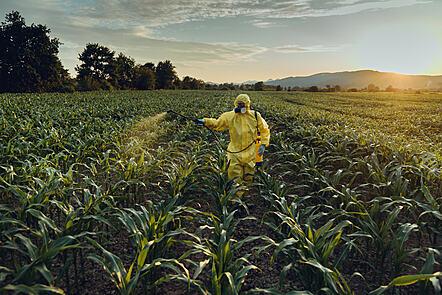
Learn about the drivers, activities and collaborative networks that protect human, animal and environmental health. Discover the environmental, economic and social impacts of pests and diseases. In a world where global trade and human movement is increasing, pests and diseases pose a major threat to agriculture, trade and the environment. Biosecurity is central to the management of these threats.

Class Deals by MOOC List - Click here and see FutureLearn's Active Discounts, Deals, and Promo Codes.

In this course, you will learn from experts in a country that is at the forefront of biosecurity research and practice. However, it is not just the involvement of experts that is important. You will be asked to consider your role and the shared responsibility of communities, industry and governments in protecting against pests and diseases.

What topics will you cover?

  • What is biosecurity
  • Why we need biosecurity
  • What drives biosecurity
  • Terminology
  • Impact of outbreaks
  • One Health and biosecurity
  • Citizen scientists
  • Promoting biosecurity in the community
  • Government and industry approaches to biosecurity
  • Communicating incursions and outbreaks

Learning on this course
You can take this self-guided course and learn at your own pace. On every step of the course you can meet other learners, share your ideas and join in with active discussions in the comments.

What will you achieve?
By the end of the course, you'll be able to...

  • Describe key biosecurity concepts and terminology
  • Explain the environmental, economic and social drivers that underpin biosecurity
  • Collect and analyse information on the impact pests and diseases are having around the world
  • Describe common biosecurity activities
  • Discuss the relationship between biosecurity and global trade
  • Summarise how biosecurity can protect human, animal and environmental health

Who is the course for?
The course is aimed at those who are interested in developing their knowledge and skills around protecting human, animal and environmental health.

Go to Class
MOOC List is learner-supported. When you buy through links on our site, we may earn an affiliate commission.

Related Courses

Improving Healthcare Through Clinical Research (FutureLearn) FutureLearn
University of Leeds

Improving Healthcare Through Clinical Research (FutureLearn)

On this free online course, find out how medical treatments are discovered, tested and evaluated to improve healthcare for all. Everything we do in healthcare has to be discovered and thoroughly tested before it can be put into practice. In this course you will explore clinical research – its challenges and its huge benefits to modern healthcare.

Self Paced
4 Weeks
Environmental Challenges: Rights and Values in Ecosystem Services (FutureLearn) FutureLearn
University of Leeds

Environmental Challenges: Rights and Values in Ecosystem Services (FutureLearn)

Differences in values can create conflict. How can we learn to manage our natural resources with integrity? Humans are very innovative, but we’ve also created many ecological problems. We’ve changed the face of the planet, fished the oceans, and we’re causing climate change through emissions. Designing institutional arrangements that recognise ecosystem services in the values we place upon natural systems will be an important way to help governing the planet, for both present and future generations.

Self Paced
2 Weeks
Understanding Autism (FutureLearn) FutureLearn
University of Kent

Understanding Autism (FutureLearn)

Understand more about autism, including diagnosis, the autistic spectrum and life with autism, with this online course. First identified over 70 years ago, autism is a lifelong developmental disability affecting how a person communicates with and relates to others, and how they make sense of the world. It is a spectrum condition; all people on the spectrum share certain difficulties, but their condition will affect them in different ways.

Self Paced
4 Weeks
Managing Change in a Healthcare Environment (FutureLearn) FutureLearn
University of East Anglia

Managing Change in a Healthcare Environment (FutureLearn)

Understand why change happens in healthcare environments and learn how to improve your response. In rapidly changing world, with new healthcare roles emerging and the complexity of care increasing, being able to respond to change is vital. On this course for healthcare professionals, you will explore the issue of change in healthcare environments, and learn how to improve your response to change.

Self Paced
3 Weeks
Liver Disease: Looking After Your Liver (FutureLearn) FutureLearn
University of Birmingham

Liver Disease: Looking After Your Liver (FutureLearn)

Learn about how your liver works, ways to look after it and how liver damage is caused, studied and treated around the world. We are currently experiencing an international explosion of liver disease that continues to have enormous impact upon healthcare systems and global health. In the UK we have seen a 20% increase in deaths related to liver disease since 2000 and this pattern reflects the global situation.

Self Paced
3 Weeks
Understanding Insulin (FutureLearn) FutureLearn
University of Southampton

Understanding Insulin (FutureLearn)

Learn more about all things insulin: from how it works, to insulin types, to side effects and guidance on how to prescribe safely. The current spend on diabetes care by the NHS is estimated to be £1.6 million pounds per hour. 80% of this is spent on managing diabetes complications, the risk of which can be significantly reduced through effective blood glucose control using insulin.

Self Paced
4 Weeks
Why Do We Age? The Molecular Mechanisms of Ageing (FutureLearn) FutureLearn
University of Groningen,University Medical Center Groningen - UMCG

Why Do We Age? The Molecular Mechanisms of Ageing (FutureLearn)

Why do we age? Is there a limit to human lifespan? Can we prolong our lives? Find out with this free online course. Discover the science behind the ageing process. The “why” and “how” of ageing has puzzled mankind ever since it questioned its place in the universe.

Self Paced
5-12 Weeks
Environmental Challenges: Justice in Natural Resource Management (FutureLearn) FutureLearn
University of Leeds

Environmental Challenges: Justice in Natural Resource Management (FutureLearn)

How do we ensure that the difficult decisions about the management of natural resources are just and fair for all? When looking at different societies and cultures around the world, it is interesting how ubiquitous the principles of justice are. It is part of our human nature to think about equality, and consider fairness as something that we do naturally. However, in practical terms, equality is hard to achieve.

Self Paced
2 Weeks
Health and Wellbeing in the Ancient World (FutureLearn) FutureLearn
The Open University

Health and Wellbeing in the Ancient World (FutureLearn)

Use literary and archaeological evidence to see how ancient Greeks and Romans approached health, well-being and societal issues. What did being healthy in ancient Rome or Greece look like? How can we tell what well-being meant in ancient times? This online course will help you investigate these questions, using both literary and archaeological evidence, to uncover details of real life in ancient societies.

Self Paced
5-12 Weeks
Heart Health: A Beginner's Guide to Cardiovascular Disease (FutureLearn) FutureLearn
University of Reading

Heart Health: A Beginner's Guide to Cardiovascular Disease (FutureLearn)

Learn more about how your heart works, the causes of heart disease and how to keep your heart healthy with this free online course. Learn how to keep your heart healthy. Your heart beats around 100,000 times a day, pumping blood around your body to deliver oxygen and nutrients, while taking away waste products. When your heart is unhealthy, it can’t perform this vital task so effectively.

Self Paced
4 Weeks