Explore the connectedness of people, animals, and the environment through this unique approach to One Health that connects traditional ways of knowing with the natural and social sciences. Combine Western and Indigenous knowledge to form a holistic understanding of the future of life in the Circumpolar North.
Class Deals by MOOC List - Click here and see EdX's Active Discounts, Deals, and Promo Codes.
Are you interested in understanding how global climate change will alter human society, animal health, and the environment? Are you curious about how these three things are interconnected?
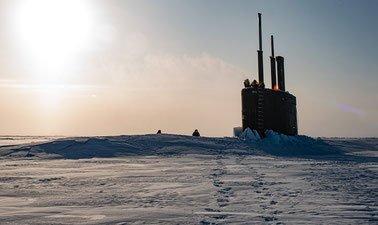
This course focuses on what is happening right now in the Arctic, where climate change is accelerating twice as fast as the rest of the world. Understanding how Arctic ecosystems are adapting and collapsing can give us insight into future changes across the globe.
Finding deep solutions to new challenges caused by climate change can’t be accomplished using only traditional fields of science, such as medicine or biology.
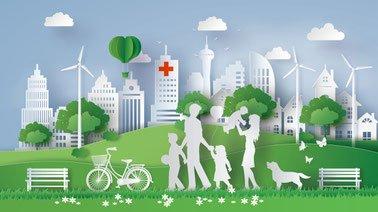
Addressing these issues effectively requires a novel approach, one that integrates knowledge across disciplines and cultures and recognizes the interdependence of human, animal, and environmental health. This concept, always central to the Indigenous worldview, has recently been recognized in Western science as One Health.
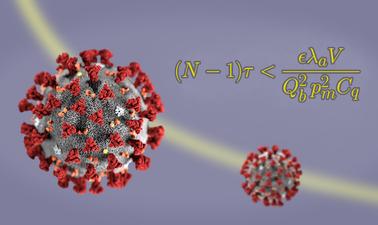
One Health was originally developed as a means of understanding how zoonotic diseases, such as the recent COVID-19 pandemic, arise.
- Between 65% and 70% of emerging diseases in humans are of zoonotic origin. The way we impact our environment and how this influences human-animal interactions play a significant role in how these diseases develop and spread.
- Health is more than the absence of disease and can be defined as a state of well-being for individuals and their communities. Under this definition, well-being encompasses physical, mental, behavioral, cultural, and spiritual health.
- Applying this holistic approach to the One Health paradigm allows us to bring in expertise across natural and social sciences and connect Western science with traditional Indigenous ways of knowing.
- Such a broad and deep integration of knowledge and experience provides opportunities for understanding large issues like food safety, security, and sovereignty at their roots, and for engaging stakeholders to build effective solutions.
This course is part of the Understanding and Operationalizing One Health Professional Certificate.
What you'll learn
Students who complete this course will:
- Have a solid understanding of the One Health concept
- Be able to identify how One Health can provide a lens through which to view a variety of challenging situations in human, animal, and environmental health
- Explain how the One Health approach can lead to sustainable solutions to critical issues facing communities in the Circumpolar North and beyond
Students will also:
- Explain the One Health paradigm, particularly as it relates to the Circumpolar North
- Describe the ten thousand-year history of One Health
- Explore interrelationships between human, animal, and environmental health
- Provide examples of challenges best addressed through the One Health paradigm
- Explain why previous approaches to problem-solving have failed
- Differentiate between reductionist and constructionist approaches to problem solving and explain why One Health utilizes the constructionist approach
- Describe how Traditional ways of knowing and Western science can be used together to understand and manage One Health issues
Prerequisites:
No particular major or coursework required as this is an interdisciplinary course.
- This course is open to all students
- Those with a minimum of a High School science background will get more from the course offerings
- We are seeking participation from diverse groups of students as the more varied their background, the more widespread and interesting the discussions will be.
Syllabus
Week 1: 10,00 years of One Health:
One Health as an Indigenous worldview
How modern science has embraced the One Health paradigm
How does the interdependence of human, animal, and environmental health relate to you in your life experiences?
A different lens through which to view the world
Week 2: Why animal health matters
The human animal relationship across time
Traditional vs urban vs rural perspectives
The value of a salmon
Defining and understanding zoonotic disease
Week 3: Human Health – More than just the absence of disease
Health concerns across the Circumpolar North (and beyond)
What is disease?
What is well being?
Physical health - the foundation
Mental and behavioral health - the drivers
Cultural health - the strength and protection
Spiritual health - the ties across space and time that hold things together
Week 4: Environmental health influences everyone
One World; One Health
Climate change and the resulting influences upon One Health
Why the Arctic is a canary in the coal mine
Changing tides; the oceans and their role in our health
What’s all this fuss about biodiversity?
Mitigation, adaptation, and resilience
Week 5: Beyond natural science: The role of social sciences and Traditional ways of knowing
Why social sciences?
What can 10,000 years of traditional knowledge lend to understanding modern problems?
How does integration of knowledge across traditional, cultural, natural and social science perspectives provide a more comprehensive picture of the problems and the solutions
Why has it been so rare to integrate across these perspectives?
How to build cross disciplinary teams that function.
Timely and relevant examples of One Health issues:
Week 6: Zoonotic diseases and COVID-19
What is a zoonotic disease?
Why are they a “One Health” issue?
Lessons not learned from SARS, MERS, and COVID-19
Other zoonotic disease threats and the role of One Health in understanding their risk and management
Week 7: Food Safety Security and Sovereignty
How are the terms safety, security and sovereignty connected in regards to food?
Rural and urban similarities and differences
Antimicrobial resistance (AMR) - a global threat
One Health and healthy stable food sources
Week 8: Operationalizing One Health
Constructionist vs reductionist approaches to problem solving
Stakeholders and their engagement
Bottom up versus top down
Community based management- the beginning and the end