EdX

Indigenous Peoples' Rights (edX)

Offered by Columbia University,
Indigenous Peoples' Rights (edX)

Examine how Indigenous Peoples have been contesting norms, institutions and global debates in the past 50 years, and how they have been re-shaping and gradually decolonizing these systems at international and national levels. Indigenous Peoples, numbering more than 476 million in some 90 countries and about 5000 groups and representing a great part of the world’s human diversity and cultural heritage, continue to raise major controversies and to face threats to their physical and cultural existence.

Class Deals by MOOC List - Click here and see EdX's Active Discounts, Deals, and Promo Codes.

We will analyze the achievements, challenges, and potential of the dynamic interface between the Indigenous People’s movement—one of the strongest social movements of our time—and the international community, especially the UN system. Centered on the themes laid out in the UN Declaration on the Rights of Indigenous Peoples (2007), the course will examine how Indigenous Peoples have been contesting and reshaping norms, institutions and global debates in the past 50 years, re-shaping and gradually decolonizing international institutions and how they have contributed to some of the most important contemporary debates, including human rights, development, law—specifically the concepts of self-determination, governance, group rights, inter-culturality and pluriculturality, and cultural rights.

What you'll learn
Learners in the course will be able to:

  • discuss how Indigenous Peoples, through their global movement, have been contesting and reshaping international norms and institutions.
  • understand how Indigenous Peoples have been working with the UN system, States and others to advance their rights on the ground.
  • explain the three pillars of the United Nations Declaration on the Rights of Indigenous Peoples (UNDRIP).
  • analyze how Indigenous Peoples have impacted and contributed to some of the most important contemporary global debates, including human rights, development, and climate change—specifically through the concepts of self-determination, group rights, land rights, environmental rights, inter-culturality and cultural rights.

Syllabus

  • The Indigenous Peoples' Rights Movement
  • Right to Self-Determination
  • Right to Land, Territories, and Resources
  • Cultural Rights
  • UN Indigenous Peoples-Related Mechanisms: The Power of Advocacy
Go to Class
MOOC List is learner-supported. When you buy through links on our site, we may earn an affiliate commission.

Related Courses

Pratiquer la méthode de recherche en sciences humaines et sociales (edX) EdX
LouvainX,Université Catholique de Louvain - UCL

Pratiquer la méthode de recherche en sciences humaines et sociales (edX)

Découvrez la démarche universitaire et explorez la boîte à outils de l’apprenti chercheur pour entamer votre projet de recherche. Où chercher l’information ? Comment s’organiser pour sauvegarder ses données ? De quelle manière référencer ses sources ? Quelle technique adopter pour lire un article scientifique ? Comment formuler sa question de recherche ? Qu’est-ce qu’un cadre théorique ? Quels cas d’application mobiliser ?

Self Paced
Self-Paced
Human Rights, Human Wrongs: Challenging Poverty, Vulnerability and Social Exclusion (edX) EdX
SDGAcademyX,SDG Academy

Human Rights, Human Wrongs: Challenging Poverty, Vulnerability and Social Exclusion (edX)

With complex legal protections and varying societal norms, how do we ensure rights for all? From women to children to indigenous peoples, the rights of marginalized groups the world over are violated daily. These injustices affect not just these groups, but also the stability of our world – and our collective future.

Self Paced
Self-Paced
Doping : Sports, Organizations and Sciences (Coursera) Coursera
University of Lausanne

Doping : Sports, Organizations and Sciences (Coursera)

The objective of this course is to encourage a critical understanding of doping. To achieve this goal, this course will rely on a multidisciplinary approach that allow you to see how different disciplines get into a single object, in different perspectives and in often complementary ways. This approach will also allow us to appreciate the complexity of a subject like doping. Doping in sports is a complex practice whose definition and identification is the result of socially and historically constructed norms. This course offers to shed light on the processes that led to the use and prohibition of doping substances.

Jun 8th 2026
4 Weeks
A Law Student's Toolkit (Coursera) Coursera
Yale University

A Law Student's Toolkit (Coursera)

Whether you are an advanced law student looking to review the basics, or an aspiring law student looking for head start, this course will help you build the foundation you will need to succeed in law school and beyond. This course will introduce you to terminology, concepts, and tools lawyers and legal academics use to make their arguments. It will help you follow these arguments—and make arguments of your own.

Jun 8th 2026
3 Weeks
Reconciliation Through Indigenous Education (edX) EdX
The University of British Columbia,UBCx

Reconciliation Through Indigenous Education (edX)

Advancing reconciliation in classrooms, organizations, and communities through the teaching and learning of Indigenous ways of knowing. This course will help you envision how Indigenous histories, perspectives, worldviews, and approaches to learning can be made part of the work we do in classrooms, organizations, communities, and our everyday experiences in ways that are thoughtful and respectful.

Jan 30th 2024
5-12 Weeks
The EU and Human Rights (edX) EdX
KU Leuven University

The EU and Human Rights (edX)

Learn how the EU affects your human rights and gain insights into the ways the EU can enhance its positive impact on human rights worldwide. Whether you are an EU citizen or not, this course concerns you! The EU is a major global actor in the field of human rights. EU treaties state that human rights are a fundamental value of the Union, which must be a ‘silver thread’ in all its policies.

No sessions available
5-12 Weeks
Economic Growth and Distributive Justice Part II - Maximize Social Wellbeing (Coursera) Coursera
Tel Aviv University

Economic Growth and Distributive Justice Part II - Maximize Social Wellbeing (Coursera)

If you really care about the big questions in the economies and societies of the 21st century, such as distributive justice - namely, inequality of income or wealth, and its correlation with economic growth - this course is meant for you. The knowledge you will gain can truly change your outlook on our world.

Jun 8th 2026
5-12 Weeks
How to be an active bystander in a post #MeToo world (edX) EdX
Jesus College, University of Cambridge

How to be an active bystander in a post #MeToo world (edX)

Learn what you can do to address sexual harassment and violence – in the workplace, at home, and in wider social relations. In 2017, an international movement gained momentum highlighting the pervasiveness of sexual harassment and violence. Millions worldwide used #MeToo, #TimesUp, #BalanceTonPorc, #NotYourHabibti, #Teknisktfel, #QuellaVoltaChe, #YoTambien and similar hashtags not just to bring collective attention to these issues, but to push for changes that would bring an end to sexual violence and discrimination in all their forms by breaking the silence and promoting social change.

Self Paced
Self-Paced
Basic Statistics (Coursera) Coursera
University of Amsterdam

Basic Statistics (Coursera)

Understanding statistics is essential to understand research in the social and behavioral sciences. In this course you will learn the basics of statistics; not just how to calculate them, but also how to evaluate them. This course will also prepare you for the next course in the specialization - the course Inferential Statistics. In the first part of the course we will discuss methods of descriptive statistics. You will learn what cases and variables are and how you can compute measures of central tendency (mean, median and mode) and dispersion (standard deviation and variance). Next, we discuss how to assess relationships between variables, and we introduce the concepts correlation and regression.

Jun 8th 2026
5-12 Weeks
Salmon, People, and Place (edX) EdX
University of Alaska Fairbanks,AlaskaX

Salmon, People, and Place (edX)

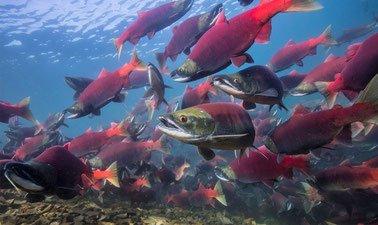
This course explores the relationships between salmon and people with an emphasis on the special ties of salmon to Indigenous peoples and to Alaska Natives in particular. No wild animal has more profoundly influenced the cultures and well-being of societies in North America than salmon. Salmon and people have been entwined in a relationship for millennia. This six-week course is an exploration and celebration of this relationship, as well as an examination of the current major issues, including habitat alterations, climate change, and management actions currently straining the relationship between salmon and salmon-dependent people.

Self Paced
Self-Paced