Agriculture, Economics and Nature (Coursera)

Agriculture, Economics and Nature (Coursera)

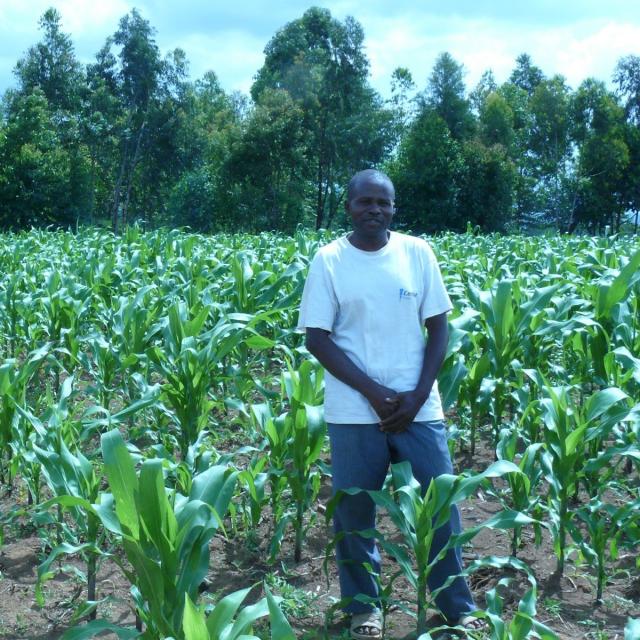
Sound economic thinking is crucial for farmers because they depend on good economic decision making to survive. Governments depend on economic information to make good policy decisions on behalf of the community. This course will help you to contribute to better decision making by farmers, or by agencies servicing agriculture, and it will help you to understand why farmers respond to policies and economic opportunities in the ways they do.

Class Deals by MOOC List - Click here and see Coursera's Active Discounts, Deals, and Promo Codes.

You can use this course to improve your skills and knowledge, and to assess whether this is a subject that you'd like to study further. The course includes high-quality video lectures, interviews with experts, demonstrations of how to build economic models in spreadsheets, practice quizzes, and a range of recommended readings and optional readings. Assessment is by a final exam.
The key economic principles that we’ll learn about can help us understand changes that have occurred in agriculture, and support improved decision making about things like agricultural production methods, agricultural input levels, resource conservation, and the balance between agricultural production and its environmental impacts.
There are literally thousands of agricultural economists around the world who work on these issues, so there is a wealth of knowledge to draw on for the course.

Syllabus

WEEK 1
Agricultural production and prices, and agriculture’s reliance on natural resources
Week 1 provides a history of agricultural production and prices, an examination into the reasons behind changes in production and prices, and discussions of the 2007 global food crisis and agriculture’s usage of resources.

WEEK 2
Resource and environmental challenges facing agriculture
Week 2 addresses the agricultural issues of water availability, peak phosphorus, herbicide resistance, and climate change.

WEEK 3
The economics of agricultural inputs
Week 3 looks at the relationship between inputs and outputs, the optimal level of an input, the question of pollution from inputs, and flat payoff functions.

WEEK 4
The economics of land conservation
Week 4 focuses on evaluating land conservation practices, weighing benefits and costs correctly, non-economic factors, and provides an example in conservation agriculture.

WEEK 5
The economics of agri-environmental projects
Week 5 discusses the importance of extending economics beyond the farm gate, characteristics of agri-environmental projects, Benefit: Cost Analysis, and provides an example with Gippsland Lakes.

WEEK 6
Government policies in agriculture
Week 6 ties up the course through discussion of government policies that support agriculture, policies that protect the rural environment, policies with problems, and justifications for agricultural policy.

WEEK 7
Final Exam

Go to Class
MOOC List is learner-supported. When you buy through links on our site, we may earn an affiliate commission.

Related Courses

Microeconomics: The Power of Markets (Coursera) Coursera
University of Pennsylvania

Microeconomics: The Power of Markets (Coursera)

We make economics decisions every day: what to buy, whether to work or play, what to study. We respond to markets all the time: prices influence our decisions, markets signal where to put effort, they direct firms to produce certain goods over others. Economics is all around us. This course is an introduction to the microeconomic theory of markets: why we have them, how they work, what they accomplish.

Sep 28th 2026
5-12 Weeks
Civic Engagement in American Democracy (Coursera) Coursera
Duke University

Civic Engagement in American Democracy (Coursera)

So how does the American political system work? Who are some of the key actors? What are key concepts for a student trying to understand what’s going on? How can I as a citizen influence politics? Civic Engagement in American Democracy takes on these and other key questions. We’re Dr. Nicholas Carnes and Dr. Bruce Jentleson, the principal course instructors. Along with our Duke faculty colleagues who also contributed modules, we’ve designed the course to provide a strong foundational introduction to US politics.

Oct 5th 2026
4 Weeks
University Teaching (Coursera) Coursera
University of Hong Kong

University Teaching (Coursera)

University Teaching is an introductory course in teaching and learning in tertiary education, designed by staff at the Centre for the Enhancement of Teaching and Learning at the University of Hong Kong. With input from instructors, guests and interviewees, including teaching award winners, students, and experts in the fields, you will be exposed to research evidence in relation to effective university teaching and practical instructional design strategies. You will also be exposed to multiple examples of effective teaching, and hear the views of teachers whose teaching has been judged to be excellent.

Sep 28th 2026
5-12 Weeks
A Law Student's Toolkit (Coursera) Coursera
Yale University

A Law Student's Toolkit (Coursera)

Whether you are an advanced law student looking to review the basics, or an aspiring law student looking for head start, this course will help you build the foundation you will need to succeed in law school and beyond. This course will introduce you to terminology, concepts, and tools lawyers and legal academics use to make their arguments. It will help you follow these arguments—and make arguments of your own.

Sep 28th 2026
3 Weeks
Social Science Approaches to the Study of Chinese Society Part 1 (Coursera) Coursera
The Hong Kong University of Science and Technology - HKUST

Social Science Approaches to the Study of Chinese Society Part 1 (Coursera)

This course seeks to turn learners into informed consumers of social science research. It introduces concepts, standards, and principles of social science research to the interested non-expert. Learners who complete the course will be able to assess evidence and critically evaluate claims about important social phenomena. It reviews the origins and development of social science, describes the process of discovery in contemporary social science research, and explains how contemporary social science differs from apparently related fields. It describes the goals, basic paradigms, and methodologies of the major social science disciplines.

Sep 28th 2026
5-12 Weeks
Get Interactive: Practical Teaching with Technology (Coursera) Coursera
University of London,Bloomsbury Learning Environment

Get Interactive: Practical Teaching with Technology (Coursera)

This course is designed to help you create dynamic, interactive online courses through the use of multimedia tools, student collaboration opportunities, and formative assessment and feedback. Each week we will focus on a particular topic: Using multimedia for teaching and learning; Encouraging student collaboration; Formative assessment and feedback.

Oct 4th 2026
3 Weeks
實驗經濟學 (Experimental Economics: Behavioral Game Theory) (Coursera) Coursera
National Taiwan University

實驗經濟學 (Experimental Economics: Behavioral Game Theory) (Coursera)

人是否會如同理論經濟學的預測進行決策?這門課將透過每週的課程影片以及課後作業帶你了解實驗經濟學的基本概念。每週將會有習題練習以及指定閱讀的期刊論文。你將會參與一些線上的實驗、報告論文並且互評其他同學的報告。

Sep 30th 2026
5-12 Weeks
Economics of Money and Banking (Coursera) Coursera
Columbia University

Economics of Money and Banking (Coursera)

The last three or four decades have seen a remarkable evolution in the institutions that comprise the modern monetary system. The financial crisis of 2007-2009 is a wakeup call that we need a similar evolution in the analytical apparatus and theories that we use to understand that system. Produced and sponsored by the Institute for New Economic Thinking, this course is an attempt to begin the process of new economic thinking by reviving and updating some forgotten traditions in monetary thought that have become newly relevant.

Sep 28th 2026
13-24 Weeks
Doping : Sports, Organizations and Sciences (Coursera) Coursera
University of Lausanne

Doping : Sports, Organizations and Sciences (Coursera)

The objective of this course is to encourage a critical understanding of doping. To achieve this goal, this course will rely on a multidisciplinary approach that allow you to see how different disciplines get into a single object, in different perspectives and in often complementary ways. This approach will also allow us to appreciate the complexity of a subject like doping. Doping in sports is a complex practice whose definition and identification is the result of socially and historically constructed norms. This course offers to shed light on the processes that led to the use and prohibition of doping substances.

Sep 28th 2026
4 Weeks
Financial Markets (Coursera) Coursera
Yale University

Financial Markets (Coursera)

An overview of the ideas, methods, and institutions that permit human society to manage risks and foster enterprise. Emphasis on financially-savvy leadership skills. Description of practices today and analysis of prospects for the future. Introduction to risk management and behavioral finance principles to understand the real-world functioning of securities, insurance, and banking industries. The ultimate goal of this course is using such industries effectively and towards a better society.

Sep 28th 2026
5-12 Weeks