The City and You: Find Your Best Place (Coursera)

Offered by University of Toronto,
The City and You: Find Your Best Place (Coursera)

Welcome to The City and You: Find Your Best Place. I'm excited to have you in the class and look forward to your contributions to the other learners in our community.
This free course will provide the knowledge and the tools needed to understand what cities do, why they matter, the forces shaping the greatest wave of urbanization in history, and how to pick the right place for you.

Class Deals by MOOC List - Click here and see Coursera's Active Discounts, Deals, and Promo Codes.

The course will also help you develop critical thinking skills. We'll accomplish this by providing evidence of the importance of cities, and why and how they matter to you. Then we’ll ask you to apply what you’ve learned in an exercise which will help you assess your own community and find your best place.
This course is accessible and open to anyone who is interested in learning more about cities and the ways they affect our lives. It is organized around five key modules: (1) Why Cities Matter, (2) A World of Cities, (3) The Creative City, (4) The Divided City and the New Urban Crisis, and (5) How to Find the Best Place for You.
After completing the course, you will be able to:
(1) Identify why cities are the drivers of economic prosperity;
(2) Explain the drivers and implications of fast-growing urbanization worldwide;
(3) Outline the key characteristics of a creative and innovative city;
(4) Describe the social divides and challenges facing cities and the solutions cities are using to address them; and
(5) Recognize the trade-offs of staying in your current city versus moving, and identify the best place for you and your family to live.
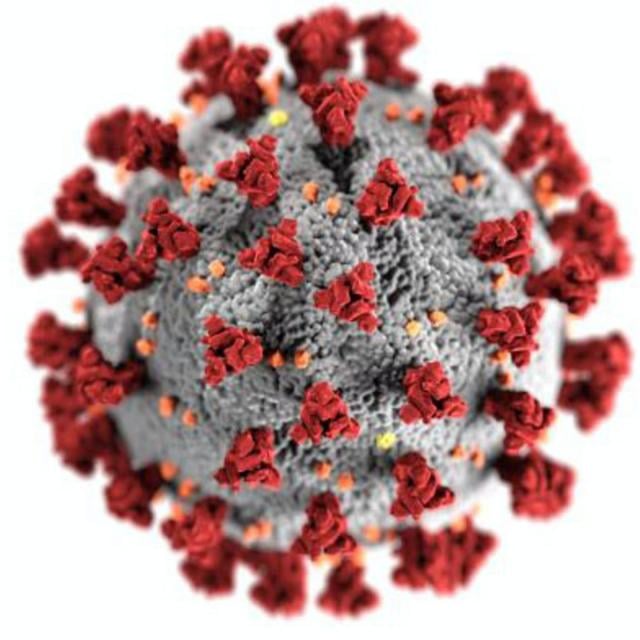
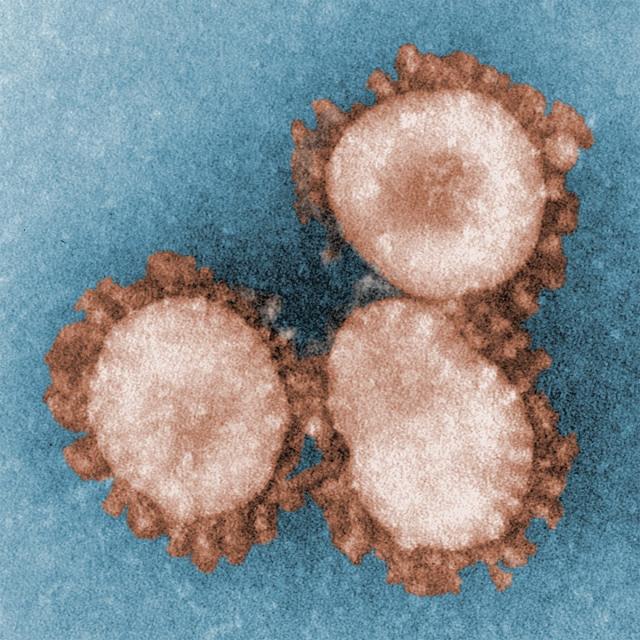
Of course the world has changed a great deal since I developed this course. The Global COVID-19 Pandemic is affecting cities, businesses and people around the world. It is something I have been writing about and working with mayors, city managers, economic developers, urban leaders and communities across the globe. I have put together a new module on Cities and the Coronavirus to help you better understand the ways in which the Covid-19 crisis is impacting cities and how you can best understand and deal with that.
I’d like to wish each and every one of you good luck as you get started on this journey. I hope you enjoy the course!

Syllabus

WEEK 1
Why Cities Matter
This session will help you to understand the importance of cities for both the economy and society, as well as, you and your family. Today, more than three and a half billion people live in cities, which is more than half of the world's population. That figure is projected to rise to as many as 10 billion people or 85 percent of the world's population over the next century. Cities are our premier platforms for generating new innovations, higher levels of economic growth, and new and better jobs. We will discuss why and how cities are important, and why picking the right city to live is important to your career, well-being, and life.

WEEK 2
A World of Cities
This session will help you understand the opportunities and challenges of urbanization around the world. Global urbanization has the power to lift living standards, create economic opportunity and jobs, reduce pollution, improve energy efficiency, and make the world safer. But, many cities in the developing world remain poor, with millions of people crowded into global slums.

WEEK 3
The Creative City
Cities have been the fonts of creativity since the dawn of civilization. The clustering of creative people in them and the diversity they bring is what drives key advances in arts, culture, and technology. These wellsprings of human progress have always occurred in our great cities from Athens and Rome to London, New York, and the emerging economies in Asia. This session will help you better understand how the clustering of diverse groups of creative people in cities spurs artistic achievement, scientific and technological advance, and human progress.

WEEK 4
The New Urban Crisis
This session will help you better understand the New Urban Crisis and the growing economic divides that challenge cities today. In the second half of the 20th century, society was divided between poorer cities and richer suburbs. But, over the past decade or so, affluent and educated people have flocked back to urban centers pushing poverty out to the suburbs. Today, middle-class neighborhoods are in decline and our societies are defined by small areas of concentrated advantaged surrounded by much larger areas of concentrated disadvantage spanning the city and its suburb alike.

WEEK 5
Cities and the Covid-19 Crisis
This session will help you better understand how the Covid-19 crisis will change cities and their recovery challenges. Covid-19 is not the first pandemic to strike our cities, nor will it be the last. Over the long course of history, cities have often been hotbeds of contagion and infectious disease. But no pandemic, plague, or natural disaster has ever managed to stifle their growth. When this pandemic is over in a couple of years, maybe less, New York and London will still be the world’s great financial centers; the San Francisco Bay Area its hub of high technology; and Los Angeles its center for entertainment and film. Shanghai, Tokyo, Hong Kong, Singapore, Paris, Toronto, and Sydney will all continue to be great global cities. But change will come to how and where we live and work. Our cities and society as a whole are likely to grow even more unequal than they are today, as both the disease and its economic fallout hit hardest at the least-advantaged. While some of these changes will prove to be evanescent, others may be permanent. Ultimately, the pandemic will be less of a break point or disruption, and more an accelerant to changes already afoot in our working and living patterns.

WEEK 6
Find Your Best Place
This session will help you understand the importance of where you live to your life and career. We each make three big decisions in our lives: our career, our choice of life-partner, and the place (city and neighborhood) where we live. We get lots of advice on the first two, but little on the third. Yet, choosing where to live is the most important decision of all. It shapes and influences the kinds of careers that we pursue and the kinds of people we will meet. This session provides you with the tools and a framework for choosing the place that is best for you and your family.


Go to Class
MOOC List is learner-supported. When you buy through links on our site, we may earn an affiliate commission.

Related Courses

After the Arab Spring – Democratic Aspirations and State Failure (Coursera) Coursera
University of Copenhagen

After the Arab Spring – Democratic Aspirations and State Failure (Coursera)

Learn why the hope and excitement of the Arab Spring is gone, why so many Arab states are falling apart, why the youth are so frustrated, why there are so many refugees, and what can be done about it. The so-called Arab Spring appeared to end decades of exceptionalism and bring the Arab world back into the mainstream of global developments. The rebellions promised the return of politics and the reassertion of popular sovereignty against their corrupt and geriatric leaders. Much hope and flowery language greeted the young men and women who deposed their leaders and tried to build new, better societies.

Aug 3rd 2026
5-12 Weeks
Economic Growth and Distributive Justice Part II - Maximize Social Wellbeing (Coursera) Coursera
Tel Aviv University

Economic Growth and Distributive Justice Part II - Maximize Social Wellbeing (Coursera)

If you really care about the big questions in the economies and societies of the 21st century, such as distributive justice - namely, inequality of income or wealth, and its correlation with economic growth - this course is meant for you. The knowledge you will gain can truly change your outlook on our world.

Aug 3rd 2026
5-12 Weeks
ODS y sostenibilidad: una mirada desde los colegios (Coursera) Coursera
Universidad de los Andes

ODS y sostenibilidad: una mirada desde los colegios (Coursera)

En este curso veremos cómo podemos generar cambios y transformaciones (a nivel individual, organizacional y social) para la sostenibilidad desde la educación formal y no-formal. Partiremos del concepto de los Objetivos de Desarrollo Sostenible (ODS) como un marco potente para generar reflexiones críticas, que nos lleven a generar acciones colectivas desde la escuela en pro de la sostenibilidad.

Aug 3rd 2026
4 Weeks
ADHD: Everyday Strategies for Elementary Students (Coursera) Coursera
University at Buffalo,The State University of New York

ADHD: Everyday Strategies for Elementary Students (Coursera)

This course will provide an overview of ADHD diagnosis and treatment. Course participants can expect to learn about ADHD as a developmental disorder that begins early in childhood, and participants will also learn about evidence-based approaches for diagnosing ADHD. Following that, two evidence-based treatment approaches (the Daily Report Card and Parenting Strategies) will be introduced. (Note these course activities are informational and are not intended to replace working with a licensed/trained professional).

Aug 3rd 2026
4 Weeks
Doping : Sports, Organizations and Sciences (Coursera) Coursera
University of Lausanne

Doping : Sports, Organizations and Sciences (Coursera)

The objective of this course is to encourage a critical understanding of doping. To achieve this goal, this course will rely on a multidisciplinary approach that allow you to see how different disciplines get into a single object, in different perspectives and in often complementary ways. This approach will also allow us to appreciate the complexity of a subject like doping. Doping in sports is a complex practice whose definition and identification is the result of socially and historically constructed norms. This course offers to shed light on the processes that led to the use and prohibition of doping substances.

Aug 3rd 2026
4 Weeks
Lecture Series for Preventing and Controlling COVID-19 (Coursera) Coursera
Xi'an Jiaotong University

Lecture Series for Preventing and Controlling COVID-19 (Coursera)

In December 2019, a cluster of patients with pneumonia of unknown cause appeared in Wuhan, Hubei. Governments at all levels and Department of Health Administration highly valued and rapidly organized the centers for Disease Control and Prevention (CDC), medical institutions, and scientific research academies to conduct a survey, rescue, and collaborative research. This new antigen was quickly identified as a novel coronavirus, named as 2019-nCoV by World Health Organization (WHO).

Aug 3rd 2026
3 Weeks
Off the Clock: The Many Faces of Time (Coursera) Coursera
Universidade de São Paulo, Brasil

Off the Clock: The Many Faces of Time (Coursera)

“Off the Clock: The Many Faces of Time” presents a transdisciplinary and transnational set of perspectives on time. This MOOC aims to expand the learners' understanding of the many facets of time, from our human experience of the present to plants, animals, bacteria, and even art’s relationship to the passing of time. This course equips learners with multidisciplinary tools for thinking about time in human and more-than-human constituents. To do so, the course asks and answers three key questions.

Aug 3rd 2026
5-12 Weeks
Cities, Climate and Change: Pathways and Opportunities (Coursera) Coursera
Lund University

Cities, Climate and Change: Pathways and Opportunities (Coursera)

How can we develop transformative skills and capacities to achieve climate neutral and sustainable cities? This course explores how we can design, create and achieve climate neutral and sustainable cities. We embrace the “mission to the moon” approach for tackling greenhouse emissions from cities putting an emphasis on pathways and opportunities. We utilise insights and inspiration from Sweden, Europe and around the world.

Aug 3rd 2026
5-12 Weeks
Compreender as dimensões interculturais na vida cotidiana (Coursera) Coursera
Universidad de los Andes

Compreender as dimensões interculturais na vida cotidiana (Coursera)

Este MOOC é o resultado de uma Co construção e pesquisa por professoras da Universidad Sorbonne-Nouvelle Paris 3 e da Universidad de los Andes (Colômbia). Seu principal objetivo é fornecer ferramentas para desenvolver dimensões interculturais na vida cotidiana. O curso é destinado a estudantes e profissionais de diferentes áreas além do ensino de idiomas (humanidades e ciências sociais, educação, clínica intercultural, estudos de arte e administração) que têm que enfrentar situações da vida cotidiana e relações com outros, onde ferramentas de reflexão são necessárias para ter uma abordagem intercultural.

Aug 3rd 2026
4 Weeks
Cities are back in town : sociología urbana para un mundo globalizado (Coursera) Coursera
Sciences Po

Cities are back in town : sociología urbana para un mundo globalizado (Coursera)

Los procesos de globalización y europeización respaldan el rápido desarrollo de las ciudades en distintas partes del mundo. En el mundo contemporáneo, el proceso de urbanización está alcanzando un nuevo pico con el incremento de las megalópolis (más de 15 millones de habitantes) como Calcuta, Los Ángeles, Daca, El Cairo, Tokio, Nueva York, Shanghái, Ciudad de México. o Seúl. Más allá de las metrópolis modernas, los investigadores intentan entender estas grandes zonas urbanas con el uso de distintos conceptos, tales como "posmetrópolis", "ciudades globales" y "ciudades-regiones globales".

Aug 3rd 2026
5-12 Weeks
Introduction to Economic Theories (Coursera) Coursera
Erasmus University Rotterdam

Introduction to Economic Theories (Coursera)

Wondering why economists have not predicted serious financial crises? Shocked by economic assumptions of human behavior as self-centered and focusing only on what can be measured? Asking yourself if there are no sensible economic alternatives to free markets? Then you are at the right place to learn economics! This is the first online course that teaches economics from a pluralist perspective. Economic pluralism means that a plurality of theoretical and methodological viewpoints is regarded as valuable in itself and is simply the best way in which economics can make progress in understanding the world.

Aug 3rd 2026
5-12 Weeks